Join us Oct. 26-28 in Newport Beach for the Digiday Media Buying Summit
Welcome to Creator University: Inside the colleges building creator economy programs
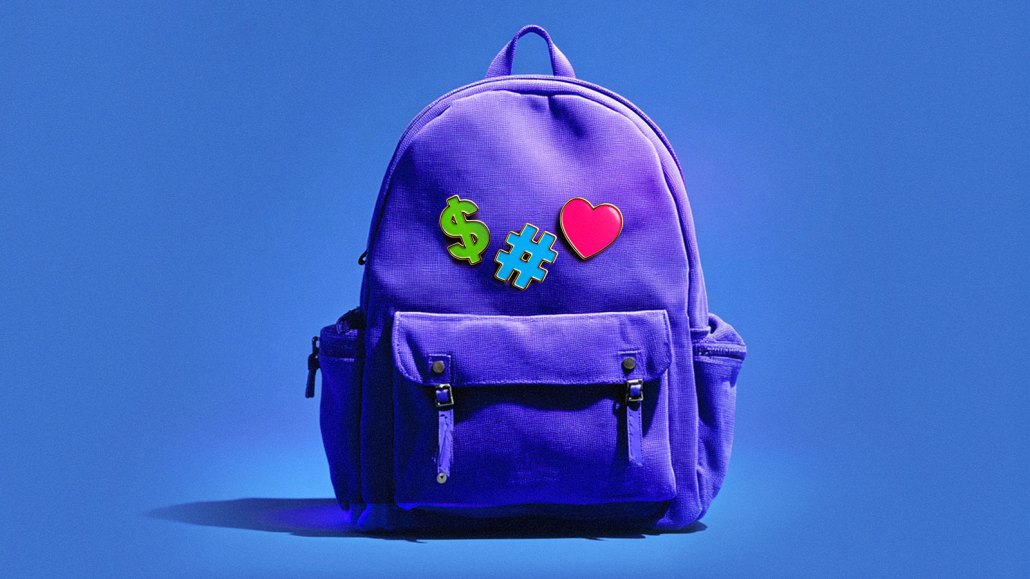
Universities are beginning to formalize the creator economy
In the past year, Arizona State launched a BA in content creation, Stanford introduced a graduate course called Mastering the Creator Economy, and Syracuse opened he Center of Creator Economy, focused on research, policy, academics and content production.
Their approaches vary, but together they signal a shift: as the industry grows, more students are learning about it in the classroom, rather than on the fly.
“The creator economy has crossed the line from an emerging marketing channel into a legitimate business discipline,” said Cole Mancini Elboeck, vp of social commerce at Go Fish Digital. “Academia catching up is another sign that this is becoming a durable part of how modern businesses reach, acquire customers and influence the market.”
A 2023 report from Morning Consult found that more than half of young people want to be creators or influencers, so naturally, universities are following the lead their (potential) future students are setting.
“Young adults coming into their college years look at a career in the creator economy as one of the most desirable jobs that they wish to have,” said Ryan Schram, executive director of Syracuse University’s Center for the Creator Economy. Though the university already has a storied broadcast journalism program and visual and performing arts school, Schram said there was a need to focus more on pillars of the creator economy.
Majoring in creator
When planning their investment in the creator economy, Schram said Syracuse thought about the “employability quotient” of what the industry is looking for, and what existing services the university had that could be pulled into the interdisciplinary program. There’s also a need to set expectations for their students and examine how the hyper fragmentation in the space could change their career path.
“When you think about the creator economy…the 50 million people worldwide that participate, that sounds really sexy on the surface. Millions of those people are creators, but as you and I know, tens of millions of those people are the folks that you don’t see in front of a camera or behind a podcast mic,” Scharm said. “They are the clippers on the supporting team. They are the influencer marketing team embedded in a brand or an affiliate marketing team. They’re the folks building creator-centric SaaS tools. They are individuals at CCA doing the representation and IP stuff.”
Syracuse didn’t just want to capture the zeitgeist and entice potential students with hyper-relevant courses and the promise of a content creator career – it also sought to lean into its reputation as a research institution (it published its first creator economy report in early October about YouTube edging out TV as Americans’ top source for political news).
Crucially, Syracuse also wants to ensure that any student can use its content creation tools, which includes several facilities and a student-run creator studio.
“We wanted to create a moat that was logically broad enough and deep enough whereby we could lead for the foreseeable future,” Schram said. “We want to champion a creator-centric campus…that gives all students, regardless of what their major is, an opportunity to create and collaborate in a different way.”
The idea is that many will likely need to lean into content creation at some point in their careers, as the marketing tool becomes increasingly popular and its successes more easily measured. That’s why Syracuse is allowing any student, no matter their focus, to minor in the creator economy.
“I met a student the other week, she’s a psychology major, and she’s going to be a creator economy minor,” Schram said. “She said, ‘I’m going to have a therapy business someday, and I’m going to need to promote my practice on Insta and TikTok from a personal branding mindset, so I want those chops.’”
Stanford Graduate School of Business lecturer Matt Abrahams echoed similar sentiments, telling Digiday that many of the students enrolled in the class (which had a 110-person waitlist) have their own startups and recognize the importance of creator as a distribution channel, or are interested in investing and see it as an avenue to help their businesses. It helped that many of the major players in the creator space, the social media platforms, are in Stanford’s backyard (the university is based near San Francisco).
“Many of our alums work in the industry in some way, shape, or form” Abrahams said. “It was easy as we were starting to think abou t[the class] to reach out and ask ‘What do you think? Where do we need to build? What does this need to look like?’”
Stanford, Abrhamas said, was at the forefront of AI, and saw the impact it could have on both its students and the world at large. The university is hoping its foray into creators will be just as important, and that it can “lead the charge” in the space.
Abrahams said his students are doing a variety of things, from creating out loud in the lecture hall, to discussing recent legislation, to building their own personal brand. They’re also mapping a specific creator or company’s business, looking at their touch points, inputs and outputs. The final assignment will be to pick a company, whether it’s their own or a traditional business looking to invest more in the creator economy, and propose their next business moves.
Colin and Samir, the YouTube duo with well over a million subscribers, spoke at one of the first Master the Creator Economy classes. Abrhamass said they told GSB students that they don’t need creators, but people who can help grow their business.
“The creator economy needs strategists, analysts, operators, managers, commerce experts, technologists, and brand leaders just as much as it needs talent in front of the camera,” said Mancini Elboeck. “That’s when you know an industry is maturing.”


More in Media
Ad industry tallies early losses from Apple’s Safari tracking block
A week after Apple’s Safari block, the ad industry is still waiting for the other shoe to drop.
For some publishers, agentic advertising is still a question of ROI
Despite the hype around agentic media buying, some publishers remain skeptical of its potential to deliver meaningful revenue.
As creators increasingly move into Hollywood, deal terms can put their IP at risk
Advertising Week New York explored the business of creator-led programming across entertainment, and the problems arising within it