Join us Oct. 26-28 in Newport Beach for the Digiday Media Buying Summit
Ad industry tallies early losses from Apple’s Safari tracking block
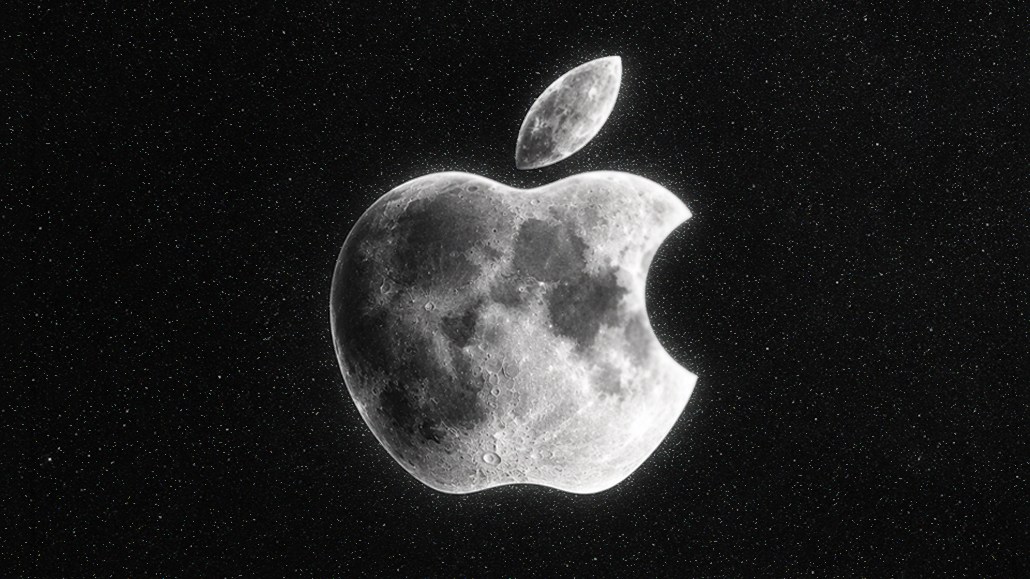
The online ad industry has been burned by Apple before, and it’s feeling the heat again.
Its latest software update cut off some of the biggest companies that track people across the web to target them with ads, stopping them from working in Safari altogether. For anyone who remembers what came before it’s a familiar feeling. Apple’s earlier crackdowns on tracking in 2017 and 2021 wiped billions off the industry, and Meta alone said the second one would cost it around $10 billion in a single year.
Given that history, it’s no wonder ad execs have spent the week on edge. The block arrived without warning, hit some of the best known names in the business and runs off a list few people outside Apple get to see. For an industry that has watched Apple reshape its business twice already, that was enough to set off alarm bells before anyone could tally the damage.
A week on, the counting has started.
Aditude, which helps publishers sell their ad space, reported Safari on iPhones and iPads accounts for 11.7% of the ads its customers show and 11.4% of their ad revenue. Among readers who had installed the latest update, eCPMs, or what publishers actually earned for every thousand ads they showed, fell 10.5%. And that’s barely from anyone having the update yet. Only about 8% of users have upgraded their software, which Aditude estimates the overall revenue hit at about 1% at this point.
Others have seen even less.
The publishers Scott Messer advises through his consultancy Messer Media, noticed little immediate impact from the block. They did not notice, he said, reflecting on subsequent conversations. He expects that to change as more people install the update.
Some publishers may escape the worst of it even then.
Two senior commercial execs at news publishers told Digiday they had not seen an impact from the block yet, and were not concerned. One of the CROs said this was primarily because they were operating a mostly subscription business, and were not concerned about the impact Apple’s changes would have on their programmatic advertising.
Plenty of publishers feel the same way, and for good reason. Tracking readers in Safari has been hard for years, so many gave up long ago on it ever making them that much money. For the rest, the next few weeks will be an anxious wait. Some are worried about the money they stand to lose if a vendor they depend on lands on Apple’s list. Others are simply fed up with waiting for the other shoe to drop.
A publisher exec, who spoke on condition of anonymity, said that the move is a “blatant” attempt by Apple to give advertisers more incentive to use its ad network. “Anything that makes advertising harder for advertisers in Safari will benefit Apple’s ad business,” adding that it’s a vendor issue, which makes it a publisher issue too. “It will hurt publishers that have low levels of direct-sold inventory more than established brands that monetize a significant amount of their inventory through direct-sold campaigns,” they said.
Consultant Davide Rosamilia put it in blunter terms: “The trend has definitely been more restrictive for anything that generates an identifier, specifically on Apple. It’s not going to get better. I would say it’s going to get worse.”
Suspicions like that might be easier to dismiss if Apple showed more interest in the industry it keeps upending. Few have anyone there to call, Apple rarely explains its changes before they land, and it does respond, it tends to keep things brief and on its own terms.
One source, speaking on condition of anonymity in exchange for candor, told Digiday that IAB Tech Lab had tried to engage Apple on its privacy policies since the early days of Safari’s Intelligent Tracking Prevention in the late 2010s. However, those efforts got little in return, and almost every source Digiday spoke to said not much has changed since. The timing makes it worse. The fourth quarter is when ad tech vendors and publishers make most of their money, and this has landed right at the start of it, leaving both groups anxious and angry.
Even those spared by the block are uneasy.
Andrew Casale, CEO of Index Exchange, told Digiday his company has been largely unaffected because it isn’t in the identity business. Apple has blocked the small bits of code that let ad tech companies recognize the same reader across sites and Index Exchange doesn’t depend on them to run. That hasn’t stopped Casale worrying about how far Apple has gone. He called the update an invasive overreach that holds the web to a different standard than apps, where people can at least choose to be tracked.
“If you compare what happens today in Apple’s app ecosystem with SDKs that aggressively fingerprint with absolutely no proactive compliance from Apple, it is quite shocking to see how flippant their behavior is on the web [i.e., in Safari].”
That flippancy extends to how Apple applies its own rules, which seem to shift from one week to the next. It cut off The Trade Desk’s ad server, the part of its business that bids for ad space and puts the winning ad on the reader’s screen, with no warning. It then quietly took the ad server off the list in a test version of iOS after the company’s engineers filed a bug report. Anyone on the current version of iOS is still blocked, and the fix isn’t expected to reach them until the end of the month at the earliest.
Casale offers an assessment of these developments that questions true motivations.
“Is that a restoration, or is that an admission of a pretty massive error?” he remarked to Digiday. “And is that not cause to say, ‘Where is the overweight?'”


More in Media
Welcome to Creator University: Inside the colleges building creator economy programs
As more young folks seek to enter the creator economy, universities are offering classes covering every layer of the still-growing ecosystem.
For some publishers, agentic advertising is still a question of ROI
Despite the hype around agentic media buying, some publishers remain skeptical of its potential to deliver meaningful revenue.

As creators increasingly move into Hollywood, deal terms can put their IP at risk
Advertising Week New York explored the business of creator-led programming across entertainment, and the problems arising within it