Join us Dec. 1-3 in Nashville for the Digiday Programmatic Marketing Summit
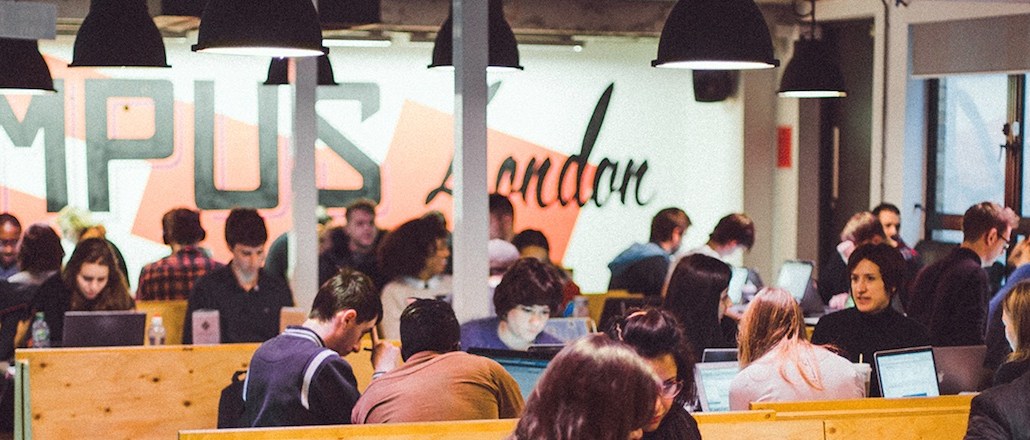
Google is looking globally to encourage entrepreneurship. It’s just launched a European Campus in Warsaw, its third after Madrid a few months ago and London in 2012. By the end of this year, it will have six of these global offices, including Tel Aviv, Seoul and Sao Paulo.
The community spaces are designed to give startups a leg up by giving entrepreneurs a place to work, network with others and put on events. For Google, they’re also a way to get young businesses acquainted with their tools and products from the outset so they’ll rely on them as they grow.
Sarah Drinkwater, head of Google’s Campus in London, is most bullish about the growth in Madrid and Warsaw, where Google’s hubs can try to match some of the U.K.’s non-technical entrepreneurs who want to find more tech-minded partners.
“London has very strong marketeers and strong business-minded people, but that’s not enough anymore,” said Drinkwater, who previously worked with a number of startups. Madrid and Warsaw, meanwhile, “are both very early markets with great quality, early-stage business owners. In Warsaw and Madrid, the market is fragmented, and the idea of co-working is very new,” she said.
Madrid launched in the summer with Sofia Benjumea at the helm. Benjumea is a former journalist and founder of Startup Spain, a 3-year old conference South Summit that brings together 3,500 entrepreneurs with 450 investors, Spain’s answer to TechCrunch’s Disrupt.
In the five months that Madrid’s campus has been open, it has amassed 10,000 members, a fifth of the number in London. (Members can include investors, venture capitalists, early-business owners and developers.)
Rose Lewis, co-founder of Collider, which connects brands and agencies with startups, said it makes sense for Google to go to a nascent market like Spain, where it can make an impact, rather than, say, Germany, which already has four unicorns, companies that are valued above $1 billion.
“As a European country, Spain was the second behind the U.K. in investing the most in technology, entrepreneurship and private equity,” she said. “That was before its economy crashed. Fostering innovation exactly what Spain needs.”
This week, back in London, Google is hosting its Entrepreneur Exchange, which brings together startups from around the world (in this case from the fashion and technology sectors), and investors. Drinkwater claimed the London campus has helped 2,000 startups find mentors in Google and that startups have raised £40 million in funding and created 180 jobs through Campus contacts. By comparison, Telefonica’s startup hub Wayra has raised £22 million so far this year.
“We’ll be testing out running events through simultaneous locations, live streaming and getting response from hubs in different locations, connecting groups of founders,” Drinkwater said. “Entrepreneurship is global; we’re helping them meet each other.”
Images courtesy from Google.


More in Media

The Daily Mail tests GEO with brands ahead of AI visibility product
The Daily Mail is running around a dozen GEO tests to work out what works before turning its AI visibility offering into an official product early next year.

Meta delays rollout of updated commercial terms amid publishers’ collective pushback
Meta’s updated commercial terms have galvanized publishers into a coordinated pushback over the company’s use of their content.

Creators say it’s difficult to make money from news — with platform rules and brand guidelines
With more people getting news from creators than traditional media, those creators are still trying to build sustainable businesses.