Join us Dec. 1-3 in Nashville for the Digiday Programmatic Marketing Summit
How a fashion creator turned audience demand into a 500+ client styling business
This article is part of an ongoing series examining successful creator business strategies. More from the series →
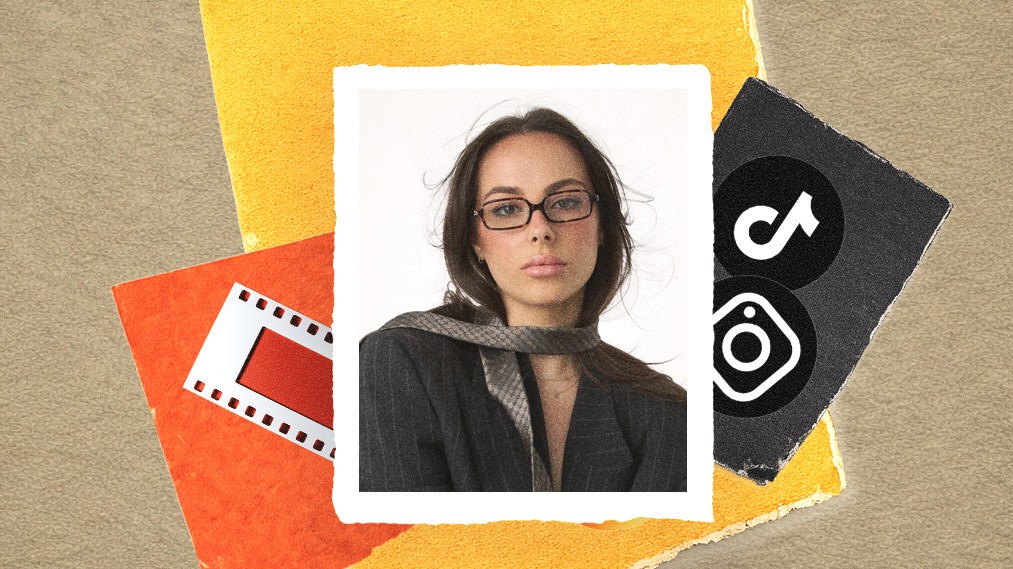
Maddy Gustini built a following by telling men what to wear. Now she’s turning that audience into a styling business — and a stake in a fashion app.
Gustini started creating content in 2023, not long after graduating with a degree in fashion merchandising and joining Neiman Marcus’ buying team. She focused on a gap she saw in the market: practical fashion advice for men. Within a year, she had more than 100,000 Instagram followers. Today she has nearly 300,000.
As followers began asking her for personal fashion advice, Gustini saw an opportunity to turn that demand into a new revenue stream: personal styling. At the time, she was (and still is) making $5,000 to $10,000 a month from brand deals.
“When you think of a stylist, you think of a celebrity stylist. You think red carpet styling. You think something that doesn’t apply or is really feasible for the masses. I wanted to take that and make it into something that would apply to the everyday man,” Gustini said.
Aside from her public styling videos, which she fills with affiliate links, she started Maddy G Style, a personal styling service that charges upwards of $250 an hour for shopping help, $55 an outfit for a style deck or $800 for a full closet redo. “They fill out a form with what they’re looking for, with their budget, all the necessary questions, and I put together outfits for them — whether that’s outfits for a trip or doing a full closet overhaul,” she said.
Gustini wouldn’t provide details on her earnings through her personal styling service, but she has more than 500 style deck and closet redo clients and over 100 regular styling clients. Still, she said around 60% of her revenue comes from brand deals, 20% from Maddy G Style, and 20% from affiliate links.
“You don’t want your income to be completely reliant on if your video gets 100,000 views or not, so you want to direct your audience elsewhere… I can either buy something directly from her or I can work with her directly,” she explained. “Everything comes from my content, and that’s the only way I advertise my styling business.”
Gustini makes content featuring menswear brands she has affiliate deals with and also includes those brands in her personal styling guides, so there are two chances for viewers to snag products for which she gets a cut of sales, on top of the initial revenue she gets from anyone who signs up for her personal styling services.
“People really look to me for advice, and they’re coming to me directly to shop, which I think differentiates my content from a lifestyle influencer that makes videos about their life,” she said.
Her fashion expertise makes brand deals feel like a natural extension of her content: She can recommend products she’d suggest anyway. But that makes choosing partners carefully essential. “If I were to recommend a product, brand, or piece of clothing that doesn’t align with my taste…that is so harmful to my content and my audience,” Gustini said.
Gustini has secured brand deals with J. Crew, Calvin Klein, Todd Snyder, Bespoke Post, Steve Madden, and Aldo.
Still, Gustini wanted to diversify beyond brand deals, the whims of the algorithm and her styling business. So she made an early bet on a startup. That’s where Emily Ward, co-founder of CEO of Shine Management and Love X Money Ventures, came into the picture, vetting creators like Gustini to join Driptail, a social fashion app that helps users find clothes based on their body type, as strategic equity investors.
Gustini was invited by Shine Management, which represents her, into Driptail’s equity investment test pool, where she offered app feedback and advice. Shortly after, she was invited to come on as an equity partner. “Working with a brand in an equity partnership, I think it’s really important that you align with that company and what they represent, and again, Driptail solved those two issues for me, so I was in right away,” Gustini said.
She didn’t provide details of her investment (if it’s solely equity-based, and how much it’s worth), but said it’s all in service of diversifying her revenue streams. “Having my hands in a few different cookie jars,” she said.
“[She] had such phenomenal insight that the founder [Mark Weinberg] benefited from so much…[the creators] really did shift and shape where Mark was taking the app,” Ward said.
According to Gustini’s representation, she’s driven the most users to the app, alongside creator Alicia McCarvell, who has 1.6 million Instagram followers. When Driptail first launched in March, it had around 100 users. By July, after the equity creators started promoting it, it had nearly 6,000. One post of Gustini’s drove 1,000 new users to Driptail and over 100 purchases in the three days after she posted it.
“You don’t have a paycheck coming every two weeks, you’re really working for everything you make…being able to have income streams long-term with something you’re consistently building is huge,” she said.


More in Media

Forbes looks to Google AI pilot for insights as publishers seek value beyond the click
Forbes has joined Google’s paid News AI pilot that gives Google expanded rights to its content to test new ways of providing readers with context about stories before they click through.

The Verge switches up its audience team to prepare for Google Zero
The Verge has restructured its audience development team to prioritize loyal readers over traffic and page views.
Reach CEO touts Google AI deal as a template, steps up pressure on OpenAI over scraping
Digiday spoke with Reach CEO Piers North about his plans to make its Google AI content deal a blueprint framework for other LLM deals, and its recent cease-and-desist letter to OpenAI.