Join us Oct. 26-28 in Newport Beach for the Digiday Media Buying Summit
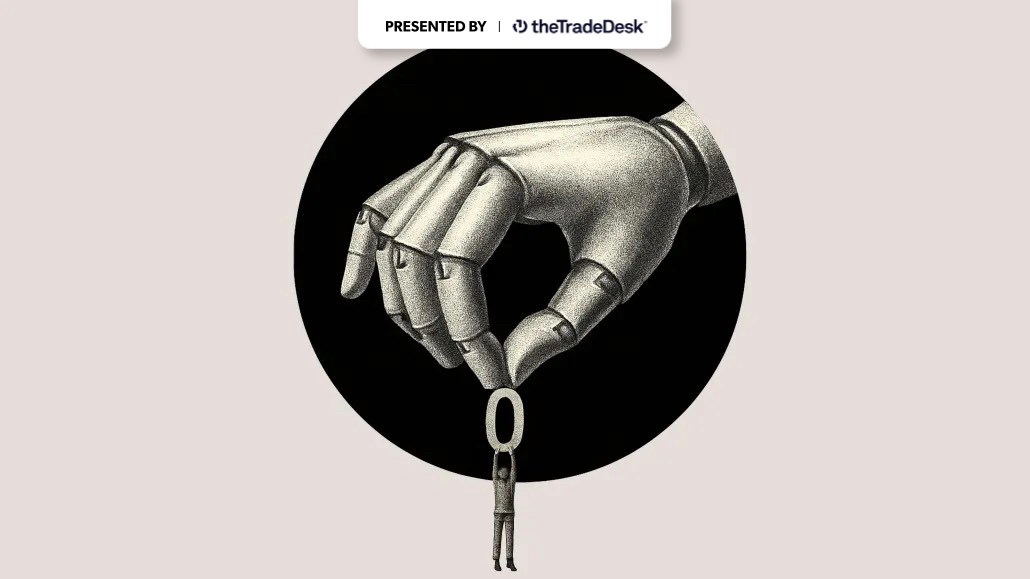
For some publishers, agentic advertising is still a question of ROI
Keep up to date with Digiday’s annual coverage of Advertising Week in New York. More from the series →
Many publishers execs say — despite the hype — agentic media buying remains a test-and-learn proposition, rather than a proven source of returns.
That caution was clear in Digiday’s conversations with publishers at Advertising Week New York last week, where on-stage discussions dusted across the topic. Sessions on agentic media, tools and marketing were peppered throughout the programming of the four-day event.
But privately, publishers aren’t sold on its future. At least, not yet.
“It would be very hard for me to go and seek investment from our leadership team for something that we don’t know whether or not it’s going to be of value to us,” Jamie Jouning, global head of advertising at The Economist, told Digiday during AWNY.
“I think organizations with massive scale are more likely to be more excited by this than those with less scale,” Jouning said. “It’s very early days. I’ve been asked by our CEO: ‘what are we doing?’ And so it’s on his radar, and it’s clearly on my radar. But I think it’s still relatively early. I don’t think we’ll be hitting down that route in a big way anytime soon. But like a lot of other people, we need to be aware of it, and we’ll test and learn in the background.”
He wasn’t the only one. Digiday interviewed three senior commercial publishing execs at AWNY and all of them described some variation of evaluating, testing or learning about agent-led buying.
“I can’t say definitively that we have signed this deal and we’re doing X, Y, and Z because we haven’t,” said Newsweek CRO Danielle Varvaro. “I think, like any company, we’re leaning into the conversations and seeing what’s the opportunity. From a revenue perspective for brands, how do you then measure the ROI on this? And what does a test campaign look like? What does that mean for the brand, and how do we measure it?”
Some publishers like CNN and others have been actively testing agent-to-agent transactions. And yet, some publishers are hesitant to embrace the AI technologies promising to reinvent advertising.
“That’s not really something we’re doing,” said Joy Robins, The New York Times’ global chief advertising officer. “We’re always evaluating. I think the thing that we really want to make sure of is, what is going to be something that is right both for our advertisers and for us. We’re really keeping an eye on it. But that’s kind of the evaluation phase, and that’s where we are right now.”
However, on the buy side, media agencies are moving agentic media buying from experimentation to real-world campaigns, testing AI agents that can automate transactions, buy inventory directly from publishers and reduce programmatic intermediaries and costs — even as agencies grapple with how to maintain human oversight, enforce advertiser-specific guardrails and ensure accountability.
Amit Grover, CEO of sell-side programmatic sales firm KPI Village, said publishers aren’t prioritizing adoption as aggressively as the buy-side because they are focused on repositioning their advertising businesses to generate revenue in the near term. While agentic media buying can reduce operational costs, publishers are prioritizing investments with a clearer path to revenue and make up for losses in traffic-dependent ad revenue, he said.
While agentic media buying promises a faster, cheaper and more direct advertising supply chain, the infrastructure needed to make it trustworthy, transparent and scalable is still being built. Agents can go rogue, making unauthorized decisions or operating outside advertisers’ instructions. Agencies also need to audit agents’ actions, such as monitor spending and identify errors.
That doesn’t mean publishers are standing still. Some are taking big swings to diversify and improve their advertising businesses in the AI era. As declining referral traffic, AI-driven disruption and mounting pressure to demonstrate advertising ROI shake up the publishing industry, media companies are rethinking how — and what — they are selling. They are looking for more ways to make money from their credibility, brand authority and direct audience relationships.
The New York Times is expanding its audience targeting and measurement capabilities, which Robins said will come to fruition next year.
Once built on scale and programmatic revenue, Newsweek has spent the past few years building out its B2B business, Varvaro said. It’s building out these opportunities in verticals like healthcare and tech, through webinars, newsletters, events and rankings.
The publishers also bought an ad network last year called Adprime, all of which make up a “flywheel” that Newsweek can tap into, she added. Newsweek has hired dedicated sellers specific to these revenue streams and verticals. Newsweek’s overall business is growing nearly 20% year over year, a company spokesperson told Digiday.
“Creating a curated space for 100 of the right people in the room can be more valuable than obviously a campaign that spans a bunch of eyeballs,” Varvaro said.
The Economist, meanwhile, is broadening its advertising business by creating new sponsorship opportunities to attract a wider range of advertisers, Jouning said. It’s developing video franchises and new subscription offerings. The publisher plans to expand its video programming from two shows a week to six in January, while breaking its Insider series into distinct franchises focused on topics like technology, money and geopolitics, to create more sponsorship opportunities, he added.
The Economist is also looking to attract more consumer-facing advertisers beyond its traditional B2B base and convince luxury brands to spend more against its hard-news coverage, as well as expanding its client-commissioned research.
“Advertisers are increasingly looking to work with brands who can guarantee that sort of level of trust and that level of credibility,” he said. “Most of our business is B2B, but … we have an audience, a very valuable audience, and that’s as appealing to a B2C audience as it is the B2B audience. That’s the muscle I’m trying to reignite a little bit,” Jouning said.


More in Media
Ad industry tallies early losses from Apple’s Safari tracking block
A week after Apple’s Safari block, the ad industry is still waiting for the other shoe to drop.

Welcome to Creator University: Inside the colleges building creator economy programs
As more young folks seek to enter the creator economy, universities are offering classes covering every layer of the still-growing ecosystem.

As creators increasingly move into Hollywood, deal terms can put their IP at risk
Advertising Week New York explored the business of creator-led programming across entertainment, and the problems arising within it