Join us Dec. 1-3 in Nashville for the Digiday Programmatic Marketing Summit
In Graphic Detail: How shoppers are adopting AI for product research ahead of Black Friday

Marketers are shifting ad dollars toward performance channels as the important Black Friday/Cyber Monday trading period approaches. Yet the way consumers use search — a crucial channel within performance marketing — is evolving rapidly, as they adopt generative AI tools like Gemini and ChatGPT to aid their purchasing decisions.
The places they find information about brands, the sources that information is based on, and what they do with that information are all changing. Meanwhile, audience adoption of AI research is far from uniform across generations and markets, further complicating the picture.
“Black Friday used to be won in the final week with the deepest discount and the loudest media,” said Jonathan Verrall, vp of SEO at Jellyfish. “Now AI writes the shortlist weeks earlier from the sources shoppers trust. Advertisers who treat Black Friday as pure promo media are already late. The winners will plan earned, owned and paid together from October and give AI data it can believe.”
What is certain is that the way brands seek to influence consumers during product discovery and research is shifting. With the year’s biggest sales event around the corner, read on for a data snapshot of the state of product discovery.
AI’s share of product research doubled in the last year
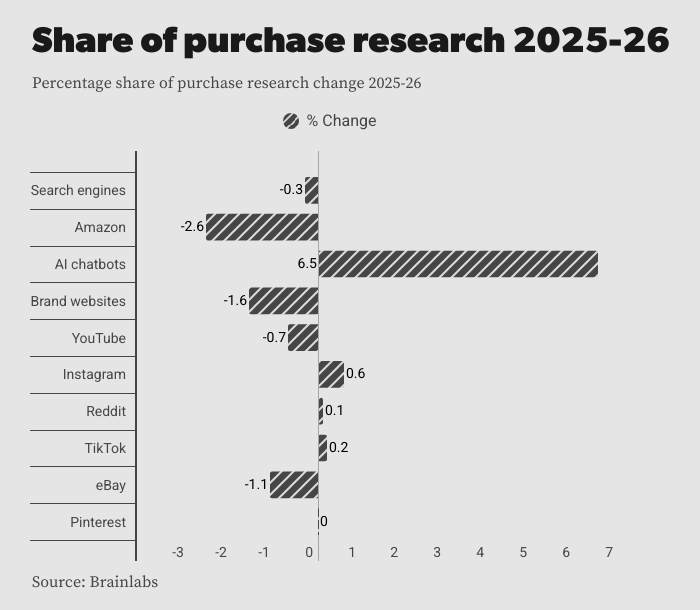
According to a survey of 2,800 shoppers in the U.S. and U.K. conducted by Brainlabs in 2025 and 2026, the percentage of consumers using AI for product research rose on average from 6% last year to 13%. Clearly, more shoppers are using AI tools to compare and research the products they’re considering. While search engines themselves still led consumer practices, sources like Amazon and YouTube slipped.
Third-party sources hold the most influence
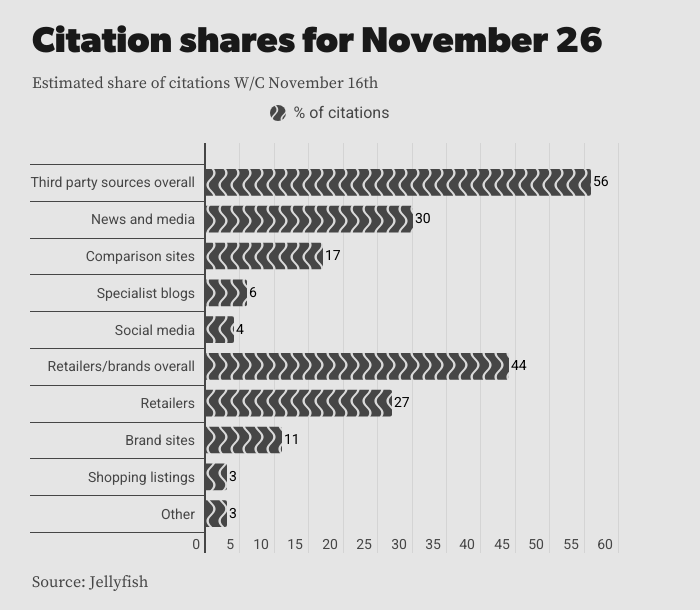
A Jellyfish study of citation sources, using U.K. Black Friday-related prompts the week beginning Nov. 16, found third-party sources leading the pack. That means blogs, news articles and comparison sites counted for more than brands’ own websites or retail listings in influencing AI chatbot representations of a brand or a product.
This is borne out by other studies. In an analysis run for an unnamed client, PMG found a brand’s website supplied just 24 out of 203 links cited in AI answers recommending the client’s products. Only 22 went directly to its homepage.
Some retailers are gaining share of citations
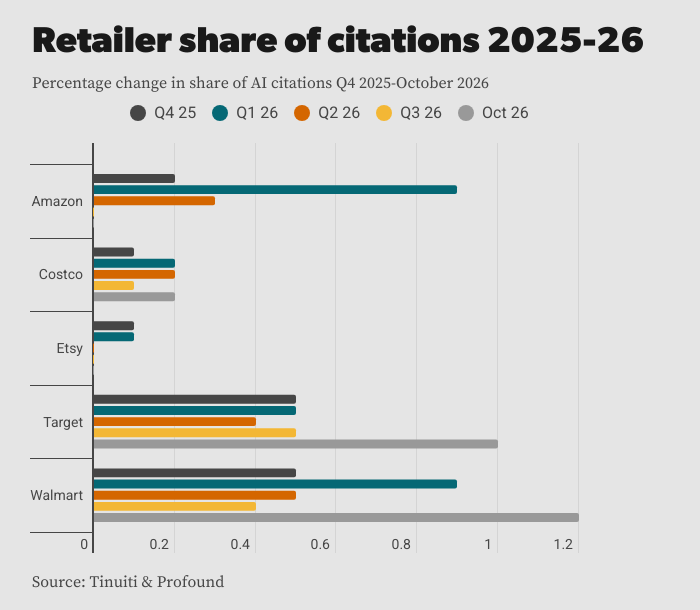
Even if they only account for a minority of citations, brands’ own sites, platforms and retailer listings are areas that an advertiser can control. Zooming in, not all retail platforms are equal, either. Amazon, Costco and Etsy’s sites have lost share of citations in recent quarters, while Target and Walmart have gained in recent months, according to data from Tinuiti and Profound.
AI search spending is rising
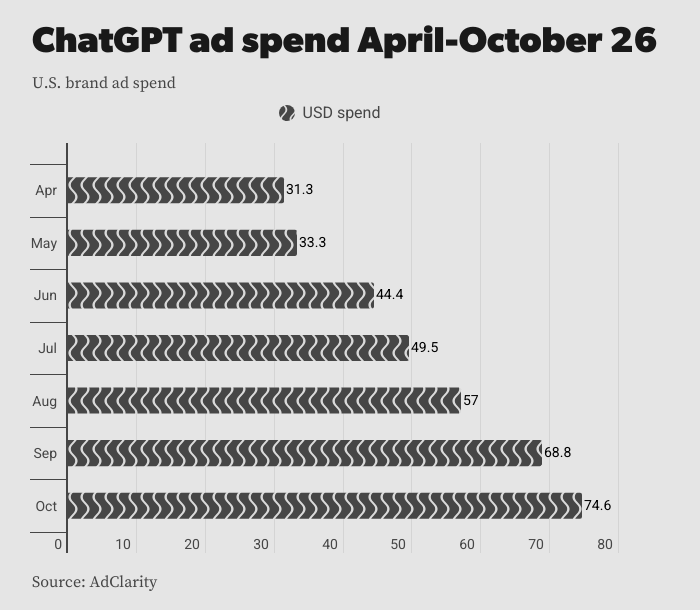
The hope that they might influence shoppers using AI tools for product discovery has been one of the motivations driving marketing dollars toward ChatGPT. Ad spend has risen month-on-month, according to estimates by AdClarity, which estimated total spend on the platform to have reached $116.6 million in October, with U.S. brands accounting for 64%. (The above chart is in millions of dollars.)
Issues with measurability and evidence that ChatGPT ads lead to greater conversions, however, may hold brands back from accelerating that spend as much as OpenAI execs would like.
…but audiences aren’t using AI equally
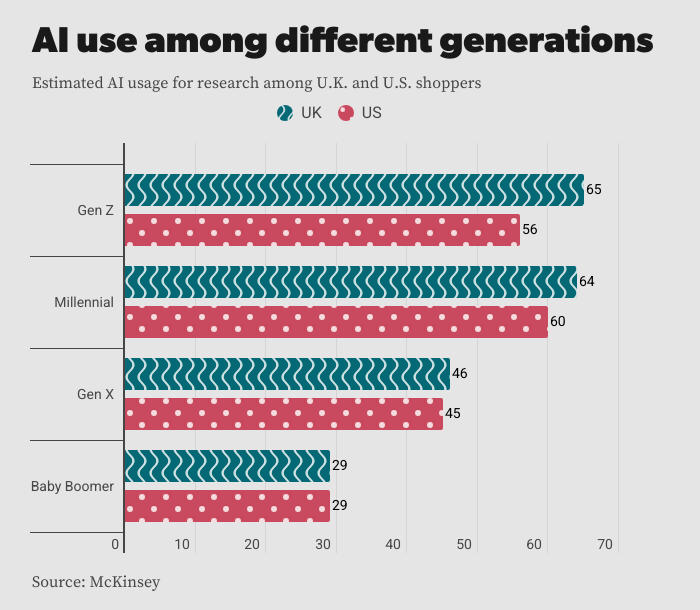
According to Bain, two-thirds of consumers use AI tools for general research, while 42% specifically use them to research products. But there are variations across generations.
The McKinsey Agentic Commerce Consumer Survey, June 2026, surveyed 5,800 shoppers who’s used AI chatbots or search tools for a shopping task in the last three months. It found middle-aged and younger consumers are embracing the tech while older shoppers (who still hold plenty of disposable income) aren’t. It’s an important distinction for brands targeting consumers in specific stages of their lives.


More in Marketing

Digiday+ Research: A-Frame Brands, Ritual and other brands prioritize new customer acquisition this holiday season
As Black Friday Cyber Monday rapidly approaches, brands are most focused on acquiring new customers this holiday season.
Walmart is letting Meta’s Muse shop its shelves — but on its own terms
Walmart is allowing access to Meta’s Muse through a gateway that lets it control how AI agents browse, shop and make purchases.

Amazon is buying ChatGPT ads while blocking OpenAI crawlers
Amazon is paying to reach ChatGPT shoppers while the chatbot is finding other ways to surface its products and deals.