Join us Dec. 1-3 in Nashville for the Digiday Programmatic Marketing Summit
Digiday+ Research: A-Frame Brands, Ritual and other brands prioritize new customer acquisition this holiday season
This research is based on unique data collected from our proprietary audience of publisher, agency, brand and tech insiders. It’s available to Digiday+ members. More from the series →
As Black Friday and Cyber Monday rapidly approaches, brands are most focused on acquiring new customers this holiday season. They’re also eager to turn those seasonal shoppers into repeat buyers.
Fifty-nine percent of brand and retailer professionals said that new customers are the primary audience for their 2026 holiday advertising. That’s down just one percentage point from the 60% of marketers who said the same last year, indicating that customer targeting trends have not shifted significantly.
Less than half of survey respondents (41%) said that existing customers are the main audience for their holiday marketing, up one percentage point from 40% in 2025.
The holiday season’s influx of shoppers gives brands an annual opportunity to attract new customers and to build lasting relationships beyond the initial purchase.
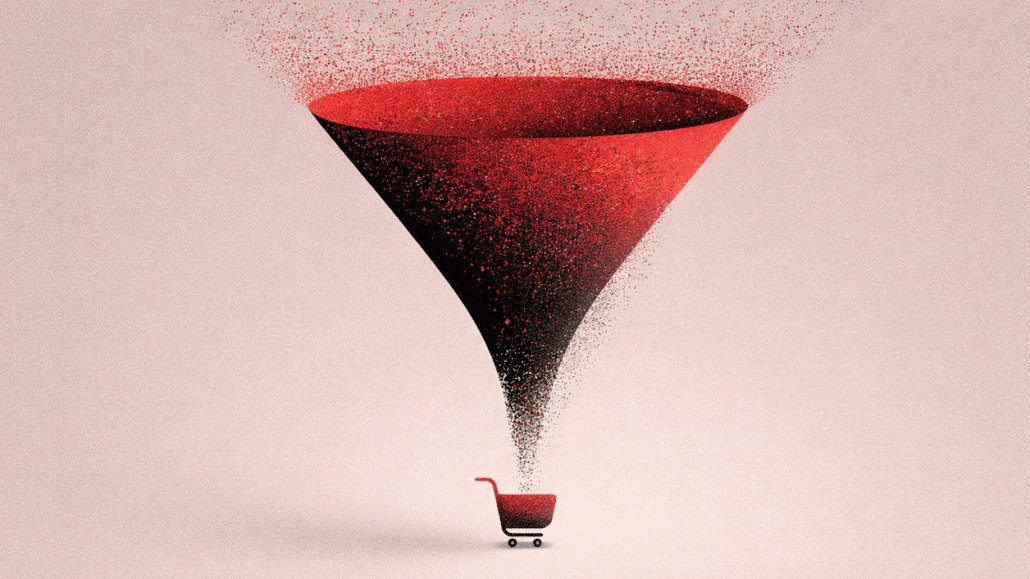
Ari Bloom, founder and CEO of brand incubator A-Frame Brands, estimates that brands see a 20% to 30% increase in new customers as a percentage of total during the holiday season, as consumers look to discover products and brands. “It is a time period where you can acquire a lot of new customers… when we naturally see new customers come into the holiday funnel,” Bloom said.
He also expects AI to play a central role in 2026 holiday marketing, changing how consumers find and buy products. “AI is probably going to become one of the most important funnels for new customers because, instead of using old habits to discover existing brands, there’s a whole other ‘person’ shopping for them,” Bloom said. “Just as we see people relying more on AI agents, you’re going to see more new brand exploration and customer acquisition from the brand side.”
But acquiring new customers is only part of the equation. Brands also need to give existing customers a reason to return.
Laura Brodie, chief growth officer at supplement company Ritual, said brands can encourage repeat purchases by offering exclusive perks, seasonal products and other incentives. “Being able to pull people back who have shopped before by creating a compelling gift with purchase, seasonal drop or something similar is one way,” Brodie said. “If you don’t have the budget to support units, having something that feels intentional for an existing customer base is another.”
Brands with similar consumer bases should also consider partnering on gift-with-purchase offers, according to Brodie. “The cost of acquisition is high during the holidays, so being able to tap an existing audience can be really cost-effective,” she said. “Similar-sized brands can create something that feels compelling [to consumers] and benefits both brands — potentially an offer swap. We’ve had success partnering with brands like Osea on a swap gift with purchases.”


More in Marketing

In Graphic Detail: How shoppers are adopting AI for product research ahead of Black Friday
Product discovery habits are changing, leaving marketers unsure how to pivot ahead of the biggest sales period of the year.
Walmart is letting Meta’s Muse shop its shelves — but on its own terms
Walmart is allowing access to Meta’s Muse through a gateway that lets it control how AI agents browse, shop and make purchases.
Amazon is buying ChatGPT ads while blocking OpenAI crawlers
Amazon is paying to reach ChatGPT shoppers while the chatbot is finding other ways to surface its products and deals.