Join us Dec. 1-3 in Nashville for the Digiday Programmatic Marketing Summit

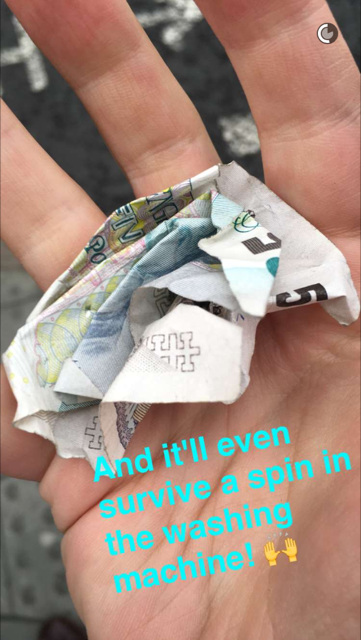
BBC News launched a Snapchat Story today, banking off a news story that doesn’t air until tomorrow. Both stories are tied to the an announcement that the country will be getting a new, high-tech £5 banknote later this year.
On TV and online, the BBC will play the new banknote news straight. On Snapchat today, however, the BBC takes a more playful approach, examining how money has changed over the years, including a whistle stop tour of the British Museum’s collection on ancient currency.
“The idea with all the Stories, while reaching audiences on new platforms, is to take them on a journey,” said Robb Stevenson, BBC News’ business and economics planning editor. With Snapchat, where the BBC has been active for two months, the broadcaster can reach new audiences and tackle the news in a quick, low-frictions way.
“We can move rapidly,” he said.
This is the third Snapchat Story to come out of the BBC News business unit. Previous Stories have included an interview with EasyJet CEO Carolyn McCall, and a day in the life of BBC News’ economics editor Kamal Ahmed on budget day, “probably the busiest day of his year.”
Despite the spontaneity of each snap, Stevenson has learned to dedicate resources to it: It is the entire job of the network’s Snapchat editor to produce content for the platform, whereas before the creation of snaps would have been only one part of a producer’s broader mandate of interviewing and producing other films for the BBC News use.
Publishers in the platform world face the challenge of balancing the desire to innovate on different social media platforms with the desire to keep the homepage a destination loyal audiences still find valuable. The BBC doesn’t shy away from experimenting on new platforms — it’s on WhatsApp, Viber and Kik — but keeping that balance is tough, said BBC News’ social media editor Mark Frankel. “We need to be alive and open, need be innovating and experimenting.”
While it’s still early, what Frankel said he has learned is that less is more. “You should tell a Story in six snaps rather than a dozen if you can,” said Frankel.
The BBC is also using Snapchat to experiment with vertical videos so it can eventually bring the format back onto its own platforms.
Frankel said they are not producing them every day, but would like to get to a point where they do every week. “The objective isn’t to offer a seamless Snapchat experience,” he said. “We’re not resourced for that. It’s to think innovatively about relevant stories.”
One of the BBC’s most successful cases was covering the Iowa caucus, partly because Snapchat featured it. But Frankel keeps quiet about the numbers. Stories have also been used to promote to other channels, for instance the final snap from a Story on the migrant crisis urged users to watch the upcoming Panorama program on the same topic.
There are no plans for the BBC to be on Discover, to sponsor a channel, or to launch a pop-up channel like the Huffington Post did with its sleep-themed Recharge yesterday. Although there are plans to use Snapchat widely around the EU referendum, taking place June 23.


More in Media

Creators say it’s difficult to make money from news — with platform rules and brand guidelines
With more people getting news from creators than traditional media, those creators are still trying to build sustainable businesses.

Why CNN International is building for agentic ad market that barely exists yet
CNN International is still chasing its first agent-sold dollar by Q1.

Media Briefing: The transatlantic push to rein in stealth bots is gathering pace
U.S. and U.K. publishers are pushing for laws to crack down on stealth AI crawlers as bot scraping surges and demands for transparency grow.