Omnicom Media’s Adamski: clients are the only ones not complaining about principal media
Keep up to date with Digiday’s annual coverage of the Consumer Electronics Show (CES) in Las Vegas. More from the series →
A month after Omnicom closed its $13 billion acquisition of Interpublic Group, the holding company is hard at work getting the assets to play nicely with each other — and beat what seem to be less optimistic expectations from Wall Street on its growth potential in 2026.
It’s safe to say the healthiest share of growth is expected out of Omnicom Media, which now encompasses six agency brands — its own PHD, OMD and Hearts & Science, as well as three IPG shops: UM, Initiative and Mediahub. Also included in Omnicom Media is IPG’s big data acquisition from 2018, Acxiom, which is already being put to use across the media assets.
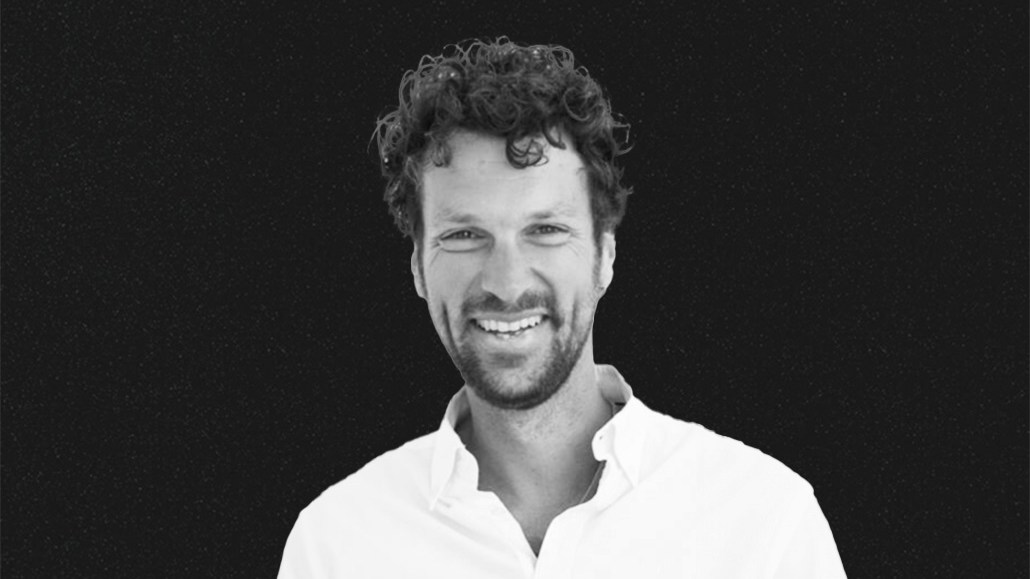
Florian Adamski, who has operated as global CEO of Omnicom Media since 2021, is now charged with making all this work. A longtime Omnicom employee who came up the ranks in his native Germany, “Flo” Adamski has pursued a strategy of creating agency brands as “platforms” backed and underpinned by parent-company resources. With Acxiom now under his control, he’s got even more to work with, but is also going to be looked upon to maintain consistent growth among those brands.
Digiday spoke with Adamski while he was at CES this week, to find out how he will maintain that growth trajectory. The following conversation has been edited for space and clarity.
Why keep six different media agency brands in an era when clients seem to be looking for more simplicity from holding companies.
Over the past few years, we deployed a platformed approach across our agencies — we introduced that back in 2022 I believe. I think we’ve been fairly successful with it, because what it gives clients is two things at once. Number one, they get access to a dedicated brand and brand solution that includes the talent, the leadership that is so important in this day and age related to service solutions, and at the same time, they have full reassurance that the infrastructure, the capabilities, the scale and the clout of the media holding company is in full support of that agency. So they’re not questioning whether they live on an island — they know they’re fully connected to the core of the engine through the people that they love.
We felt that this was a model that A, was highly successful in the past, and B, would be quite a differentiator versus what our competitors are doing.
Does size of client have something to do with the choice?
There is not a single client that we have, and will have in the future, that is not interested in the scale that is a material advantage. But the question is, how do we organize and activate it? And that can sometimes be through a very large entity, such as Initiative or OMD. But there are instances where clients are very specific about wanting access to a certain team and certain talent, and an agency that has an ethos of progressive differentiation – all while being part of a holding company. Again, it’s the platforming of it that makes the difference. Because we’re not pitching these concepts against each other. We’re not sending Mediahub in a pitch against OMD and telling them, well, the one gives you this, and the other ones give you that.
I’ve heard that there has been an exercise within Omnicom to examine loss-leader clients and maybe start resigning them. Can you comment on that?
I’m a little taken aback … I think there were a few ethical thresholds broken over the past six to nine months, trying to take advantage of fabricated news, rumors that were self made [by our competitors]. They knew they would have this one moment right before and after the close [of the acquisition], there was going to be a moment of uncertainty, because the marketplace has not been fully briefed. That is now going away. And I do believe that 2026 is going to be a highly productive year for us.
I can assure you, there is no specific exercise underway. Pre- and post-merger, we constantly monitor and track our profitability on client businesses and across our business. But that should hopefully be the norm for everybody, not just us.
Let me be clear: an agency client relationship needs to stand on healthy economic feet. That is an interest that not only an agency, any agency, would have, but frankly every single client also has, because they understand that access to talent, technology and investment doesn’t come for free — it has value.
Undervaluing and throwing the value of these things under the bus is in no one’s best interest. It can work for a short period of time. Over time, what I see happening across the industry is that some of these pitches are being solely just decided through commercial considerations. These things typically don’t last because they’re built on quicksand. You can show savings in year one to your board. But in year two, that saving has cycled through, and you realize that what you thought you were being promised might not come through at the same rate.
Which region holds the most potential to achieve growth, and which is the region needs the most TLC from you?
I think 2026, generally speaking, is going to be a robust year, broadly speaking for the ad industry, right? We see different predictions out there, but generally speaking, there is a sentiment that there is going to be a higher single digit growth across the world. And then if you break it down by region, to your question, that sentiment holds true for every single region.
We believe that Latin America will continue to grow at a healthy clip for us — that also is true for Asia Pacific, including China, which also has seen significant growth over the past years. But that doesn’t mean to say anything about any softness in our European or North American business.
Finally, do you have a position on principal media — which can be used as a means to finding profit for Omnicom?
I feel that the premise of that debate starts in a wrong place. You also have to realize where some of that commentary comes from, and the sometimes vested interests that people have to to come out with these types of statements. So there is a lot of noise. But I’m not seeing that noise coming from clients.
Because clients want two things: value and certainty. That’s not just in terms of reducing our media buying rates, but it is in creating business outcomes. You find the ability to provide value and certainty in different layers of the marketplace. And that is what I said at the beginning of this conversation — the scale, per se, is a material advantage, but only if we organize and activate it in the right way, and that means finding value in different pockets of the marketplace.


More in Media Buying
Genius Sports opens up real-time live sports targeting to brands
The live sports data firm is working with Publicis and a laundry list of SSPs ahead of major sports tentpoles like the NBA Finals and World Cup.

Future of Marketing Briefing: A cynic’s guide to the most transparent dispute in programmatic history
No, the industry doesn’t need another hot take on The Trade Desk’s standoff with the agency holdcos. I’m going to give you one anyway.

‘Be an engineer to understand the engine’: Why consultant Nick Manning thinks principal media is anti-marketer
An expert at the heart of Foster-WPP case argues principal-based media tensions could hold British group’s recovery back.