Join us Dec. 1-3 in Nashville for the Digiday Programmatic Marketing Summit
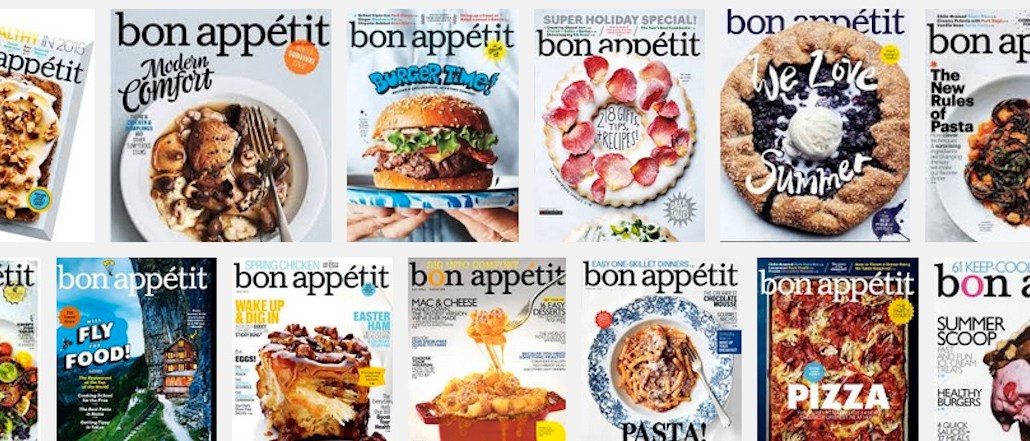
Bon Appétit’s readers like their tomatoes room-temperature and their editorial pure.
The Condé Nast glossy is usually tantalizing readers with mouth-watering recipes. But this month it had readers gagging when it covered its August issue with a Samsung ad. It was the first execution of 23 Stories, the native ad platform that Condé Nast, controversially, said would permit advertisers to work directly with the editorial staff of its famous magazines.
For the campaign, the magazine ran a Samsung-branded cover on top of the real cover featuring a refrigerator. The Samsung cover opens to expose the inside of a stocked fridge and tips from Bon Appétit’s editors.
The reaction was, well, not positive. Bon Appétit took the unusual step of posting an Instagram video detailing how to use its magazine cover. That’s quite possibly a first, and probably not a great sign.
Needless to say, readers were not mollified by the well-intentioned effort to clear up confusion as to how to use the magazine. To read the reaction on social media, you’d have thought BonAppétit was suggesting adding peas to guacamole. On social media, where comments are usually confined to recipes, reader backlash was swift and unequivocal.
Really @bonappetit? A Samsung ad on my issue? Almost threw it out before realizing what it was. NEVER do this again! pic.twitter.com/bGvPtCMSS2
— Jennifer W. (@jennbird75) July 29, 2015
That’s an ad on the front cover of @bonappetit magazine! The FRONT cover … That’s your best idea, guys? pic.twitter.com/huDPAiqx6b — Chet Van Wert (@cvanwert) July 28, 2015
Didn’t realize that @bonappetit was now Samsung Monthly. pic.twitter.com/YUr4uuuWZ0
— Rebecca Flint Marx (@EdibleComplex) July 27, 2015
Similar outrage was expressed on Bon App’s Instagram account and Facebook page.
Several readers did made the very valid point that included in the Samsung fridge were tomatoes (heirloom, no less), which, as any foodie worth his Himalyan salt knows, is the wrong way to store the fruit. Bon Appétit for its part stayed on the sidelines of the discussion.
This is all pretty silly, though, considering this is a food magazine, after all — and the very same one that once permitted an advertiser “takeover” of the masthead (prompting a finger-wagging from Condé Nast boss S.I. Newhouse himself). Bon Appétit has also aggressively sought new sources of revenue with extensions like branded pots and pans and a Good Housekeeping-like seal of approval. It also should be noted that the Facebook and Instagram likes far outweighed the number of negative comments. A Condé Nast spokesperson emailed that 97 percent of the social feedback was positive and the integration was “performing well.”
On the other hand, as publishers increasingly push such collaborations like native ads that masquerade as editorial on their readers (all the while claiming to respect them), the Bon Appétit backlash shows that foodies are not a group to be messed with. Just ask the Times.
Image courtesy of Bon Appétit.


More in Media

Creators say it’s difficult to make money from news — with platform rules and brand guidelines
With more people getting news from creators than traditional media, those creators are still trying to build sustainable businesses.

Why CNN International is building for agentic ad market that barely exists yet
CNN International is still chasing its first agent-sold dollar by Q1.

Media Briefing: The transatlantic push to rein in stealth bots is gathering pace
U.S. and U.K. publishers are pushing for laws to crack down on stealth AI crawlers as bot scraping surges and demands for transparency grow.