Join us Oct. 26-28 in Newport Beach for the Digiday Media Buying Summit
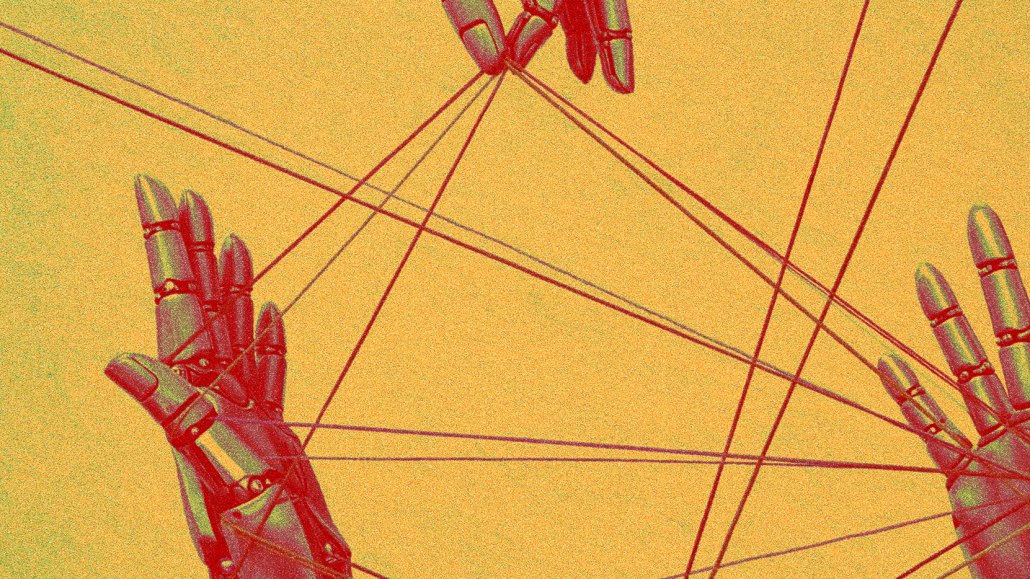
As generative AI floods the web with synthetic content, the creator economy was expected to offer something different: human-led, authentic alternatives.
While there are wholly AI-generated influencers, and a report from Wondercraft said 80 percent of creators were using it at some point in their workflow, many believed brands would prefer the raw, human realness that creators bring to social media platforms and that the public’s general disdain for content made wholly by AI meant some influencers would avoid its usage, or potentially choose to disclose it.
Those were the vibes at the end of 2025. But nearly five months into 2026 it’s clear that generative AI has embedded itself into creators’ workflows and processes, and, in some cases, their content — for better and worse.
Here’s a look at the current state of generative AI in the creator economy.
Platforms are cracking down on AI generated content and adding tools to protect creators
Leaders at platforms like YouTube and Instagram have opined on how to properly identify AI-generated content, and how creators’ human touch will remain ever-important. YouTube’s Neil Mohan promised the platform would “reduce the spread of low quality AI content” earlier this year. Just days after Mohan’s promise, 16 of the top 100 most subscribed slop channels were removed from the platform entirely, as reported by online video editing platform Kapwing.
Recently, YouTube opened up its AI deepfake detection tool to all of Hollywood, as reported by The Hollywood Reporter. Those tools require celebrities to upload their likeness and will then flag content that potentially utilizes it without their consent, like AI-generated fan movies that recast characters, or fake trailers for upcoming films.
A YouTube spokesperson confirmed to Digiday that the tool is available for all creators in the YouTube Partner Program, and was launched for politicians and journalists, as well.
“Our goal is to build AI technology that empowers human creativity responsibly, and that includes providing tools that help protect creators and their businesses,” they said.
Some creators are using AI in place of creative teams
There are tons of generative tools that can help creators ideate on and even create content, from ChatGPT and Claude to Adobe Firefly.
RHEI unveiled its AI platform, Made, last February, as another option for creators looking for creative support through AI agents. Shahrzad Rafati, founder and CEO of RHEI, calls the program a “creative operating system.”
Made gives subscribers access to a handful of AI agents (the more you pay, the more you get), including creative director Milo, producer Remy, community manager Zara, and distributor Lila, all personalized to the creator’s DNA, according to Rafati.
Rafati says RHEI first used Made for enterprise accounts (Sony Pictures, Lionsgate, Universal Pictures) as a proof of concept before opening it up to creators. RHEI didn’t provide details, but said they’ve had “incredible success” with enterprise clients, and are one of the largest players helping them launch digital channels, fill them with content, and drive engagement to them.
She believes 90 percent of content will be AI-generated, or human-generated assisted with AI in the next year or so, and that tools like Made are meant to “get creators to focus on becoming better content creators.”
RHEI declined to specify how many creators are using the program, saying only it was in the “thousands.”
Creators are using AI to filter out prospective partnerships
Creator “super-app” POP.STORE recently launched its AI ECHO ME program, an agentic commerce platform meant to help creators identify revenue opportunities, generate content, and engage with fans.
CEO Gautam Goswami told Digiday it’s meant to replace several disparate agentic tools that creators may be using, can connect to a social media account, go through their DMs, and eventually emails, and identify if the message is coming from a brand or a creator. It will identify their size, and if the message has a clear monetary proposition in it.
“Creators are basically chickens with their heads cut off running around all day long, and within that craziness, trying to come up with creative ideas and shoot great content and always worried that they may get lost in the algorithm,” Goswami said, alleging that creators have told him that. “80 percent of DMs go unanswered.”
In his view, what separates the top tier creators from everyone else is the strength of their teams. Goswami proposes that ECHO ME be that team, especially since the tool can also send messages as the creator (more on that later) and act as a selling agent, monitoring comments and likes on social media to rank followers and sending offers from the POP.STORE to those most likely to convert.
There’s a cost ($50/month for DM monitoring and around 500 AI responses, with higher tiers allowing for more responses, a format not unlike generative AI tools like ChatGPT and Claude).
Prior to its official March 18 launch, it had 15,000 creators signed up across lifestyle, fitness, real estate, and food verticals. Approximately 20,000 creators use ECHO ME as of April 30, according to a spokesperson.
Some are even using generative AI to talk to fans
Business content creator Konstantinos Synodinos told Digiday he was hesitant at first to start using ECHO ME’s chat features. “Your voice is such a personal asset and it’s so difficult to be replicated,” he said. “But once I saw how accurately it represents me, it stopped feeling like AI and started feeling like an extension of myself.”
Synodinos told Digiday he can now have thousands of discussions in parallel across Instagram, drastically increasing his engagement with followers. It’s unclear if they’re aware he’s using generative AI to chat with them.
Either way, he’s adamant that other creators use tools like this if they’re serious about scaling. “We’re entering a phase where the creators who win won’t just have the most views, but the best systems,” Synodinos said. “Combining personal brand, owned audience, and AI is the new unfair advantage.”
Brands might start using AI influencers to mitigate risk
In an era where collaborations can end overnight thanks to triggered morality clauses, some believe that AI-generated influencers could offer brands riskless partnership opportunities – or at least ones with more control. At least that’s what Kseniia Petrina, co-founder and CEO of influencer marketing company Holy Marketing, believes could happen.
Petrina told Digiday there’s a curiosity amongst brands when it comes to AI-generated influencers, and that she’s seen some experimenting with them as a test, but no real proof that they outperform human creators in campaigns.
And then there’s the question of trust. “Brand safety and audience trust are different questions. A brand may feel safer using an AI creator because there is less risk of a creator saying something offensive or going off message. But that does not automatically mean the audience will trust it,” she said.
And the biggest risk is alienating your potential customers, who feel betrayed by synthetic personas.
“Creator marketing works because the audience believes there is a real person making a real judgement,” Petrina said.
Instead of brands leaning on AI influencers as a method of control, Petrina believes they should build brand-owned, human-focused creator systems, and use AI to support the process through “research, scripting, trend analysis, reporting, and production support.”
But who owns them?
AI-generated influencers may avoid messy scandals and slip-ups, but it’s still unclear who owns the rights to them. Victoria Schwartz, professor at Pepperdine Caruso School of Law and expert in intellectual property rights, told Digiday that it’s a legally murky area.
“Normally, if we were to take the image of an actual influencer and reproduce it, they might have a right of publicity,” Schwartz said. “They could say ‘stop using my stuff.’ […] But what if the image you’re seeing isn’t a real person’s face?”
Schwartz wrote a paper that breaks down publicity rights state-by-state, highlighting which states might have a right of publicity claim even for AI-generated influencers. Ultimately, however, the situation is far too uncertain.
“They haven’t really thought about this,” Schwartz said of those creating AI influencers. “None of this has been litigated…there’s a lot of thorny questions.”
This could pose potential problems in the future, especially if more brands turn to AI influencers to promote their products.
For all its benefits for creators, AI still has its risks
For all of the purported benefits to workflow and scalability, it’s clear that there are still risks and kinks to the creator economy adopting generative AI wholesale.
Take mega creator Khaby Lame, who signed a deal this January with a Hong Kong-based printing firm giving them the rights to his AI-generated “twin” that was reportedly worth $975 million. It seemed like a wildly successful deal for the TikTok star – except it’s looking increasingly sketchy based on reports from The Wrap and elsewhere.
The printing firm’s stock has collapsed 90% since the deal, and major brokerages have restricted trading on it, and Lame has removed the stock ticker from his social media bios, according to The Wrap.
Then there’s the army of AI-generated influencers that may be influencing American politics, as reported by the New York Times. The more stories break showcasing how AI-generated influencers are being used to manipulate people, the less the general public will trust AI.
And of course, one of the biggest issues facing creators using generative AI is how it can reflect their tastes – or lack thereof. Creators and marketers and tech leaders who believe generative AI should be a part of workflows all stress that it’s not a replacement for humanity and personal taste – and that when it’s used in place of creativity, it’s glaringly obvious.
“There’s a category that’s instantly recognizable – the uncanny lighting, the generic composition, the lack of any real point of view. No intention behind it. Audiences feel it even when they can’t name it,” Octavio Maron, chief creative partner of creative innovation at Dentsu said.
“But when AI is in service of a genuine creative vision – when there’s taste, judgment, and a human perspective driving the decisions – it stops being visible. The work just lands. So the question isn’t really whether AI content is detectable. It’s whether there’s someone behind it worth listening to.”


More in Media
Ad industry tallies early losses from Apple’s Safari tracking block
A week after Apple’s Safari block, the ad industry is still waiting for the other shoe to drop.
Welcome to Creator University: Inside the colleges building creator economy programs
As more young folks seek to enter the creator economy, universities are offering classes covering every layer of the still-growing ecosystem.
For some publishers, agentic advertising is still a question of ROI
Despite the hype around agentic media buying, some publishers remain skeptical of its potential to deliver meaningful revenue.