Join us Oct. 26-28 in Newport Beach for the Digiday Media Buying Summit
The BBC wants to give its digital audience a taste of the future, with Taster.
A six-person audience-facing research and development unit, Taster is the BBC’s home for new ideas and experiments, which it builds against themes such as interactive video, personalization and even virtual reality.
The effort comes as the BBC, like most legacy news organizations, is trying to catch up to the changing viewing habits of young people. While adults aged 35 to 44 say they spend 67 percent of their viewing time watching TV, that number drops to 50 percent for people aged 16 to 24, according to numbers from Ofcom. That gap will only increase as time goes on.
“When you’re a nationally funded broadcaster, it’s jarring to think that a percentage of the population is no longer coming to you for content,” said BBC digital creative director Will Saunders, who heads up Taster. “You need to work out how you make yourself relevant.”
For BBC Taster, increasing relevance means experimenting with new ways of repackaging its existing content. In one of its first projects, Taster turned a television interview between “Girls” creator Lena Dunham and “Absolutely Fabulous” creator Jennifer Saunders into an interactive video that lets users select which portions of the conversation they want to hear (options include “Kicking Off” and “Get Naked”). Interactivity is also core to “Backstage Pass,” which follows around rap group Run The Jewels during a 2014 London concert, and with“Kitchen Bitch!” a choose-your-own-adventure-like cooking show that lets viewers direct how the recipe unfolds.
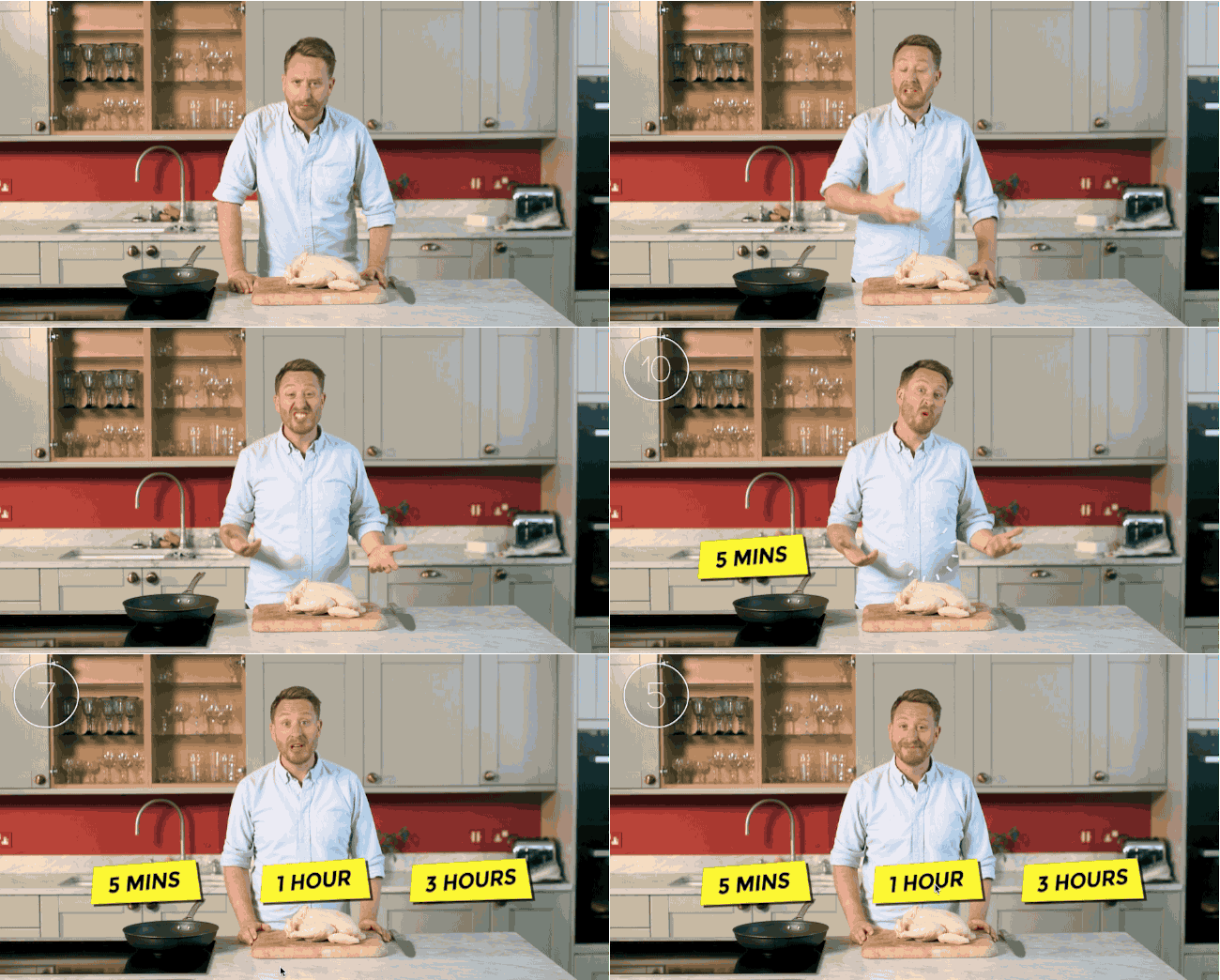
Reader feedback has been a core part of Taster’s efforts so far. The site encourages visitors to both rate and share its experiments in hopes of learning what resonates the most.
“We don’t know where some of this stuff is going, but as a big content-creation company, we need to work out what these different technologies let us do. And we need to work it out in front of an audience,” Saunders said.
Increasing relevance with young people also means more personalization. In January, BBC released “My Story,” an online tool that uses readers’ Facebook profile details to tie their lives with news segments from BBC’s archives. BBC said the goal was to make world news more relevant to people who aren’t consuming BBC News content.
BBC has also pushed more personalization tech with BBC Shuffle, which learns users’ viewing habits to present them with more relevant videos, and a January update to the BBC News app, which lets users create their own personalized news feed. It has introduced personalization tech with its iPlayer video-on-demand service, which also offers personalized channels.
“If a lot our audience is getting their news through social timelines, we have have to figure out how personalization helps raise their awareness of things that might be of value to them,” Saunders said.


More in Media
Ad industry tallies early losses from Apple’s Safari tracking block
A week after Apple’s Safari block, the ad industry is still waiting for the other shoe to drop.

Welcome to Creator University: Inside the colleges building creator economy programs
As more young folks seek to enter the creator economy, universities are offering classes covering every layer of the still-growing ecosystem.
For some publishers, agentic advertising is still a question of ROI
Despite the hype around agentic media buying, some publishers remain skeptical of its potential to deliver meaningful revenue.