Join us Sept. 14-16 in Miami to connect with top publishing leaders
This research is based on unique data collected from our proprietary audience of publisher, agency, brand and tech insiders. It’s available to Digiday+ members. More from the series →
Publishers are getting paid late due to the coronavirus crisis, the ensuing economic recession and the generally uncertain business climate.
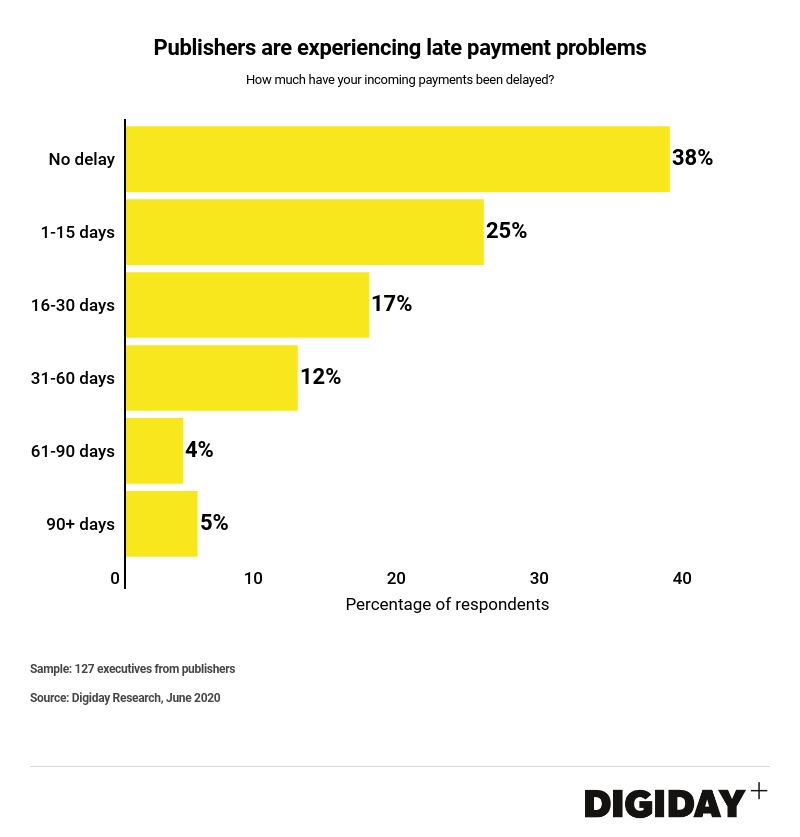
A new Digiday survey found that for a quarter of publishers, payments are delayed under two weeks, while for 17%, delays are between two weeks and 30 days. For 20% of publishers, delays stretch past 30 days.
The Digiday survey also found that for 44% of publishers, late payments had created a problem for their business.
The problem isn’t a new one. Publishers (and really, many on the sell side, from freelancers to others) have complained about delayed payments and lengthening terms for years. But the current situation has made it worse. As we reported previously, payment delays have increased 20% for both publishers and media agencies.
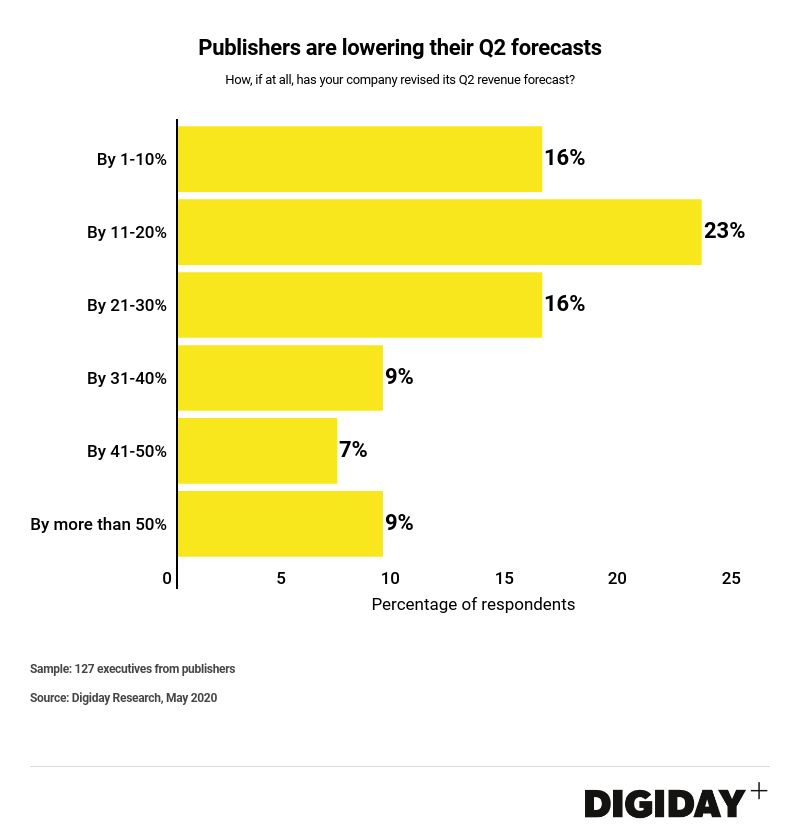
Longer payment windows or late terms are a case of everyone trying to hold on to cash for as long as possible. As the economic situation continues to worsen, many are hoping that keeping cash longer will offer some relief. But the end isn’t exactly near. Publishers expect the second quarter to net out worse than the first, where half of publishers surveyed missed forecasts. Publishers are bracing themselves for a worse second-quarter: Only 2% have raised forecasts, 17% have kept them flat and the vast majority — 80% — have lowered forecasts.
The average publisher expects that the company’s revenue will return to pre-coronavirus levels in the first half of 2021. About 6% of publishers believe that the revenue will be permanently impacted.


More in Media

As AI automates everything, The Atlantic is building games by hand
The Atlantic is bucking the AI automation trend with a new trivia game handcrafted by “Jeopardy!” champion and senior editor Drew Goins.
USA Fencing relies on creators to attract new fans ahead of the 2028 Olympics
Creators can bring new fans to niche sports in droves, and USA Fencing wants to tap into their cultural power.

An anatomy of the creator brand trip’s midlife crisis
The brand trip as we know it may be dead, but a newer, more genuine and engaging format is rising from its ashes.