Here’s what else a $8M, 30-second Super Bowl budget can purchase in 2026
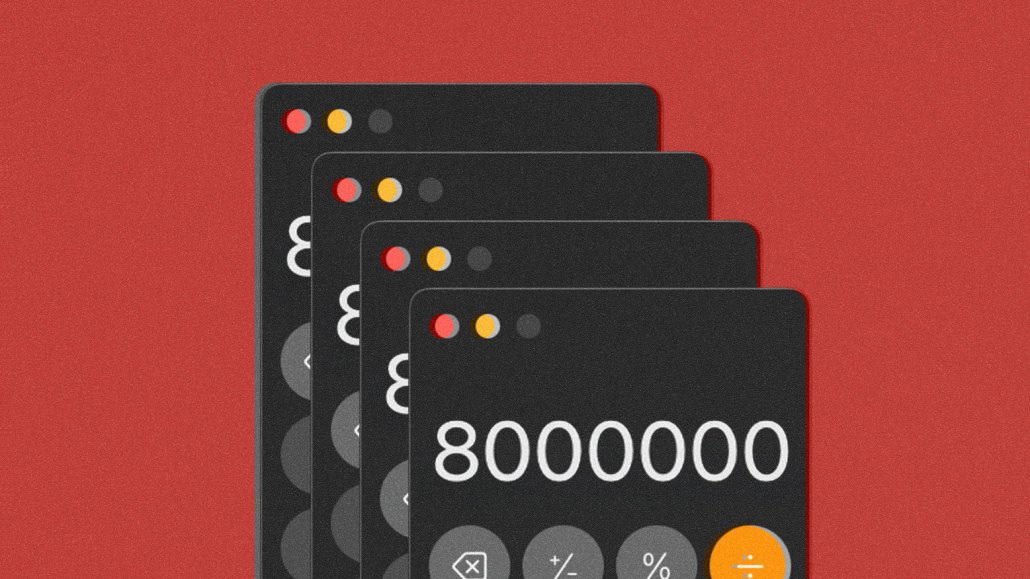
The Super Bowl — arguably the industry’s most coveted ad opportunity — is back this Sunday. Already, advertisers have shelled out up to $8 million for a 30-second spot.
Notably this year, marketers are also grappling with plans to spend around the Winter Olympics and World Cup. Ad prices continue to climb, with brands like Instacart, Kellogg’s Raisin Bran and Hellmann’s expected to broadcast spots in the Big Game. For others, like HexClad and Avocados From Mexico, those Super Bowl-related dollars are being spent off the broadcast.
With the broadcast appearing on NBC, Peacock, Hulu, YouTube TV, DirecTV, and NFL+, and other major cultural moments waiting in the wings, some may question whether an $8 million opportunity to get in front of 127 million viewers simultaneously is worth it.
The Super Bowl may be one of the last monocultural moments, but there are other ways to spend that money. Here’s Digiday’s annual look at what $8 million can get a media buyer elsewhere. (See our previous tallies here, here, here and here.)
267 million Google search plus AI Overviews impressions
AI has upended the search landscape. Between chatbots like OpenAI’s ChatGPT and Google’s AI Overviews — AI-generative summaries that sit above the usual search results — advertisers have spent the last two years scrambling to tweak their SEO strategies.
Google introduced ads to AI Overviews in 2024, before bringing ads to AI Mode — its AI chatbot that appears on search pages (not to be confused with Gemini) — last year. Not to be outdone, OpenAI last month announced plans for its own ad product in ChatGPT responses with rollout plans starting this month. Early reports estimate initial ads will run for $60 for every 1,000 views an ad gets.
As for Google search and AI Overviews, CPMs generally range from $15 to $30, according to a media buyer who shared ad costs anonymously. Meaning, for the cost of an $8 million Super Bowl spot, an advertiser could afford up to 267 million impressions on Google’s search and AI Overviews.
“Super Bowl ads capture people eating nachos. Search ads capture people pulling out their credit cards,” Jenny Yeend, executive director of media planning and strategy at independent ad agency 22squared, said in an email to Digiday.
780 micro influencers
Influencers and creators have moved upstream. The creator economy is getting more sophisticated now that brands have the infrastructure and data to strike more strategic deals.
Danielle Wiley, CEO and founder of influencer marketing shop Sway Group, told Digiday that for $8 million, a brand could run a campaign with 780 micro influencers (between 10,000 and 100,000 followers on a social media platform). On the opposite end of that, a brand could partner with 52 elite macro influencers (more than 500,000 social media followers).
Notably, influencers and creators have been increasingly incorporated into Super Bowl campaigns as well as in-game commercials. For example, MrBeast is partnering with Salesforce for a Super Bowl commercial this year. Meanwhile, Tequila Don Julio has tapped comedian Druski for a social campaign leading up to Super Bowl Sunday.
800 million TikTok impressions
Under new management, TikTok has a more certain future in the U.S. However, changes to its privacy policy and concerns about the company censoring politically sensitive content has left users leery.
Still, some advertisers like Vita Coco are staying put, opting to weather out the uncertainty to maintain its audience and cultural muscle memory, as Digiday reports. As it stands, CPMs range from $5 to $10, according to the anonymous media buyer. For $8 million, a media buyer could get anywhere from 1.6 billion to 800 million TikTok impressions.
In comparison, Meta’s Reels CPMs range from $7 to $12, making it a slightly more expensive short form video alternative to TikTok. With those figures, an advertiser could get between 1.1 billion to 667 million impressions on Reels.
1.6 billion impressions in programmatic display ads
Yeend told Digiday that $8 million could buy nearly 1.6 billion programmatic display impressions. The agency exec did not outline details on that transaction. However, quick math estimate $5 CPMs for a spot on the open web.
It’s unclear how long CPMs are expected to stay there given that agentic AI has started to shake the technical foundation of programmatic advertising. But that’s a story for another day.

For the sake of Super Bowl spend, $8 million could buy a brand advertiser the chance to appear across the open web as what Yeend calls a “haunting presence” online.
“You could essentially ‘digital billboard’ the internet, serving a banner ad to every single internet user in the United States five times over,” she said.
Nearly 5 years on a wallscape on Interstate 95 in Miami
For any advertiser experiencing digital fatigue or looking for a doomscrolling break, out-of-home (OOH) advertising could prove to be a bright spot.
Brian Rappaport, CEO of Quan Media Group, an agency that specializes in planning and buying OOH media, shared that a wallscape on Interstate 95 in Miami would run an advertiser $130,000 for a four-week stint. With $8 million, a brand could theoretically keep that ad either painted or attached directly onto the exterior surface of a building for about 4.7 years.
“For $8 million, you can easily own three to four of the top DMA’s (designated market area or a media market) for six weeks and create an unmissable presence,” Rappaport said to Digiday in an emailed statement.
667 million impressions in an airport terminal takeover
Keeping with the offline theme, CPMs for an airport terminal domination hover between $9 and $12, per Rappaport. Say an advertiser has $8 million to spend, that could theoretically afford said advertiser anywhere from 889 million to 667 million impressions. It’s unclear whether that airport would be Hartsfield-Jackson Atlanta International Airport, one of the world’s busiest airports, or Dawson Community Airport in Montana — said to be the smallest airport in the U.S.
Either way, the OOH buy would catch travelers.
“There are so many ways to reach your audience via a much more hyper-targeted approach, and still create that memorable opportunity, out-of-home will help you do that,” Rappaport added.
5 billion impressions on Walmart Connect
Retail media networks have grown up and major advertisers have taken notice. On its most recent earnings call, P&G said it’s banking on retail media networks to navigate a fragmented “new media reality.” And where P&G goes, other advertisers are likely to follow — even as media buyers question incrementality in the RMN space.
That hasn’t stopped spend from going to the biggest players — mostly Walmart and Amazon. For a lower-funnel, measurable campaign on Walmart Connect, CPCs range from $.50 to $1.50, per the anonymous media buyer. For $8 million, that could be 16 million shoppers clicking on your product on the low end. On the high end, that’s 5.3 million clicks.
Roundel, Target’s retail media network, has CPCs that go from $.70 to $2 for the same lower-funnel offering. That means for the cost of a Super Bowl spot, a brand could buy more than 11 million clicks on the low end, and about 4 million on the high end.
‘A prime-time spot on network TV every single night for four months‘
True, network television has seen better days. Whether that’s because ABC ended its #TGIT (Thank God It’s Thursday) programming block with Shonda Rhimes shows or because people are streaming shows instead, who’s to say?
Still, Yeend says $8 million could land an advertiser a prime-time spot on network TV every night for four months.
“Why bet the farm on one 30-second window when you can be the main character of prime time from Labor Day to New Year’s Eve,” she said.


More in Marketing

Digiday+ Research: Retailers take a more complex approach to loyalty
Loyalty programs have changed over the last year: The number of retailers who offer them has increased, and the programs are now more complex.

The Trade Desk is changing how advertisers buy — and what they can see
The Trade Desk’s new buying modes bundle costs and automate decisions. Here’s what that means for advertisers.

AI talk at retail events shifts to proving real results, defining a true strategy
AI is moving further and further away from the experimentation phase. That was clear at this year’s Shoptalk Spring.