Join us Dec. 1-3 in Nashville for the Digiday Programmatic Marketing Summit
Future of Marketing Briefing: Memes used to be a joke. Now they’re a strategy
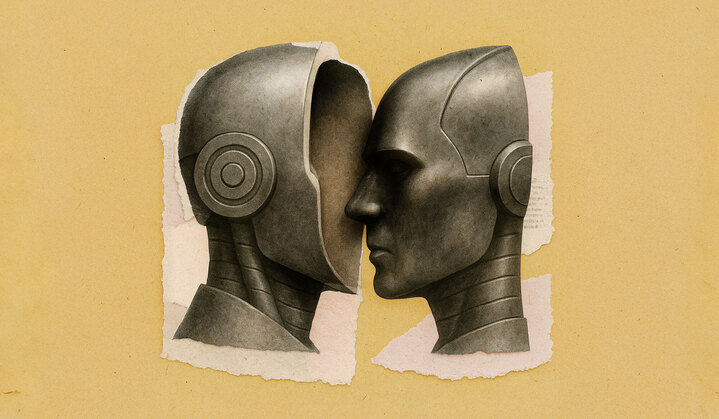
This Future of Marketing Briefing covers the latest in marketing for Digiday+ members and is distributed over email every Friday at 10 a.m. ET. More from the series →
Last month, a U.S. Special Forces soldier was indicted for insider trading — not on stocks, but on a prediction market. He had detailed knowledge of a military operation. He bet on it. The platform where he placed those bets responded to the indictment with something close to a shrug.
That shrug tells you everything about the world marketers are only beginning to understand. It’s one where a meme can move a market, and a market can become a meme. Where the internet’s lingua franca — irony, virality, the shared joke — now has real stakes attached.
Which is why, five years after Bud Light hired a chief meme officer as a stunt and the industry laughed, nobody’s laughing anymore. They’re hiring for the same.
Live Nation, CBS Sports, Nascar’s Dirty Mo Media, Sony Pictures, Beast Industries and Binance are now hiring for roles where meme fluency is either a core function or a formal requirement.
The Bud Light stunt, it turns out, was a blueprint, one brands have been redrafting since the dawn of social. What changed is the stakes. Memes can launch careers and end them. Lose a hedge fund billions and make strangers on the internet millionaires overnight. They handed a presidential campaign its entire visual identity, and inspired a government department with the power to fire federal workers. More marketers are realizing they need to be able to understand that. None of this sneaked up on anyone. Brands just chose, for a long time, not to take it seriously.
“What’s interesting is watching the broader market still fundamentally misread it,” said Dan Salkey, co-founder and strategy partner at creative company Small World. “Most brands think the power is in the format; the template, the caption, the cultural reference. So they invest in spotting trends faster, in hiring people who are chronically online. What they’re missing is that the format is just the wrapper. The actual power of a meme is that it makes a complex idea feel like common sense. It doesn’t inform you, it recruits you.”
If that sounds like marketing guff, look at memes in the wild. The White House posts video-game style edits of real war footage on its official channels. When 12 tones of KitKat bars were stolen in transit across Europe earlier this year, it was a meme format within hours. BMW and Lidl had both jumped on it within days. Meanwhile, “Five Nights at Epstein” is sitting on Wikipedia’s list of 2026’s defining memes. That’s the full spectrum right there: brands raving to ride a chocolate heist, and a corner of the internet no brand can go anywhere near. The ones navigating it well aren’t just fluent in internet culture. They know exactly what they stand for. The meme is just how they say it.
It’s easier to show than explain. Earlier this year, a supervisor at Canvas Worldwide— a self-described cat lover named Jennifer Valdez — spotted a TikTok musician called Jacob Jeffries going viral with a song about kombucha. The video had 18 million views. She saw the opportunity, moved fast and brought to her team, who secured a product placement in his next video for GT’s Kombucha brand. It landed 4 million likes and 50,000 comments.
“Now you put somebody with a different mindset in that position and maybe that reaction wouldn’t have been as fast,” said Raul Tafur, vp of social and content strategy at agency Canvas Worldwide.
It’s a small story with a large point. As Canvas Worldwide’s vp of content partnerships Terra Fernandez explained: “I can teach you how to apply cultural interests. I can’t teach you to have them.”
Hiring for instinct is one part of it. The other is building the infrastructure to act on it.
At RPA, associate director of social strategy Tara Carlson has spent the past year rethinking how briefs are built. Previously, a strategist would pull together audience segments and interests and hand them to a creative team. Now, that brief includes something different: what’s actually being said in the comment sections of the creators and viral moments relevant to the brand — i.e not what the audience cares about in the abstract but the specific language, cues and cultural references they’re using to talk to each other right now.
“We’re not just giving them a one-liner brief,” said Carlson. “We’re giving them the context of how these people are conversating.”
It’s an important distinction since memes don’t live only in content anymore. They’ve migrated into the comments — people screenshotting viral videos and using the expressions in relies, building a secondary layer of communication that runs underneath the content itself. A brand that only monitors what’s trending misses half the conversation. As Carlson explained: “The memes aren’t just showing up in content. They are in the comment section as well.”
Platform literacy compounds all of this. What lands on TikTok — reusable format. The shared visual or the absurdist callback — reads as try-hard on Threads, where the currency is the perfectly timed deadpan. Get the dialect wrong and everyone notices. Easier said than done would be an understatement.
When it works, though, the results speak for themselves. Netflix builds meme hooks directly into show IP, giving fans the raw material to generate awareness organically. Adidas made a trainer inspired by Homer Simpson disappearing into a hedge meme. Both are doing the same thing: finding the place where the brand and the culture overlap, and planting a flag there.
“If you can’t look at certain memes and say, ‘not for us,’ then you haven’t necessarily done the work of defining what your brand is and how your brand behaves and who your audience is,” said Jon Crowley, partner and head of strategy at Fuse Create.
The World Cup this summer will be a good litmus test for this. Few events generate as much meme activity as concentrated, as fast or as globally distributed — a missed penalty, a manager’s reaction, a substitution that makes no sense. Brands will have seconds, not hours, to divide whether a moment is theirs or someone else’s to ride.
“If you aren’t thinking of the meme aftermath as the starting point, you have already lost the brief I think if you’re a brand,” said James Kirkham, co-founder of brand consultancy Iconic. “Moments are the prompt for the work rather than the work itself and the actual work is what happens in the hours and days afterwards in fan group chats, reactions, TikTok edits and the slow remix layer of the internet. Unless you are part of conversations in existing communities you will be ruthlessly filtered out, no matter how large your media buy was.”
Blending PR with performance in an AI-driven internet
Brands are adapting their marketing strategies for AI-driven discovery and search, with large language models (LLMs) overtaking traditional search models as consumers’ default mode for accessing the internet.
For some marketers, this requires a root-and-branch overhaul of their organizations, not just a mere tweak to their existing modus operandi. One such organization implementing such a change is COS (short for Collection of Style), part of the H&M Group.
Earlier this week, the Agentic Advertising Organization — a disruptor trade organization that seeks to establish standards as AI becomes the default OS for online marketing — hosted its inaugural AGM.
Lauren Price, svp at COS, discussed how the company has approached visibility in LLMs, AI search engines, and recommendation systems, noting how the organization did not begin with a rigid “AI playbook.”
Instead, the company treated AI discovery as an emerging channel that required organizational experimentation, drawing on lessons from the early days of e-commerce and the thesis that AI adoption would similarly accelerate because of its convenience for consumers.
Intuitively, the first step for COS was understanding how the brand appeared across AI search and recommendation systems, including an audit of how it surfaced in AI-generated responses and a comparison with its peer set.
Intuitively, this process unearthed the insight that AI systems heavily rely on recommendation-style content, with name-checks in relevant editorial outlets a key part of improving performance as they contain rich language that LLMs can easily process.
These insights prompted COS to merge its PR and performance marketing teams — which often work in silos — allowing its marketing team to better understand how brand-building (the traditional preserve of PR) and performance marketing can work more collaboratively and demonstrate their contribution to the bottom line.
“There was something different about spending so much time together, tackling the same problem,” Price said during the May 6 event. “Taking that performance marketing mindset and applying it to these brand-building tactics was at the heart of being so effective.”
She added, “The effectiveness of performance marketing and brand marketing are so interwined… the org-structure [of a marketing team] should reflect that.” — Ronan Shields
Numbers to know
956 million: Total monthly active users that Snap reported during its Q1 2026 earnings call
28%: Percentage of social media users globally that dislike when brands do not correctly label AI-generated content
14% to 16%: Year over year percentage growth of revenue that Pinterest expects to achieve in Q2 2026
36%: Percentage of teens which say they see the best ads on YouTube
What we’ve covered
‘Expand thoughtfully’: OpenAI offers ChatGPT ads to new markets including the U.K., Brazil and Japan
OpenAI is expanding its ChatGPT ads pilot to the U.K., Brazil, Japan, South Korea and Mexico as it pushes beyond its initial English-speaking test markets. The company said it wants to “expand thoughtfully,” while balancing advertiser demand with concerns around privacy, trust and regulation.
TikTok recreates its ads for billboards through Vistar partnership
The companies say the goal is to recreate the feel of TikTok on digital billboards using redesigned creative, user interactions and new formats built specifically for out-of-home advertising.
OpenAI starts laying foundations for ChatGPT ads in EU
In a move spotted by Digiday before its official markets expansion, OpenAI added consent controls and country-level tracking to its conversion pixel infrastructure. The move suggests the company is designing its ad business around stricter EU privacy rules from the start, rather than retrofitting compliance later.
‘Maybe ChatGPT is a different kind of a place’: Why OpenAI is saying no to search budgets — for now
OpenAI is telling advertisers not to move search budgets into ChatGPT yet. It says the product is still too early for performance marketing and needs better measurement first. The company also wants ChatGPT to be seen as a different environment from traditional search.
What we’re reading
OpenAI is opening the window on Its ad ambitions
Debra Aho Williamson sat down with OpenAI’s Asad Awan and Benji Shomair — both ex-Meta execs, to get their perspective on the ad market and what the team is working on behind the scenes.
The Trump administration’s AI doomer moment
The Trump administration is unexpectedly warming to AI safety concerns after previously dismissing “doomer” warnings about advanced AI. The shift appears tied to fears around increasingly powerful frontier models — particularly their potential cybersecurity and national security risks — with officials now considering pre-release government reviews for some systems, according to Platformer.
Meta is building an AI agent called ‘Hatch’ and an AI shopping tool in Instagram
Meta is developing a consumer AI agent internally called “Hatch,” inspired by OpenAI’s OpenClaw, that can autonomously complete tasks across websites and apps rather than simply answer prompts. The tech giant is also building a separate AI-powered shopping agent for Instagram that could let users tap products in Reels or feeds, ask questions, compare options and complete purchases without leaving the app, per The Information.
Snap says its $400M deal with Perplexity ‘amicably ended’
Snap said its planned $400 million deal with Perplexity has ended “amicably” before the AI search startup was integrated into Snapchat. The partnership would have brought Perplexity’s AI answers into Snapchat chats, but Snap now says its forecasts no longer include any revenue from the deal, according to Tech Crunch.


More in Marketing
AI boosts discovery but reviews still seal the deal, new research shows
ChatGPT is where 16% of shoppers start looking for products. However, only 9% go there to actually buy something.
Future of Marketing Briefing: Advertisers have more ways than ever to choose a holdco, and free holdcos to choose from
Fewer holdcos, more ways to pick one: inside the changing agency pitch.
Walmart Connect pitches brands directly as it pushes lift studies ahead of holiday ad deals
Walmart Connect is using lift studies to prove ad performance directly to brands ahead of the holidays, signaling a tighter race with Amazon.