Join us Oct. 26-28 in Newport Beach for the Digiday Media Buying Summit
The Economist prepares for a two‑track internet: one for humans and one for AI agents
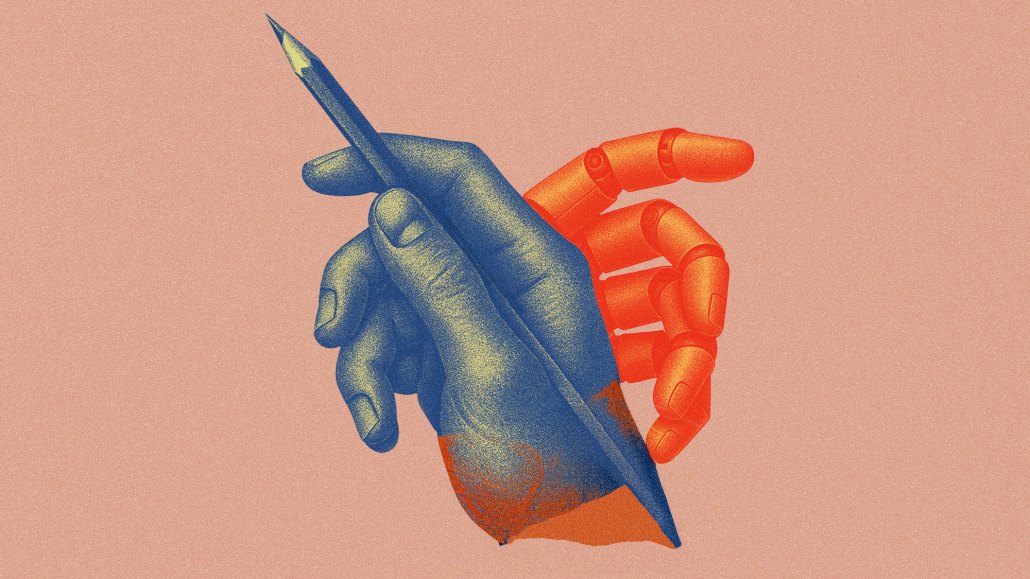
The Economist is testing new ways of structuring content to be read solely by agents as AI engines increasingly surface and summarize news.
For now, the subscription publisher is experimenting with agent‑readable versions of content that already sits outside its paywall — chiefly marketing copy and B2B sales material — and restructuring those surfaces for AI answer engines.
The bet is that discovery won’t start on homepages or even in search boxes, but with AI intermediaries acting on a user’s behalf. As Josh Muncke, vp of generative AI at The Economist Group, told Digiday, the publisher is preparing for “a world with two versions of the web” — one optimized for rich, human reading experiences, and another where “agents want clear structure, questions and answers, ideally text,” not carousels and feature art.
“There are some obvious places we must do that,” Muncke told Digiday at the PPA Festival in London. “We want our marketing content to be findable and discoverable and optimized for agents. And then we obviously need to think deeply about how and what portions of our editorial content should also appear in those kinds of surfaces.”
Naturally, being a subscription publisher, The Economist has to be forensic about which marketing pages and teasers sit outside the paywall, and how much agent‑legible content it can afford to give away without eroding the value of a subscription.
A growing share of B2B buyers now start with ChatGPT, Gemini or Claude, so The Economist’s sales and marketing pages have to show up cleanly in those answers, stressed Muncke. That means building parallel versions of the same pitch: glossy, comparison‑heavy pages for humans, and stripped‑back, Q&A‑style structures for agents — and accepting that agent‑readable content is now part of the go‑to‑market plan, not a side project.
Muncke said that all work is currently rooted in “first, tentative experiments” around content that already sits in front of the paywall, with internal conversational search and agent‑readable formats used as sandboxes to “work out the kinks… not just in accuracy and performance, but also how it sounds and the tone” before anything is exposed more widely.
The approach is still early-stage across most publishers, but it reflects a broader shift as AI becomes a prime layer in how journalism is discovered and consumed.
“Agent optimization is a defensive baseline,” said Alessandro De Zanche, founder of media consultancy ADZ Strategies. “Every quality publisher will build some version: the alternative is technical invisibility as search rebuilds around agents.”
But discoverability is a technical problem, he argues, not a business model. The harder problem is retention. “Agents drive discovery, not the trust and engagement subscriptions and premium advertising depend on, and without it the agent layer’s economics collapse,” said De Zanche. “Everyone ends up building it. Trust coming from the audience is what ultimately separates the publishers who survive from those who disappear.”
Cultivating an internal vibe-coding culture
If the agent-first work is about how The Economist shows up on the open web, the more fundamental change is in how it now builds products in the first place. Over the last year, Muncke’s team has shortened product delivery cycles by folding generative AI into the development process and reorganized around small, cross-functional team “pods” that can move at AI speed.
One test case was its new CarPlay app, a highly requested but fiddly project that had been on the roadmap, noted Muncke. Instead of running it through a traditional long spec-and-handoff cycle, The Economist assigned a small pod: a designer, engineer, product and editorial members with access to AI tools for writing tests, documentation and boilerplate code. The result: the CarPlay app shipped five months earlier than planned. Overall, it has more than “doubled technology velocity,” said Muncke. “At that point, that level of pace forces you to think differently about how fast we can move, and how that increases our ability to test and iterate things in the market.”
Five months saved in a product cycle sounds significant, but the real question is what that time is actually being used for, stressed De Zanche. “If the capacity goes into more products, faster experimentation that improves retention, or freeing creativity from repetitive tasks, it benefits the P&L,” he added. “If it goes into doing the same faster or absorbing headcount cost, the return is illusion.”
Abi Watson, head of publishing at media analysis firm Enders, said the medium-term play isn’t really about productivity, but what new product categories AI makes possible. “Where AI shortens the cycle from idea to a launched paid product — [like] a new newsletter tier, a verticalized data product, an agentic research interface for subscribers, a B2B agent licensing line — the upside is real because it’s tied to subscription or enterprise revenue rather than internal efficiency,” she said.
At The Economist, that CarPlay sprint is now a template. The publisher has set up six to eight pods across its product stack. In areas that touch reader experience, editorial staff are embedded directly in those pods to ensure AI-powered features still “retain the look, feel, style, tone of The Economist,” per Muncke.
Meanwhile, the publisher has been quietly cultivating an internal culture of vibe coding: encouraging staff who would never previously have touched a code editor to start building their own tools.
“The main difference is that now everyone is a builder,” Muncke said, who also oversees the publisher’s AI Lab under which he is currently hiring five additional roles. Editors on the science desk are vibe‑coding utilities that trawl academic journals, pull relevant papers and assess credibility for upcoming stories. Product teams are spinning up automated performance reports instead of queueing requests with data teams. There’s even a template “Chief of Staff” agent that plugs into inboxes and calendars, drafts responses and surfaces daily priorities and follow‑ups.
Not every experiment has worked. The publisher has already paused experiments including an attempt to turn its 300‑page house style guide into an automated copy checker and AI companions for live subscriber events that testers found more distracting than helpful, per Muncke. “We can move much more quickly now… the hard part is making sure we’re building the right things, in the right places, and still sounding like The Economist while we do it,” he added.
Muncke is clear there are lines The Economist won’t cross. “Nobody wants to read an AI‑written Economist,” he said, adding that AI’s role is confined to research, workflow and utility tools. The group has also committed to clear labelling so readers aren’t “tricked” about where AI is used.
Those red lines are a reminder that, for all the experiments, The Economist still sees AI as infrastructure rather than authorship: something to speed up research, workflows and product delivery, not a shortcut to churning out more copy. Muncke’s job over the next few months is to keep that balance — choosing the right use cases, spreading the skills beyond a handful of enthusiasts, and making sure the best internal hacks don’t stay hidden on individual desks. If The Economist pulls it off, agents may do more of the fetching — but the thing subscribers are paying for will still be the human judgement in the middle.
Update: An earlier version of this story said that The Economist had seen an 8% uplift in efficiency on product delivery cycles, but that was last year’s metric, before the latest wave of agentic tools. Now it has more than doubled the velocity.


More in Media

As creators increasingly move into Hollywood, deal terms can put their IP at risk
Advertising Week New York explored the business of creator-led programming across entertainment, and the problems arising within it
Apple’s Safari ad tech blocklist sends publishers back to IAB Tech Lab’s Trusted Server
What publishers once filed under someday now has a deadline, and Apple set it.
Media Briefing: As AI search shifts referrals, publishers revisit registration walls
As referral traffic declines, publishers are rethinking registration walls as a way to turn anonymous visitors into valuable known users.