Join us Oct. 26-28 in Newport Beach for the Digiday Media Buying Summit
Why a once-anonymous creator unmasked herself to build a bigger media brand
This article is part of an ongoing series examining successful creator business strategies. More from the series →
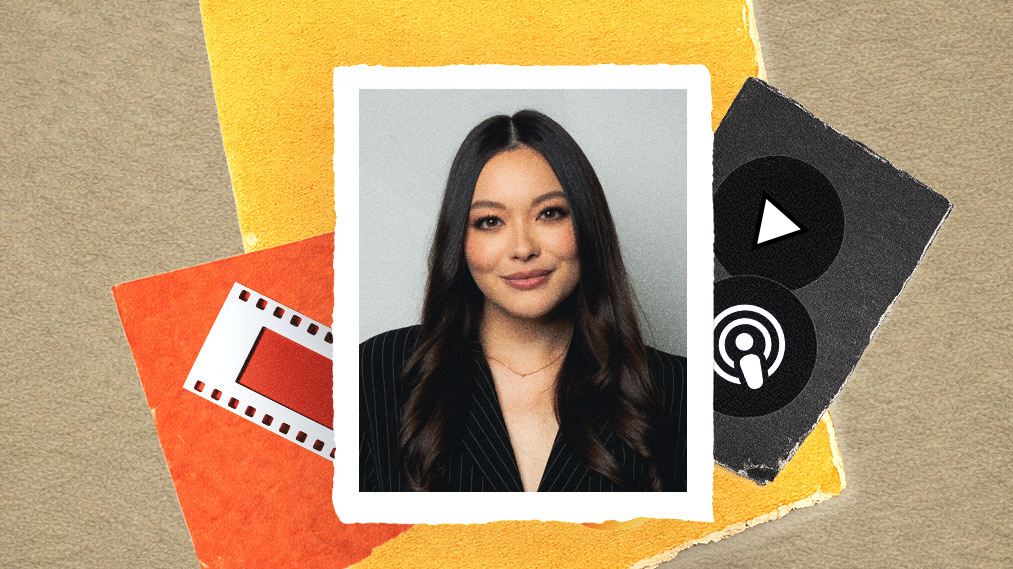
In 2018, Kristi Cook was an anonymous YouTuber making videos about internet celebrity drama and gossip on a channel known as Spill Sesh, with only her disembodied voice doling out the week’s hottest gossip. The channel became wildly popular, garnering over 700,000 subscribers in just a few years (now 860,000) across more than 1,000 videos with over 350 million views.
At the time, Spill Sesh highlighted a relatively untouched niche: taking TMZ-style reporting (which she was familiar with as she once worked for the media company) and applying it to internet celebrities, influencers, and content creators. In 2023, she told The New York Times that she earned around $20,000 a month through Google AdSense.
But Cook felt that, despite her success, her creator journey had grown stagnant.
“I wanted it to be something that could give me longevity,” Cook said. “I didn’t know if doing these anonymous YouTube videos or anonymous TikToks was really going to get me where I wanted to be, or have Spill Sesh be this media company if there was no face.”
That’s why, three years ago, Cook revealed her identity in a highly publicized video with YouTube makeup artist Manny Mua. Since then, her follower count has steadily grown, adding more than 300,000 followers on YouTube and 120,000 subscribers compared with the day before her November 2023 reveal. Though she declined to discuss specific revenue details, Cook told Digiday her brand deals have grown from four to five figures.
A PR firm Cook hired right after her face reveal introduced her to her manager, and UTA signed her last February.
The decision has also opened her up for more opportunities, like interviewing celebs at red carpet events for her new channel, getting UTA representation, and inking an audio-video deal with The Roost for her “Weekly Teacap” show. After revealing her identity and signing with UTA, Cook’s income is now split almost evenly between ad revenue on her videos and brand partnerships — the latter taking off after what she calls her “Hannah Montana” moment.
“Change is scary for an audience — people hate change — so I didn’t want to change anything about my YouTube channel, other than me using my real voice. For the next year-plus after the videos were exactly the same — the next day after the face reveal it was business as usual,” Cook said. During that time, she also invested in short-form content on Instagram Reels and TikTok, which she believes helped her attract more attention from brands — but it wasn’t an easy transition.
“Almost seven or eight months after I did the face reveal, I started to feel a bit lost,” Cook said. “I knew what I needed and I didn’t know how to get it at all, and I was just like, ‘Who can help me?’”
A structured team helped turn Spill Sesh into a more robust media brand, spanning the “Weekly Teacap” show, a second, interview-driven YouTube channel, and a Studio 71 podcast called “Popity” with fellow creator Sloan Hooks.
Cook was a college correspondent at USA Today before working at TMZ for four years, so her content is steeped in her experience as a pop culture journalist. She credits this training for her ability to host red carpet interviews and sit-down chats, an important distinction in a space where popular creators are given unprecedented access to celebrities, to varying degrees of success (earlier this year, creator Jake Shane’s Vanity Fair Oscar Party questions kicked off discourse around whether influencers should be red carpet reporters).
“I couldn’t imagine being an influencer right now, like thrown to the wolves, right next to E! News. Everyone is hating on influencer reporters. I’d be sweating if I had never done it before, because it’s already just so overwhelming,” Cook said.
Cook wants to expand Spill Sesh further with more red carpet access, interviews, and content variety even as she remains laser-focused on her YouTube (“that’s my baby,” she says) and on telling niche, celebrity-driven stories.
And there’s hope that Hollywood’s recent interest in creator content could turn into a movie deal — as has played out from the likes of Alex Cooper to Mr.Beast to the minds behind this year’s horror blockbusters Obsession and Backrooms.
“Trust me, I could give you a really great documentary. You guys don’t know what’s living up here,” Cook said. “Those are things that I’m really honing in on, and just also with my podcast — I feel more legitimized.”


More in Media
As creators increasingly move into Hollywood, deal terms can put their IP at risk
Advertising Week New York explored the business of creator-led programming across entertainment, and the problems arising within it
Apple’s Safari ad tech blocklist sends publishers back to IAB Tech Lab’s Trusted Server
What publishers once filed under someday now has a deadline, and Apple set it.

Media Briefing: As AI search shifts referrals, publishers revisit registration walls
As referral traffic declines, publishers are rethinking registration walls as a way to turn anonymous visitors into valuable known users.