Join us Dec. 1-3 in Nashville for the Digiday Programmatic Marketing Summit
How political creators are juggling platforms to find the three Rs: reach, revenue and rules
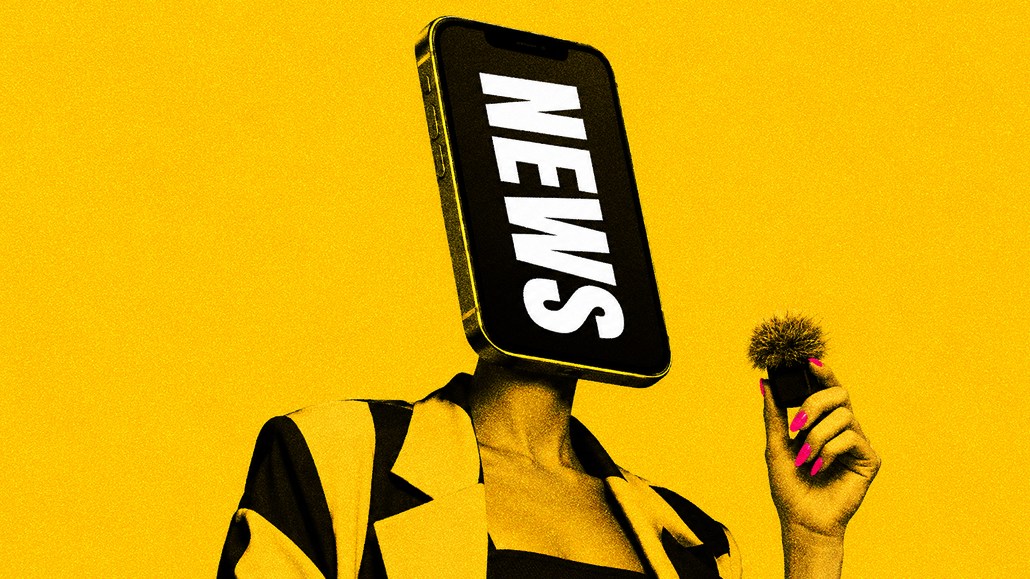
Political creators need platforms that can deliver reach, revenue and clear rules. But no single platform reliably provides all three: YouTube offers ad revenue, Instagram can deliver huge audiences without paying creators and TikTok’s moderation and engagement can be unpredictable.
“A good platform for a political creator does four things,” said Ryan Schram, executive director of the Center for the Creator Economy at Syracuse University. “It helps new audiences find your work, it pays you fairly for that work, it tells you clearly what the rules are, and it lets you keep your relationship with your audience if you leave. Most platforms do one or two of those well. Very few do all four.”
Schram said that political creators gravitate to where political conversations are already happening, noting a 2024 PEW Research study that found that 85 percent of the most-followed news influencers are on X, half are on Instagram, and 44 percent are on YouTube.
“Journalists, campaigns, and elected officials are on X, and its users come for news. The catch is that creators and audiences aren’t in the same places,” Scharm said. “Audiences are larger on YouTube and Facebook, so the most successful political creators publish on several platforms rather than relying on one.”
Ahead of particularly contentious U.S. midterm elections, influencers are shaping narratives and highlighting key issues. Digiday spoke with six political creators and Schram about which platforms they are finding most fruitful, and which they’re struggling with.
Reliable revenue: YouTube
YouTube remains a mainstay for many news and politics creators. “YouTube has the largest news audience and pays the most,” said Scharm. “It’s paid out more than $100 billion over four years and shares 55% of ad revenue.”
As far as the algorithm that drives that revenue, a YouTube spokesperson told Digiday it does “not favor or penalize content based on political orientation.” There are instances where YouTube’s systems “elevate high-quality voices,” like when major breaking news happens and the platform gets a special “breaking news shelf” on the homepage.
YouTube has leaned into news creators over the last few years, with its news, civics and podcast partnerships program, led by Brendan Feldman, offering advice on how to grow and monetize their channels. “For these last few years, a lot of focus has been on the real renaissance of journalists coming to YouTube, many in an independent capacity…and how we can best support them in building really vibrant businesses on our platform, connecting with audiences,” said Feldman.
Creator Aaron Parnas said he focuses on YouTube and Facebook in terms of monetization, though it’s only about 1 percent of his revenue pie.
“YouTube is the platform most worth investing in and also the hardest to grow on,” said V Spehar of Under the Desk News. “But if someone was just starting, I’d say focus on YouTube. It’s the most stable and fairly monetizes – but it’s hard to grow. So you may have to create for YouTube first, and then use clips to build discoverability by posting the clips on all socials until you figure out which social platform you perform best on.”
Great reach: Instagram
Several of the creators Digiday spoke with said Instagram has good engagement, but at least one mentioned the platform isn’t a revenue source.
“I don’t make a penny because Instagram doesn’t pay out for anything, in terms of Reels. So I make zero money on Instagram, but I had 450 million views last month,” said Parnas, who added he gets much higher viewership on the platform than elsewhere, but frustratingly isn’t earning anything for that elevated engagement.
Newly independent news creator Mark Istook, said he found Instagram to be easier to predict, and the comments are far less “poisonous and toxic” than on sibling Meta-owned platform, Facebook.
The jury is split on Instagram’s utility. While creator Grant Hermes found Instagram might as well be a “black box” in terms of understanding its underlying structure, creator Adam Mockler, however, has figured it out, boasting 90 million views a month on the platform.
Surprise successes: Reddit, Facebook
Mockler pulls in even more views on Facebook, boasting 120 million on the platform which he called an “underdog” that has been “really swinging lately.”
“I genuinely think Zuckerberg changed something when Trump got into office,” he said. “They opened politics back up on Facebook, and it allowed advertisers to buy up spots on political stuff again.” It’s performing so well, Mockler has doubled down, putting more resources and more team members, he did not offer specifics, on the platform, even hiring an intern that helps post on the platform.
Parnas said he also focuses on Facebook because it, along with YouTue, is where the most revenue comes from.
Mockler also told Digiday he’s leaning into Reddit, a platform notoriously difficult to break through.
“We had a 17-year-old high schooler posting on Reddit for a while…I view Reddit as more valuable than TIkTok right now,” Mockler said, adding about 70 percent of the intern’s role was him posting his appearances on CNN or other traditional news platforms in several subreddits, while the rest was on the official Mockler Media Reddit account, all to get people to engage with his content and find him on other platforms. “I view it as internal PR,” Mockler said.
Struggle city: TikTok, X
Spehar and others said TikTok has been a tough platform lately, with inconsistent flagging and engagement hampering their revenue and reach.
“[TikTok] blocks political content or mislabels it as ads and live streams focusing on politics can be falsely reported. Overall it’s hard to get your perspective out if you don’t already have a big channel at this point,” Spehar said, adding the platform is still a good place for creators to build, but is more saturated than it once was.
Parnas placed TikTok on the third rung of his monetization scheme, underneath YouTube and Facebook and alongside Instagram and Istook said the platform should be more reliable when it comes to engagement, but is “all over the map” after it closed a deal with the U.S. earlier this year.
“My views on TikTok have remained very, very consistent over the past year,” said Parnas. Yet just a few days ago, one of his political videos got stuck in an “under review” stage for nearly three hours. “I just took it down,” he said.
Istook said he has the biggest audience on TIkTok but found the platform the least predictable in terms of engagement. “Something will do millions of views, and something else will do 1,500, which just is hard to make sense of with a follower count like I have,” he said.
Politicians and mainstream media organizations still regularly post on X, so many creators still post there as well. Mockler said he uses it often, but Istook said the platform’s preference for subscribers is frustrating.
“Elon [Musk] pushed this whole public marketplace of ideas, the old school freedom of speech idea,” he said. “When you are giving credence to subscribers over non-subscribers, then you have your thumb on the scale.”
Subscription supremacy: Substack, Patreon, beehiiv
For nearly every news creator Digiday spoke to, paywalled content is their bread and butter, whether it’s on Substack, Patreon or beehiiv.
“I prioritize Substack over everything,” said Parnas. “My paid subscription audience really funds much of my business and it’s a recurring stream of revenue.” Parnas uses other platforms to “educate people,” but only focuses on his Substack for subscriber revenue, which he says is about 97 percent of his revenue pie.
Lachlan Cartwright, founder of Breaker Media, focuses almost exclusively on the independent media company’s beehiiv newsletter because of the nature of its content: breaking news and scoops. Breaker Media has 45,000 subscribers.
“There’s information you can only get at Breaker, and you have to pay for it,” Cartwright said. “Social media is an afterthought. I will post on X, probably the day after, because guess what? I get no money from Elon. Why am I giving him my scoops, why am I giving Zuckerberg my content?”


More in Media
‘They hold us hostage’: Publishers furious over terms change still can’t quit Facebook
Publishers are pushing back against Meta’s AI scraping terms, testing their leverage over a platform they still rely on.
People Inc. is building custom APIs to make its journalism easier for AI agents to use
People Inc. is moving toward custom APIs for AI systems, Forbes has adopted Markdown for agents, while the FT, Daily Mail are considering how agents could reach content for subscribers.
Giggly Squad’s SiriusXM deal signals a shift from podcast networks to creator ecosystems
The Giggly Squad deal shows podcasts have turned another corner. Video, short-form, IRL shows…where does the podcast go from here?