Join us Dec. 1-3 in Nashville for the Digiday Programmatic Marketing Summit
“Be somewhere else.”
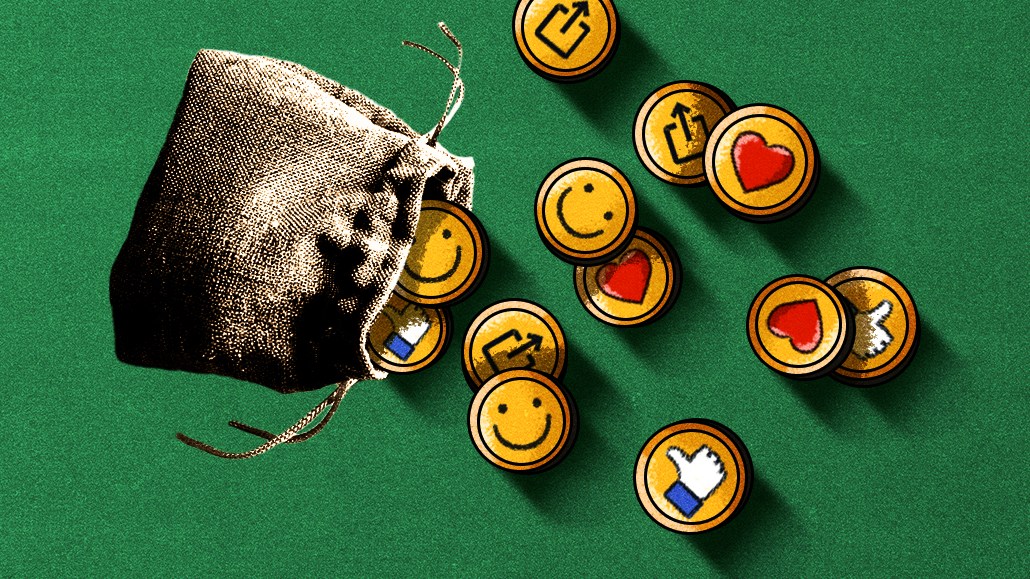
That’s the text on the single post that lives on Lush’s TikTok account. To its 344,900 followers, the beauty brand’s TikTok is practically a ghost town. It’s been that way for years.
In 2021, the U.K.-based beauty brand decided to step away (and siphon ad dollars) from Instagram, Facebook, TikTok and Snapchat, in protest of the platforms’ data privacy policies and algorithms. Lush officially brought down the axe after Facebook whistleblower Frances Haugen’s exposure of the platform knowingly causing harm to teen mental health.
By 2023, the company stopped posting to X as well, in light of Elon Musk’s takeover.
The exit from big tech
It has been five years and Lush hasn’t been back to those platforms — neither in terms of posting nor in paid advertising, Julia Hamfelt, head of marketing for Lush North America, told Digiday. Instead, marketing dollars are earmarked for things like Lush’s mobile app, brand collaborations, content creator and in-person events. She did not provide exact spend figures.
“We don’t engage in any paid advertising on social media, in that we don’t invest in paying the platforms for advertising,” Hamfelt said. She added, “We do still engage a large community of creators and influencers, but our philosophy really is to invest in people over platforms.”
To modern media planners and direct-to-consumer marketers, leaving social media may sound self-sabotaging — abandoning millions of potential shoppers, losing brand visibility and a cultural connection.
“Paid social is really about driving reach,” said Jeremy Ekes, vice president of client service and strategy at January Digital. He added, “That is the pro. You’re buying a reach vehicle.” The tradeoffs of abandoning that vehicle, as far as Ekes is concerned, are losing eyeballs and having to find alternative ways to reach shoppers.
For Lush, the risk was worth it. “There was a period of time where we had to rebuild avenues and ways to directly connect with our customers,” Hamfelt said.
The path to replace paid reach
To adapt, the beauty brand turned its attention to creators and in-person events. Lush also invested in its own channels, like its mobile app, which currently has 2.8 million users, and email marketing, which reaches more than 6 million people globally, Hamfelt said. In comparison, Lush Cosmetics North America’s Instagram page has 3.6 million followers alone.
Lush has also increased its cross-brand collaborations, generating around £34 million (about $47.9 million) in sales, driving retail traffic and brand exposure, per the brand’s June earnings report. Popular collections included Wicked, Hello Kitty, Minions, Minecraft and most recently, The Grinch, though the brand did not provide exact sales figures.
Lush hasn’t exactly shut itself off from the social stratosphere — it launched its own Substack account and joined Bluesky this year. Lush also maintains an active presence on YouTube (where they post at least once a month) and Pinterest. They have an organic, unpaid approach to those platforms, Hamfelt said.
“There are some hard lines in the sand,” Hamfelt said, “but there are also benefits in continuing to have a presence with and partner with platforms that are taking the right steps to change and protect user safety.”
Lush isn’t interested in joining its peers — which could be seen as effectively, paying to rent audiences on Meta, Snapchat, TikTok and X. The strategy hasn’t put it out of business. In fact, Lush is growing.
For its 2025 annual earnings, Lush pulled in £736.2 million ($982.3 million). That figure is up from £672.7 million ($897.5 million) in 2024. For Lush, 2025 was a strong year with 11 consecutive months of “solid growth,” per the earnings report. The company points to things like new product launches, cross-brand collaborations and online customer forums for its success. Lush has not yet reported financials for 2026.
To be fair, paid social was not a significant part of Lush’s ad budget even before stepping away. Hamfelt declined to say how much ad spend Lush dedicated to social platforms before leaving.
Notably, marketers are pumping more money into social. Last year, social media ad revenues reached $117 billion, according to the Interactive Advertising Bureau’s 2025 Internet Advertising Revenue Report. That’s more than search ($114.2 billion), digital video ($78 billion) and display ads ($81.6 billion). Next year, eMarketer predicts social networks will account for more than $3 out of every $10 spent on advertising.
Diversification in an era of platform scrutiny
Social media spend is on the uptick, but marketers have long since struggled between operational frustration and dependency on tech behemoths, especially Meta and Google. Some have been trying to better divvy up ad dollars across the social media stratosphere.
“Social is where eyeballs follow and a lot of reach can be garnered, but it’s not the only option,” Ekes said. He later added, “We have definitely seen diversification across brands’ media mix across multiple channels — especially as advanced measurement has brought clear perspectives on what’s incremental to businesses and what is not.”
Just last week, Meta in particular was ordered to pay a $25 billion penalty in New Mexico as part of a data privacy case that stemmed from the Cambridge Analytical scandal a decade ago. Meanwhile, countries like Australia have moved to ban social media for children under the age of 16, citing the impact on kids’ mental health.
“I think what we’re seeing now is that conversation has hit the mainstream in a much bigger, more powerful way,” Hamfelt said. “Companies like Meta are being held to account in a way we haven’t seen previously.”


More in Marketing

Post World Cup, fashion brands are tapping soccer stars like Bellingham and Yamal for partnerships
Three months after the World Cup ended in a Spanish victory, the partnerships with marquee players keep coming.
In Graphic Detail: What Apple’s identity block means for the ad money
How Apple’s identity block hits publishers’ wallets, and why Apple can afford it.
Anthropic’s ad bill is soaring, according to IPO filing
Anthropic’s IPO filing shows an ad-free AI company with a fast-growing ad bill.