Join us Dec. 1-3 in Nashville for the Digiday Programmatic Marketing Summit
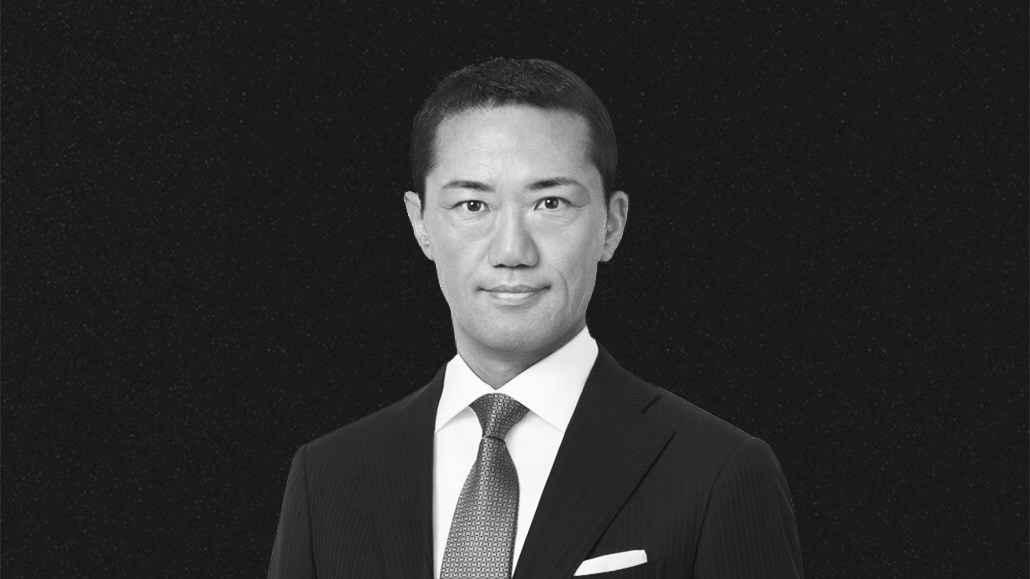
Media Buying Briefing: Takeshi Sano is making the rounds for Dentsu — is it enough?
This Media Buying Briefing covers the latest in agency news and media buying for Digiday+ members and is distributed over email every Monday at 10 a.m. ET. More from the series →
Ending up your first six weeks as global CEO of an agency holding company that’s been struggling with a major retention of a global client is pretty solid. So it has been for Takeshi Sano, who at the end of March took over Dentsu.
On Friday, Heineken announced the winners of its global media, production and creative review, keeping its global media business parked at Dentsu. (Publicis will handle “global secondary production” as well as creative for the Heineken brand itself, while Publicis, WPP, and Stagwell will handle various creative work for its other brands — Amstel, Birra Moretti, Desperados, and Tiger.)
But that brief amount of time also saw Dentsu lose the massive Microsoft business to Publicis, which agreed to incorporate Microsoft AI into its operations as a sweetener to that deal. The software giant is said to have been a top-three client for the Japan-based holding company.
Although it’s hard to know if Sano’s presence was what won over Heineken to keep its media with Dentsu, sources close to the CEO said he was involved and engaged in the pitch. And what’s striking here is it’s arguably the first time Dentsu’s global CEO has been involved in a pitch.
For what it’s worth, in the eyes of Ruben Schreurs, CEO of Ebiquity, you can’t pin the Microsoft loss on Sano. Still, the next 12 months will hold the key to whether Sano can readjust the perception of Dentsu to the point where not only key clients are retained but major new clients are won.
As Digiday has written recently, Sano is a relative gust of fresh air for a holding company that has largely dallied in the doldrums for the last few years. Although Dentsu’s 2025 client wins and losses weren’t terrible, they weren’t great either, and the company has taken a reputational hit when prior CEO Hiroshi Igarashi failed to line up a strategic partner or a private equity investor.
However, in the battle for holding company supremacy among Publicis, Omnicom, WPP, Dentsu and Havas, Dentsu sits smack in the middle — largely because it’s successfully defended business but not because it’s winning a ton of new business.
So what’s Sano’s plan? He’s certainly been more visible than his predecessor, having visited and hosted town halls in New York, London and elsewhere. As a Dentsu insider put it, “We need to show we’re in the game.” He’s chatted on podcasts, he’s visited several existing clients. One consultant who spoke on condition of anonymity said he was involved in a major client pitch — unheard of during Igarashi-san’s tenure.
Digiday requested comment from Sano for this story but did not receive any at press time.
“It shows how intentional he is being about wanting to shift that perception of the Dentsu CEO being just stuck in Tokyo, unable to speak English and engage with clients,” said the consultant. “Since he’s taking the reins, he has been very intentionally reaching out to clients, involving himself in some of these processes, [and] making himself available to staff, which is precisely what Dentsu needs.”
He certainly has his work cut out for him, agreed multiple consultants who deal with Dentsu — and see just how much the other holdcos are going after it at a still-vulnerable time. After all, some of Dentsu’s biggest clients have rivals furiously trying to poach them away, as happened with Microsoft. We’re talking General Mills, Kraft-Heinz, Procter & Gamble, General Motors. Although no consultant nor any Dentsu insider would comment on specific clients, the concensus is he’s likely met with them all by now.
It couldn’t come too soon. Dentsu has “a massive marketing problem right now and they’re not really doing anything to address that with the type of urgency that they need to,” said the consultant. “They need to build confidence that this is a sustainable business, that it’s a business that can invest and can compete.”
The best way to do that is win and retain business, and Sano has helped with the latter via Heineken. But he will need to keep a visible profile and get a lot closer to the Arthur Sadoun model of global CEO than the Igarashi-san model. “He needs to be setting out a clear strategy, reinforcing that and presenting to the market a very credible fourth or fifth option for clients,” said the consultant.
Even WPP CEO Cindy Rose has been far more visible than her predecessor Mark Read, since she took over in 2025. The upcoming Cannes Lions Festival of Creativity will be a real indicator of just how visible and public Sano is willing to be. He will be making a main stage appearance at the festival, in a session on June 23 where he’ll be interviewed by Julie Boorstin of CNBC.
“Cindy has made it very clear what the WPP is that she’s building,” explained Schreurs, who believes Cannes Lions is an opportunity Sano shouldn’t waste. “Arthur has made it very clear how they see the world differently from WPP and Omnicom, with regards to automation, AI, layoffs (as in, not going through that). And it will be interesting to see what’s the story or value proposition that will differentiate Dentsu from its peers? Cannes would be a fantastically timed event for [Sano] to make a big appearance and … make use of the opportunity of all those senior stakeholders being together, who are all very curious to learn what Dentsu will be in the coming years.”
“Arthur and Cindy are ubiquitous at the moment — they’re in every single pitch, you know, top to top,” said the first consultant. “I’m sure they’re going to be working them extremely hard at Cannes and they’re not there just to shake a few hands. They are very much engaged, immersed in their clients’ businesses, which does create that sense of confidence and accountability that many of these clients thrive upon.”
On a much smaller scale, Sano is apparently making some changes in regions, having just folded the iProspect and Carat brands in Australia into one Dentsu Media brand. Whether more of this happens in other regions remains to be seen.
Color by numbers
A lot of companies lean on consumer sentiment studies to prove one thing or another. It turns out they’re not very good predictors of action taken. Chicago-based marketing analytics firm Big Chalk Analytics last week released findings showing that widely used consumer sentiment data from the University of Michigan and Conference Board is nearly completely unreliable at predicting key business metrics, including consumer spending, inflation, and unemployment. Looking at nearly 50 years of data, the analysis found that while sentiment is often treated as a leading economic indicator, it has limited real-world predictive value and has become less reliable since the pandemic began.
For example, the correlation between sentiment and consumer spending starts at 0.429 for U of Michigan and 0.464 for Conference Board, but declines to 0.185 (Michigan) and 0.115 (Conference Board) after a 12 month lag.
Takeoff & landing
- PMG expanded its strategy practice, putting Tim Lardner, who has led PMG’s strategy team for the past several years, in charge of the independent’s business transformation strategy practice. PMG also hired Jonathan Tatlow as svp to lead communications strategy, creative Strategy and insights, coming over from Digitas where he had been chief strategy officer.
- Independent Go Fish Digital is expanding its AI-powered marketing intelligence platform Barracuda, which aims to help brands predict performance before budget is spent. Barracuda analyzes AI search results, paid media, and competitor activity.
- Horizon Media, according to press reports, suffered a data breach that exposed sensitive personal information but declined to say how many individuals were affected.
- Two big account moves in India: Omnicom’s Initiative landed media duties for Netflix there, winning it away from WPP’s Wavemaker, and Madison Media landed media duties for Jindall Stainless as that brand expands beyond its B2B roots.
Direct quote
“We have a lot of advertisers who are very performance focused. They’re not going to be OK in a world where they’re not able to see post click activity or as clearly or as cleanly.”
—David Dweck, president at Go Fish Digital, talking about how AI isn’t preying on search budgets.
Speed reading
- Seb Joseph reported on how Amazon is not only bringing its content to the upfront marketplace, but putting its tech prowess right alongside.
- Sam Bradley chronicled the rise of Google’s AI Max and its impact on search, which has seen costs increase by as much as 15% in the last year.
- Digiday’s presence as a media partner at Possible generated interviews with several executives across marketing, agencies and ad tech.
- I wrote about how Omnicom quietly has moved its Flywheel commerce operation into Omnicom Media, ostensibly to incorporate more closed-loop attribution into its investment activity.


More in Media Buying

Media buyers chart path for brands and sponsors through high NBA demand
Brands looking to push more dollars towards NBA audiences must choose between spending on a sponsorship, or funnel budget into TV, streaming and social.

How Amazon turned its Thursday Night Football into a two-pronged pitch to capture ad dollars
TNF’s the jewel in Amazon’s Prime Video sports portfolio, and a lever for endemic and non-endemic media budgets.

Media Buying Briefing: How are the 2nd tier holdcos separating themselves from the Big Three?
Just under Publics, Omnicom and WPP, the scrum among a handful of holdcos and indies to stand out yields some interesting moves.