This article is part of a new series in which Digiday challenges industry assumptions and explores why today’s long shots could be tomorrow’s inevitabilities. More from the series →
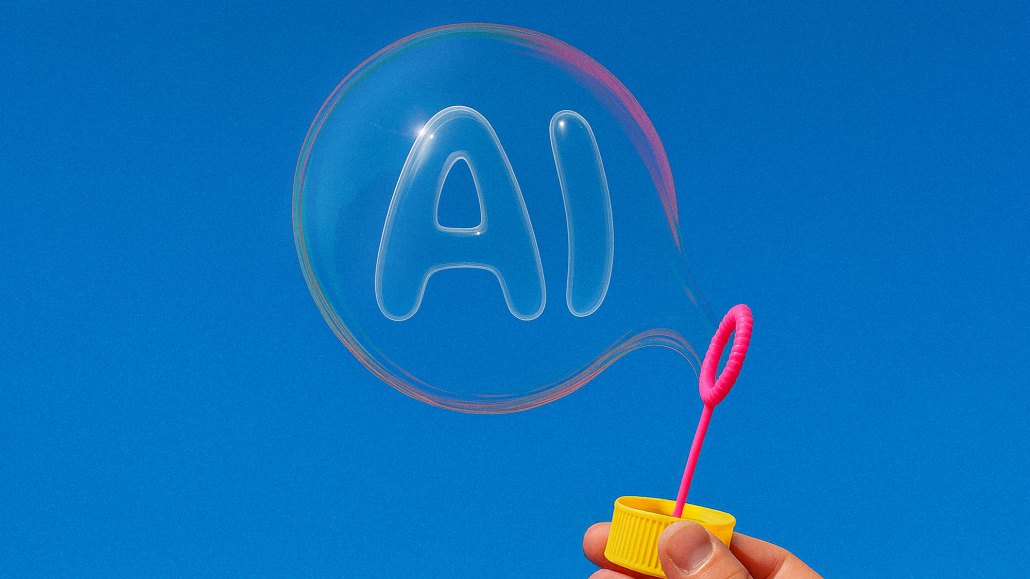
OpenAI is set to wade into the advertising business this year, but its move to finally monetize ChatGPT with ad dollars may have come a touch too late.
ChatGPT’s 2022 launch inaugurated the current generative era and made the app a touchstone for the entire sector. But OpenAI’s head start has since been eroded by rivals, the greatest of which has both momentum and experience building ad businesses.
In case you missed it, OpenAI declared its intention to display ads against the free and budget tiers of ChatGPT in a blog post published Friday (Jan. 16), with tests beginning “in the coming weeks.”
Though the move was expected, it’s a milestone — according to Isabel Perry, global evp of strategy at Dept., nothing less than “the start of the fourth wave of digital advertising,” the first three being search, social and retail media.
The ads will show up at the bottom of ChatGPT responses formatted as sponsored listings close to the topic at hand; for now questions hover over pricing, measurement capability and ad load.
Despite those unknowns, plenty of brands will want to test the water. The last time an advertising terra nova arrived was TikTok’s launch of its ads product five years ago. With eMarketer estimating its U.S. user base at 67.7 million (OpenAI doesn’t publicly disclose user figures) the potential audience is nothing to sniff at. Furthermore, those users’ prolonged engagement with the app, and the increasing use of the tool for commerce, will excite brands already investing in AI applications, search and commerce.
There are reasons to be cautious, however. OpenAI faces the problem of building an ads business in public around a product its users are accustomed to accessing without crosstalk from advertisers.
People come to ChatGPT to get something done — not to browse, discover or be interrupted. And ChatGPT is built for open-ended answers, not repeatable inventory. Brands want control and context, while AI chat interfaces deliver neither with any consistency. And they want a means to measure the impact of their messaging they can compare with other channels.
None of those obstacles are existential. “If the ads are helpful and relevant, which they can be due to the context windows and data that these AI search experiences already have, users might not experience that much disruption,” noted Nicole Greene, Gartner vp and analyst, in an email.
Formats can be tweaked. Targeting can be improved. Measurement, which Perry said will be at the “heart” of advertiser wishlists for OpenAI, can be developed to satisfy demand. Tech platforms have form sanding down awkward user experiences to make room for ads. And unknowns aside, there’s a decent chance OpenAI can eventually position this as more than just another search format for brands.
But here’s the problem: Google is already ahead of the game.
The tech giant has been testing ads in AI Mode and AI Overviews (both running off its LLM, Gemini) for months. And last week it launched a pilot for retailers targeting shoppers in AI Mode, which will enable them to offer discounts within the AI context. Elf Cosmetics, Petco and Samsonite are already running ads in the U.S. It also introduced a commerce protocol developed with Shopify, intended to allow sales to take place within AI Mode.
Aaron Dicks, chief technology officer at digital media shop Impression, noted such products will be an easier sell for advertisers who are already comfortable with cost-per-click pricing structures. “It’s going to be an extension of search,” said Dicks. “That’s a smaller step to take with Google whereas to take the step with [OpenAI] is completely uncharted territory.”
Where it once had a head start on the entire tech industry, OpenAI’s fledgling ads business will launch into a dogfight for performance ad dollars. (Spending on campaign tests will “be grouped in with commerce and search,” noted Obsessed Media co-founder Danny Weisman).
Media execs hope that in time OpenAI can offer the industry something truly unique, perhaps along the lines of the “Sponsored Intelligence” framework outlined by Brian O’Kelley in a blog post on Monday (Jan. 19). Advertising that can take advantage of the rich context of a conversation between a user and chatbot allows brands to influence both consumer intent and consideration, noted Chris Regas, vp of media at Markacy. But that’s not currently on offer.
Per the Financial Times, OpenAI expects its ads business to rake in “low billions” by the end of the year. If it’s to meet that target — or ever provide a return for the investors who’ve plowed treasure into it these past three years — it will need to impress CMOs who expect to see something more than a mere display unit.
Google has the distribution, the data and decades of advertiser relationships to dominate any shift from search boxes to chat windows. OpenAI, meanwhile, has a clever product and a massive cultural footprint. It’s a key difference — just ask Myspace, or Netscape, which once opened the door to the commercial internet only to watch Google overwrite its business.
That pattern could repeat once again. While Google presses on, OpenAI is testing ads without an ads chief (as far as we know), without a mature ad-tech stack and without the self-serve infrastructure that lets millions of advertisers spend money easily. “Google’s already pulling ahead,” said Naji El-Arifi, director of marcomms and AI specialist at VML.
If there was a moment for OpenAI to plant a serious flag in advertising, it was last year. At the time, Google was distracted by antitrust battles and scrambling to integrate AI without damaging its cash cow.
That window has closed. OpenAI will join the ad business — but winning it is a very different challenge today.


More in Media Buying

Ad Tech Briefing: Criteo makes self-serve push with GO, targeting SMB growth
Criteo is bringing itself into more direct competition with Amazon and Google.
The Trade Desk shakes up Identity Alliance payouts, with a new focus on incrementality
The Trade Desk is changing how it pays its ‘identity partners’ in a shakeup potentially worth ‘tens of millions of dollars’ a year.

Media Buying Briefing: What will Meta’s and YouTube’s legal losses mean for the marketplace?
As Meta and YouTube suffer defeats with damages in court, will media buyers steer clients away from them? Unlikely for now.