TikTok’s confirmed U.S. deal still leaves unanswered questions
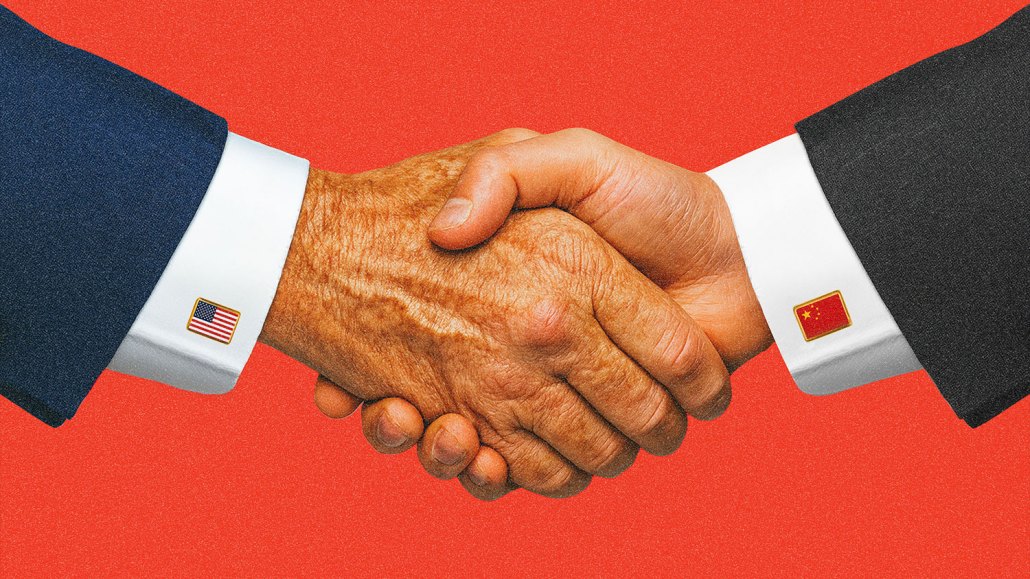
After more than a year in limbo, TikTok can finally put the threats of a U.S. ban to bed, now that the deal between the American and Chinese governments has officially been ratified.
On Jan. 22, TikTok officially confirmed its U.S. ownership: TikTok USDS Joint Venture LLC, marking the end to the will-it-won’t-it talk of a ban that overshadowed much of the last year.
The clarity is real but limited. For marketers, the resolution answers a few long-standing questions while quietly introducing a new set of uncertainties about governance, influence and what “American ownership” actually means in practice.
1. When does this all kick in?
While the deal is confirmed (at last), no one knows exactly when the separation will happen (or if it already has). TikTok has already shown U.S. users a new privacy policy on their For You pages, but what happens next? Will there be a phased separation? Is there a date by which it all needs to be completed? During that period, will there be outages or hiccups? All marketers know is that it’s happening, and likely soon if it hasn’t already.
2. Will a U.S.-centric feed supercharge engagement, or will it chip away at TikTok’s cultural cachet?
Because TikTok USDS will retrain, test and update its algorithm using U.S. data alone, what trends — and what ultimately dominates users’ feeds — will take on a distinctly American shape, said Kelsey Chickering, principal analyst at Forrester. Where it lands — and how often it surfaces — however will invariably shift for U.S. audiences, she added.
“This matters because the algorithm is the heartbeat of the app’s addictive experience,” she concluded.
3. Speaking of culture and popularity, what about its competitive edge?
TikTok’s success has hinged on its unique algorithm that no other platform has been able to replicate. But with this new setup, the algorithm is going to change (for better or worse), which could create an opening for its platform peers to get ahead.
4. If ByteDance tweaks the algorithm, does that mean the core base of the tech used by TikTok USDS will be impacted?
Since the U.S. is effectively licensing the tech behind the algorithm and tweaking it for the U.S., any changes to the original tech will likely have some form of impact — however big or small.
5. Should users / advertisers expect outages and bugs?
Handing control of an algorithm to an investor-led board is largely uncharted territory, especially at this scale. TikTok USDS’ board has been charged with safeguarding American user data and ensuring the algorithm is trained solely on U.S. inputs. What they have not been hired to do is write code. That gap matters. Decisions about governance, oversight or strategic tweaks can still ripple through a system this complex, triggering outages, hiccups or bugs that require real-time fixes. And there is no guarantee those moments won’t happen.
“If new infrastructure or algorithms are introduced, it opens up questions around how brands and users prepare,” said Buttermilk’s global head of brand, Lucy Robertson. “From feature continuity, to how commerce and monetisation evolve with renewed focus on the U.S. market.”
6. Sure, there’s interoperability so creators and brands can still be discovered — but how will that impact creator monetization?
In theory, everything should continue business as usual. But if TikTok’s U.S. algorithm will prioritize American content, that could have a material impact on international creator monetization. Could it mean that U.S. creators get boosted in the U.S., and reap the rewards that come with it? Or could it mean that international creators take a hit, if a big part of their audience was from the U.S. and their content doesn’t get promoted as much? And that’s before we even consider creators working with brands on the platform.
As paid social media expert Shamsul Chowdhury pointed out, there are now more added measures for brands to work with U.S. creators by way of renewed contracts.
“This may be a deterrent if the contracts are limiting or overly cumbersome for brands to deal with,” he said. “Brands do gravitate to local creators due to the familiarity and reach component, so I’m not sure how many global brands without a U.S. presence would lean on a U.S. creator.”
7. Does this shield TikTok from new scrutiny from lawmakers going forward?
TikTok has battled it out against U.S. lawmakers since 2020 in order to remain on American soil. Now the deal is finally signed, the question is whether or not TikTok USDS is officially in the clear, and will get no push back or scrutiny from lawmakers ever again.
“Some observers have expressed concerns that the current deal might not actually solve the issues that led to the legislation in the first place since Bytedance will still be involved with several aspects of the US version of TikTok,” said eMarketer’s principal analyst Minda Smiley. “I wouldn’t say TikTok is necessarily in the clear, so to speak. Despite its popularity in the U.S., I think TikTok has a challenging year ahead in more ways than one.”
8. Could this deal pave the way for similar-type existences for other non-U.S. apps in the future?
So far, this particular deal covers anything under ByteDance, including CapCut, Lemon8 and “a portfolio of other apps and websites in the U.S.,” according to TikTok’s announcement.
But this deal has also set a precedent that could be used if U.S. lawmakers deem other international apps problematic to national security in the future — a prospect that looks increasingly plausible as geopolitical tension widen, not just with China but across the Atlantic as well.
9. What will be the relationship between TikTok USUS Joint Venture and TikTok (global)?
TikTok’s former head of operations and trust and safety Adam Presser is now CEO of TikTok USDS Joint Venture, while TikTok’s former CEO Shou Chew is now CEO of TikTok globally and sits on the board – so does that mean Presser just answers to the board, or to Chew who runs the global business? After all, TikTok USDS will still be using the official tech behind TikTok’s algorithm.
10. How will all this be sold to advertisers?
Until now, TikTok’s pitch to advertisers was simple: join the platform and reach over a billion global users. Now that pitch might have to change given the new set up. The question remains, will it be as simple as a few checkmarks in the ads manager to switch between placements for TikTok U.S. or TikTok global, or will it be something more complicated entirely. The level of complexity will likely determine how many new advertisers join on either side of the Atlantic.
Finer details of the deal setup
Per TikTok’s announcement, here’s the key information:
- U.S. user data: TikTok’s U.S. user data will be held in Oracle’s U.S. cloud,
- Security: To satisfy national security concerns, a “comprehensive data privacy and cybersecurity program” will be in place and “audited and certified by third party cybersecurity experts”
- Algorithm: The new JV will “retain, test and update the content recommendation algorithm on U.S. user data” and the algorithm will be secured in Oracle’s U.S. cloud environment.
- Control: TikTok USDS Joint Venture will have “decision-making authority for trust and safety policies and content moderation”
- Global access: U.S. users won’t be shut off from the rest of the world. The JV will ensure U.S. creators and brands “can be discovered” and “can operate on a global scale”.
- U.S. management: The JV will manage global product interoperability, along with e-commerce, advertising and marketing.
New leadership
In addition to Presser’s appointment, the platform’s former security officer of TikTok U.S. data security has been appointed chief security officer of the joint venture, while the newly appointed board includes:
- Shou Chew – director (TikTok’s CEO)
- Timothy Dattels – director (senior advisor to TPG Global)
- Mark Dooley – director (managing director at Susquehanna International Group)
- Egon Durban – director (co-CEO of Silver Lake)
- Raul Fernandez – independent director and chair of the security committee (president and CEO of DXC Technology)
- Kenneth Glueck – director (evp in the Office of the CEO at Oracle)
- David Scott – director and security committee (chief strategy and safety officer at MGX)
What about the investors?
TikTok U.S. now has three managing investors which each hold a 15% stake in the JV, while ByteDance retains just under 20%, to satisfy the divestiture bill that started this whole process.
The remaining 34% will be split between a group of investors including Michael Dell’s family office, Vastmere Strategic Investments, Alpha Wave Partners, Revolution, Merritt Way, Via Nova, Virgo LI and NJJ Capital.
Responding to a request for comment, a TikTok spokesperson pointed to the TikTok USDS Joint Venture website for answers.


More in Marketing
Marketers shift growing shares of search spending to GEO
Generative AI is pushing brands to shift SEO budgets toward visibility in AI-generated answers over clicks.
Philadelphia Cream Cheese pulls dollars from search – people aren’t Googling ‘cream cheese’
Philadelphia Cream Cheese has stopped paying for search ads, at least to prospective shoppers on Google. Over the past year, the Kraft Heinz-owned CPG brand has phased out its traditional search ad spend, opting to put those dollars instead into retail media and broader channels, according to Maddy Zingle, vp of marketing for Philadelphia Cream […]
TikTok courts CMOs with first-ever Collective, as it targets bigger budgets
In its first CMO-focused event in the U.K. TikTok showcased how easy it is for brands to create content. The event is only part of the platform’s sharper 2026 commercial strategy: targeting larger, long-term ad budgets, courting independent agencies, and positioning itself as a serious competitor to Meta in 2026.