Join us Dec. 1-3 in Nashville for the Digiday Programmatic Marketing Summit
How a sports betting creator drove 200 million short-form views of his podcast
This article is part of an ongoing series examining successful creator business strategies. More from the series →
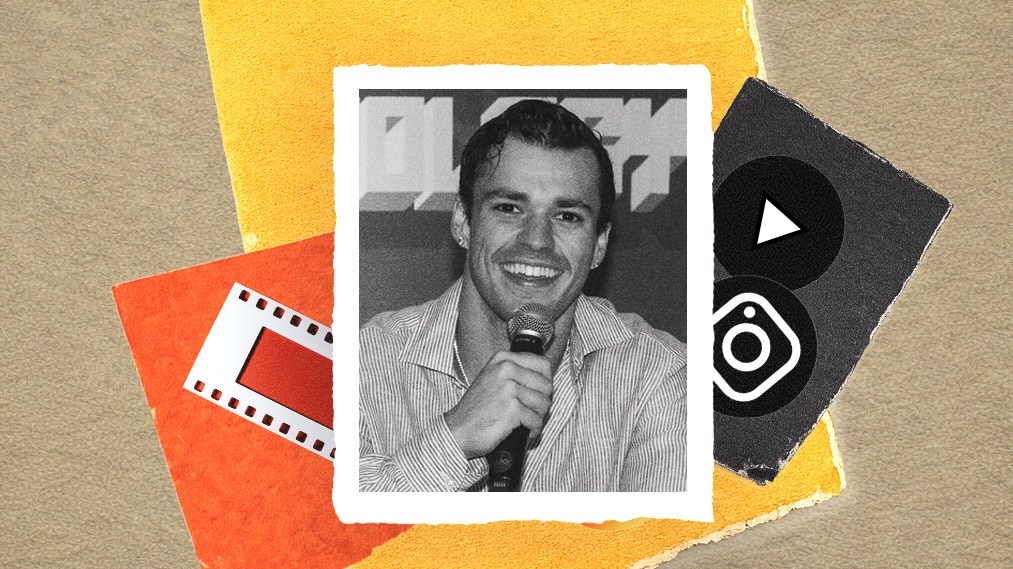
After some trial and error, Zach “Mystic Zach” Hirsch has determined how to toe the content line. The sports betting analyst and commentator has nearly 2 million Instagram followers, and a Draft Kings-sponsored podcast, Double Coverage, that boasts millions of views across YouTube and TikTok.
But not long ago, one of Hirsch’s biggest videos (both in terms of views and in terms of guests, as it was an interview with fellow creator-turned-boxer Jake Paul) was taken off YouTube, reportedly because it was sponsored by an offshore betting company Hirsch wouldn’t name, rather than one of the more mainstream platforms like Draft Kings, which is vetted by Google and available state-by-state depending on local gambling laws. The offshore sportsbooks exist in a sort of legal gray area — they’re unlicensed in the U.S., but federal law targets the operators and payment processors rather than the bettors themselves. Still, the takedown threw his content approach into relief and forced him to take a step back.
“That was really scary,” said Hirsch. He said the company wasn’t an approved Google vendor, which seemingly prompted the strike, but didn’t provide details.
This spring, Hirsch found that partner in Draft Kings, which he calls an “anchor sponsor.” There’s no exclusivity, so he’s free to get other partnerships, and the increased social acceptance of legal betting brands has made it fairly easy for him to find new partners, including direct-to-consumer telehealth and online pharmacy brand Hims. He did not say how much his partnerships are worth — or how long they will last.
“Sports betting hasn’t been a notable flag for brands when they vet creators,” said Mat Micheli, co-CEO and co-founder of Viral Nation. “Betting is now deeply ingrained in the culture of the brands that deem it important.”
However, Micheli stressed the importance of partnering with licensed, regulated vendors to avoid what happened to Hirsch last year.
“There are regulated multinational operators in other parts of the world that are legitimate and licensed, just not in the United States. For American creators speaking to an American audience, the standard has to be simple: you only promote something that is lawful to use in your audience’s own country. That’s the line that separates a brand-safe partnership from a risky one,” he said.
Hirsch’s creator career is deeply entwined with the controversial world of sports betting. He signed a contract with BetOnline as soon as he turned 18, and spent nearly five years with them, co-hosting a sports prediction podcast with former NFL player Adam “Pacman” Jones. At the time, however, he was just a paid host, and not involved in the show’s day-to-day production or marketing efforts.
Hirsch decided he wanted to take a more hands-on approach for his next podcast endeavor.
“I saw a lot of soft spots and inconsistencies that could be improved, especially as a Gen Zer,” he said. The biggest soft spot for him was the lack of reliance on other social media platforms to drive discovery. “Eighty-five percent of Gen Z sports podcast listeners are introduced through social media, which is clips,” Hirsch said, referencing a 2024 Edison Research report.
He leveraged his existing connections in the professional sports and entertainment worlds, which he built with a different podcast, Kiss and Myst, co-hosted by rap legend Jadakiss (Hirsh said the podcast was sponsored by World Star Hiphop for seven figures). These connections helped ensure Double Coverage would have an impressive slate of guests, from WWE wrestler Cody Rhodes to boxing legend Mike Tyson, as well as a regular slate of NFL players and UFC fighters, and leaned hard into circulating clips on TikTok and YouTube.
“We’ve had over 200 million views on short-form content since the NFL season began,” Hirsh said. Since July, the podcast has seen steady, impressive growth, with 151 million cumulative views on TikTok, and 43.7 million on TikTok, per the platform’s statistics shared with Digiday.
“I’ve gone all in on short-form content and identifying what resonates most,” Hirsh said. That includes shaving off a half-second or word to make the clip more punchy and hiring a professional designer for thumbnails. In its second season, Hirsch pivoted to make the podcast more fast-paced so it can easily be cut up into clips.
“There’s no room to breathe; it’s like you’re watching one continuous TikTok clip, which is what resonates with our audience,” he said.
For Hirsh, short-form video is not just a promotional channel; it shapes how the show is made. He says the team edits clips tightly, invests in thumbnails, and has made the second season faster-paced so moments can be cut for social platforms.
Double Coverage is also looking beyond the screen, with plans for more experiential programming and in-person events. Hirsh said his ability to “set up anywhere, travel anywhere, fit into any crowd” could help make that possible. He doesn’t have an official NFL partnership, but he says he is, “in talks” and plans on having a “massive media day presence” for the second year in a row.
“I’d love to get 100 million views a week on short-form content and get over a million views a podcast episode,” he said. “I’d like to have four anchor sponsors that believe in me and are committed long term that I can build around.”


More in Media

As publishers await click data, Google’s AI visibility push complicates the opt-out decision
Google is moving on two fronts: working up the U.K’s Competition and Markets Authority-mandated search opt-out publishers have long sought, while enhancing AI Overviews in ways that could make opting out less appealing.
WTF is the AI training opt-out policy token?
Major AI companies are backing a new AI training opt-out standard proposal for publishers, but it exposes deeper tensions over AI scraping.

Creators see promise in Instagram’s long-form push, but question whether exposure is enough
Instagram wants to pull long-form creators away from YouTube, but is it offering enough? Experts weigh in on the platform’s pivot.