Cheez-It bets on ‘Prince Cheddward’ mascot in an overcrowded sports marketing arena
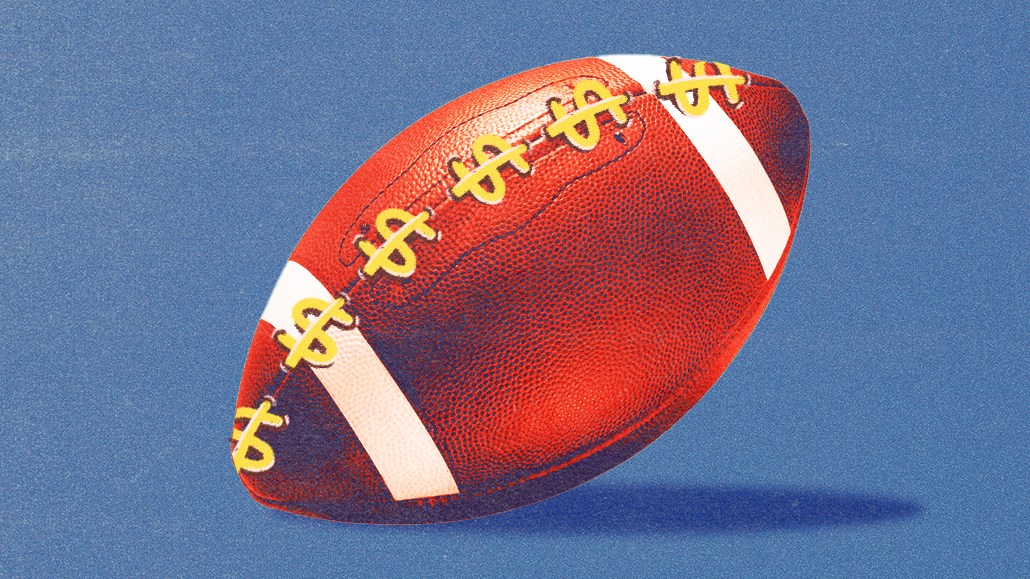
After a three-year hiatus, Cheez-It has officially brought its mascot Prince Cheddward out of retirement in time for this year’s Citrus Bowl. As sports marketing gets more crowded, Cheez-It hopes its revived brand mascot will drum up enough fan nostalgia to drive more sales.
“He’s a fan-favorite asset who helps us stand out without needing to ‘out-spend’ or ‘out-shout’ anyone,” said Cara Tragseiler, senior brand director for Cheez-It.
It’s increasingly necessary for brands to find new ways to break through the noise. This year, the WNBA set a league record with 46 official sponsors, including newcomers like Coach, Booking.com and Ally banking, according to Sports Business Journal. Even last year, 39% of marketers planned to increase their investment in large-scale sports sponsorships going into 2025, according to Forrester’s Q4 2024 B2C Marketing CMO Pulse survey.
“Everything is sponsored now. So slapping your logo on something isn’t going to have the relevance or the talk factor that it would have 10 years ago,” said Graham Douglas, co-founder and creative director at Gus, an indie creative agency.
Hence the need for Prince Cheddward’s return. The beloved brand mascot has seemingly worked for the likes of Duolingo with Duo the Owl, or Ellie the Elephant, who represents the New York Liberty WNBA team.
“They aren’t just telling a story, they are creating a ‘mythology’ that can serve as a powerful ‘hook’ elevating Cheez-It’s to top-of-mind,” said Noah Mallin, founder of Mallination, a marketing consultancy.
Cheez-It has long invested in sports — in its eighth consecutive year as a Bowl sponsor. College football is a marketing core pillar while the Kellanova-owned snack brand has plans to increase its professional basketball footprint, Tragseiler said. Earlier this year, Cheez-It launched a campaign with the Golden State Warriors’ Jimmy Butler. (Tragseiler declined to outline sports marketing spend details.)
The more ways Cheez-It can show up in sports, the better for the sake of brand awareness, it seems — at least as far as Tragseiler is concerned. Plus, it’s a calculated bet.
In a study, Cheez-It learned that fans who were aware of the snack brand’s game sponsorship were twice as likely to either serve or eat the crackers during football games.
“We know that it moves the needle in terms of purchase,” Tragseiler said. She later added, “College football is both a passion area for consumers, so it’s a way for us to drive brand relevancy by connecting over that cheered passion.”
Mascots like Prince Cheddward aren’t new. But this year, brands have increasingly been either launching or re-launching mascots to tickle consumers’ nostalgia and stand out in a saturated marketing environment.
This year alone, Domino’s pizza launched Mac Scott, a penne-shaped mascot, Cava rolled out Peter Chip, a pita chip with googly eyes, and candy brand Hi-Chew introduced its first official mascot Chewbie.
Part of it is the nostalgia, but brand mascots can be less volatile than human spokespeople — a safer bet for marketers navigating a polarized cultural landscape, according to Wayne Best, chief creative officer at VML, New York.
“If they do smart things, or tap properly into culture, they can increase commerce, brand recognition, and customer loyalty. If they are silly and lame? Well, kerplop,” Best said in an emailed statement to Digiday.
Looking ahead, the cheese snack brand has plans to activate around the FIFA World Cup next summer alongside its parent company. Tragseiler also said the brand has increased its sports marketing investment and remains “committed to continuing to activate in this space” without offering any specifics.


More in Marketing
‘The processes are continuing forward’: Advertising’s dealmakers press on with M&A despite Iran uncertainty
War in the Middle East is a problem for advertising’s dealmakers. Just not yet.

In graphic detail: The numbers making the case for what holdcos could be
What the data says about the CMO-agency relationship — and none of it is comfortable.

TikTok rebrands its advertiser pitch around full-funnel ambition
The company’s latest business campaign aims to make the point that the app sees itself as a top tier platform for advertisers, where the full funnel can happen within one experience.