Join us Dec. 1-3 in Nashville for the Digiday Programmatic Marketing Summit

This article is part of an ongoing series for Digiday+ members to gain access to how platforms and brands are pitching advertisers. More from the series →
OpenAI and its first ad tech partner Criteo are framing their pitch around conversational advertising — a format that’s long been promised but rarely delivered at scale. The pitch is landing in clients’ inboxes just days after Criteo announced it would give its advertisers direct access to ChatGPT inventory through its platform.
And true to the pattern of the past month, OpenAI isn’t doing the selling itself. That job falls to Criteo.
Here’s how it’s being positioned to buyers.
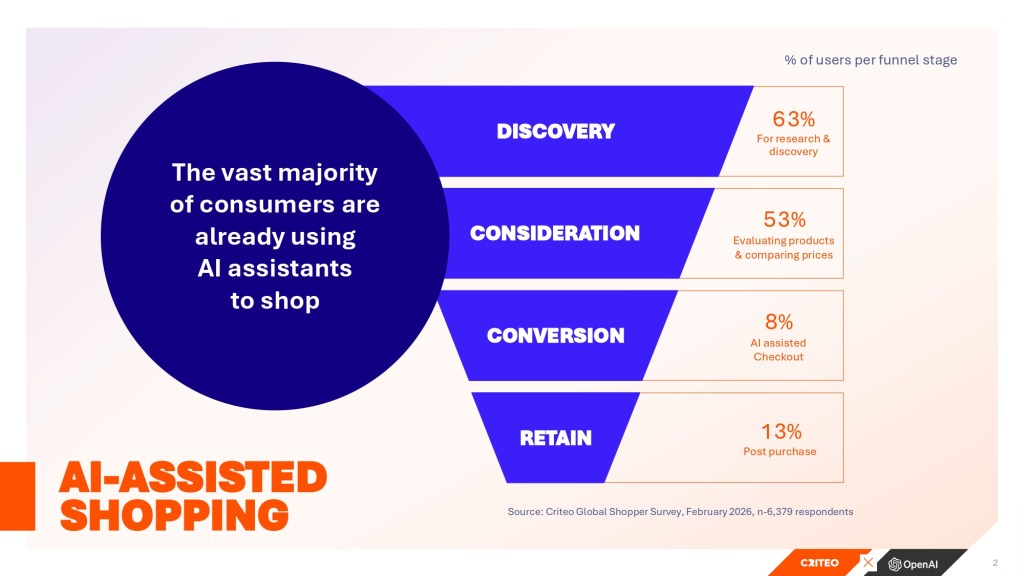
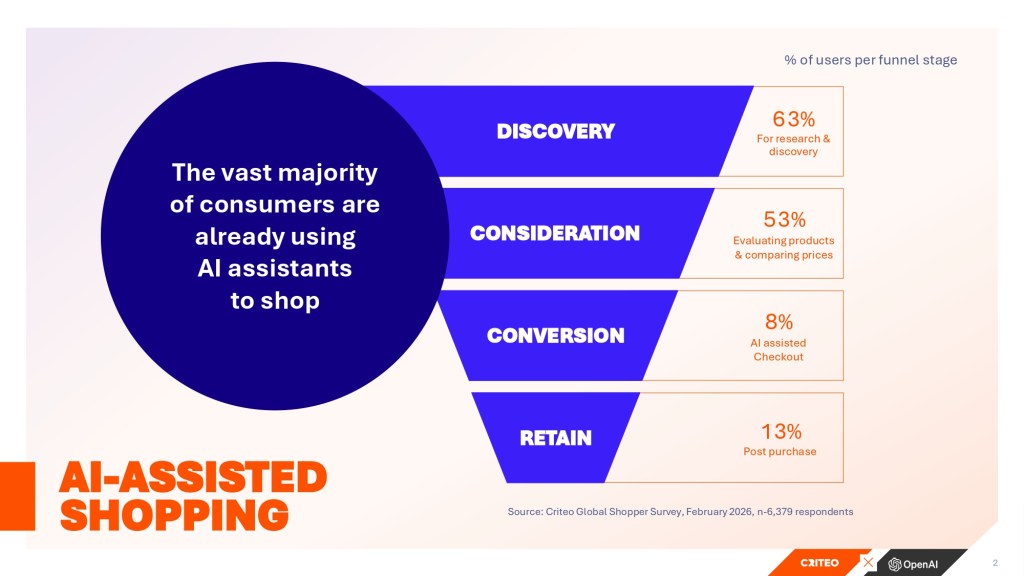
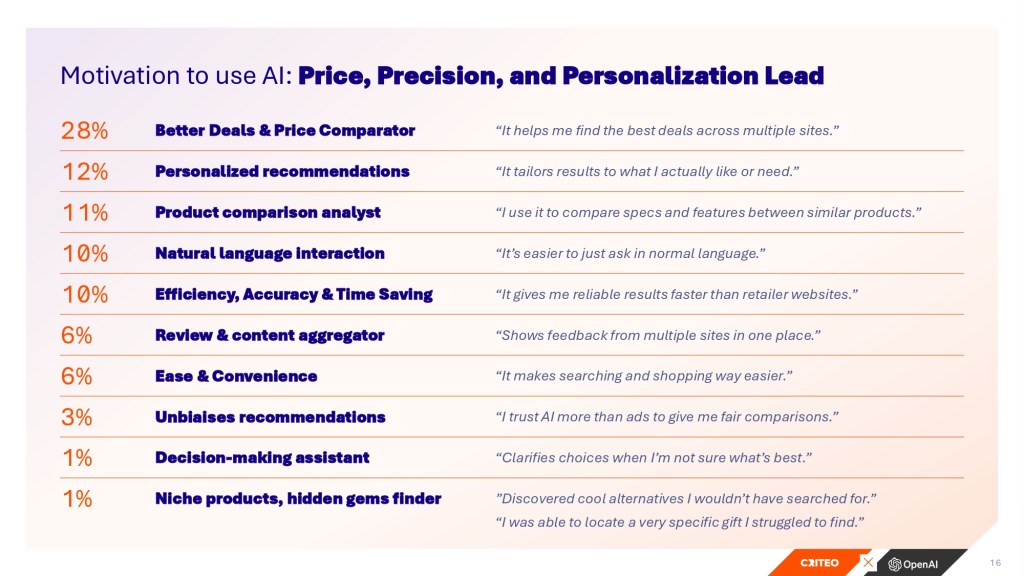
In the pitch deck which was shared with Digiday, Criteo starts off by talking marketers through the state of AI-assisted shopping, explicitly outlining how people are already using AI assistants to make purchasing decisions before making the case for why advertisers should be there too. The slide cites data from Criteo’s own global shopper survey from last month.
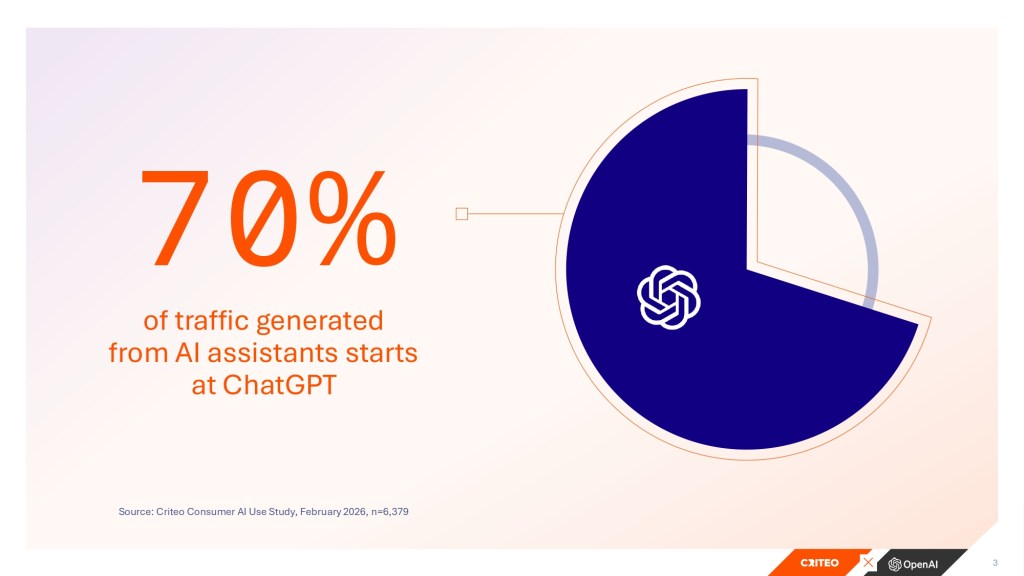
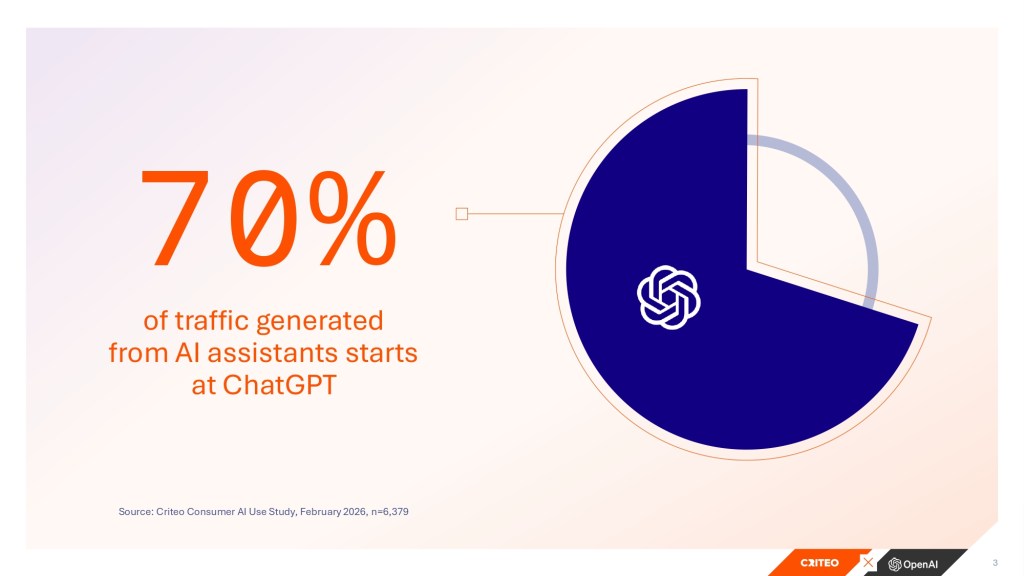
The next slide sharpens the argument, claiming ChatGPT is the dominant source of AI-driven traffic. The implicit message to buyers is blunt: if they’re not advertising on ChatGPT, they’re not really doing conversational advertising at all. Again, the data cited is Criteo’s own.
The following slide pulls the lens back to the funnel. Here, Criteo claims that shopping inside the ChatGPT compresses the distance between discovery and purchase, collapsing what used to be a multi-step journey into a single conversation.

If there was any doubt who ChatGPT ads are really designed for, the next two slides settles it.


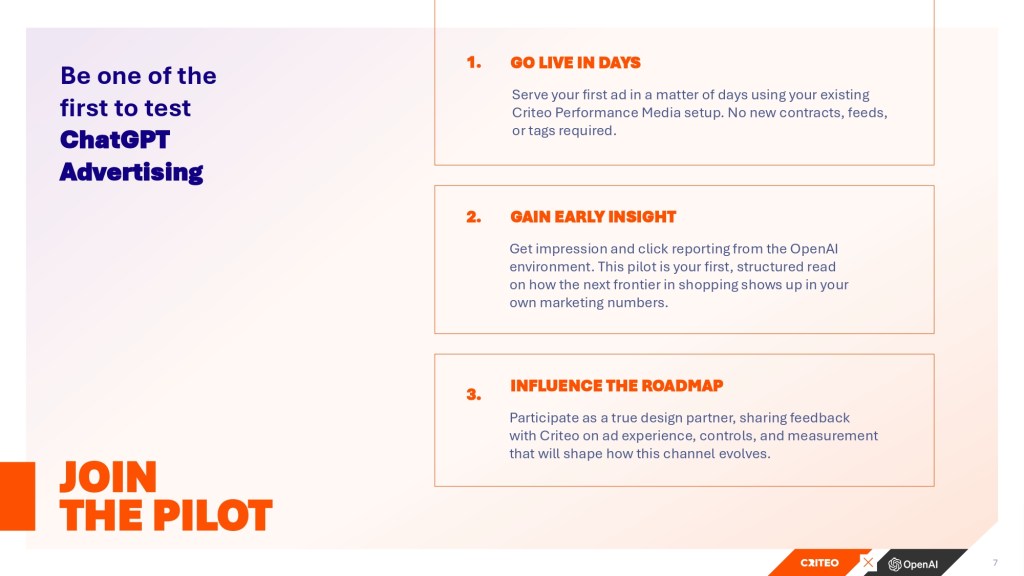
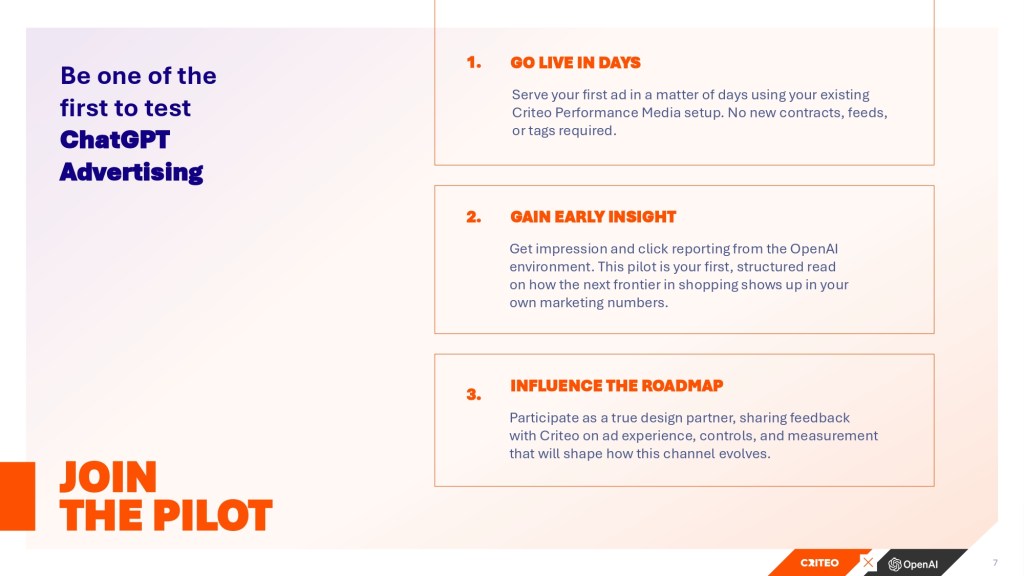
Next, the deck explains why Criteo is an important partner for OpenAI’s ad pilot. According to the deck, advertisers can go live with their ads in ChatGPT “in days” using their existing Criteo Performance Media setup, making the transition seamless, with no added complications of new contracts, feeds or tags.
Then, the deck shifts to make clear that Criteo is still in the early stages, running tests to make sure the basic plumbing works before spending real money. But the bigger ambition for Criteo, according to the deck, is to eventually manage ChatGPT ads for marketers the same way it manages all their other ad campaigns — display, streaming TV and social — in one place rather than as a standalone channel they have to handle separately.

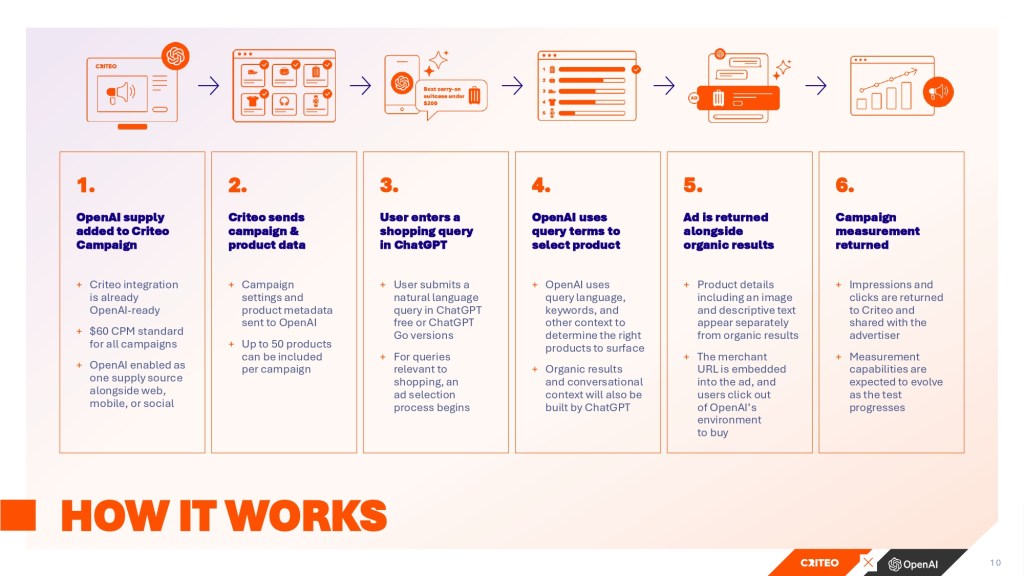
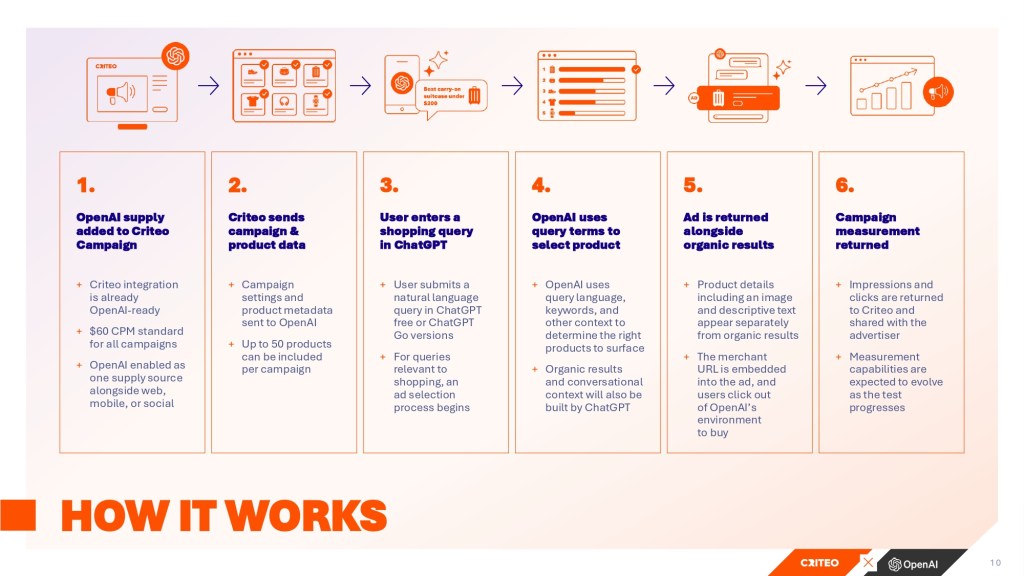
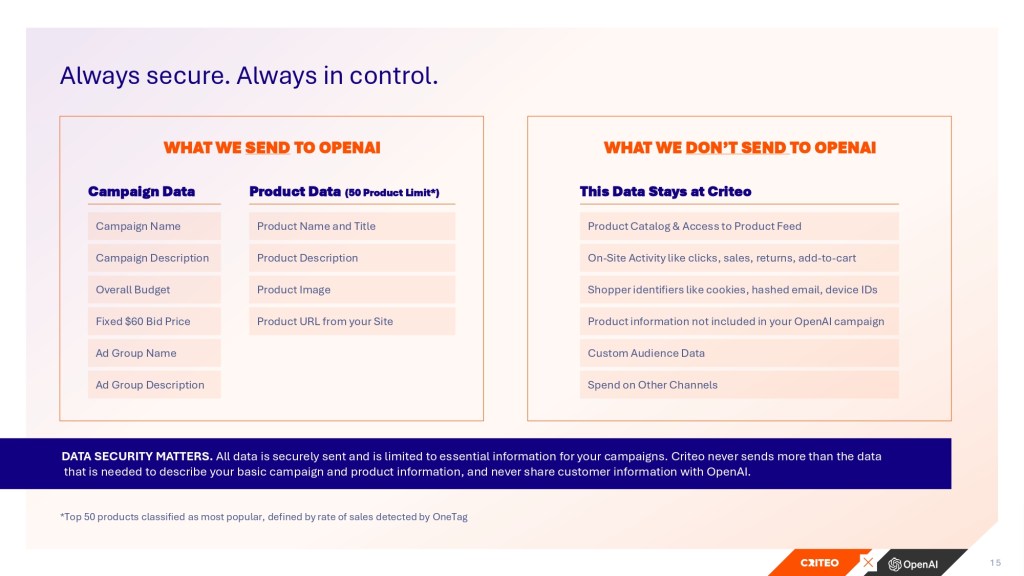
Slides 10 and 11 walks advertisers through a step-by-step of how the ad pilot process will work, and points out that they can include up to 50 products per campaign. What is clear is that while Criteo is opening access to its client base, the conditions around the pilot remain the same as who joined last month directly with OpenAI, including the $60 CPM which the deck confirms is “standard for all campaigns.” Though what is unclear is if the $250,000 minimum commitment is still required, if the aim of this partnership is to open up accessibility.
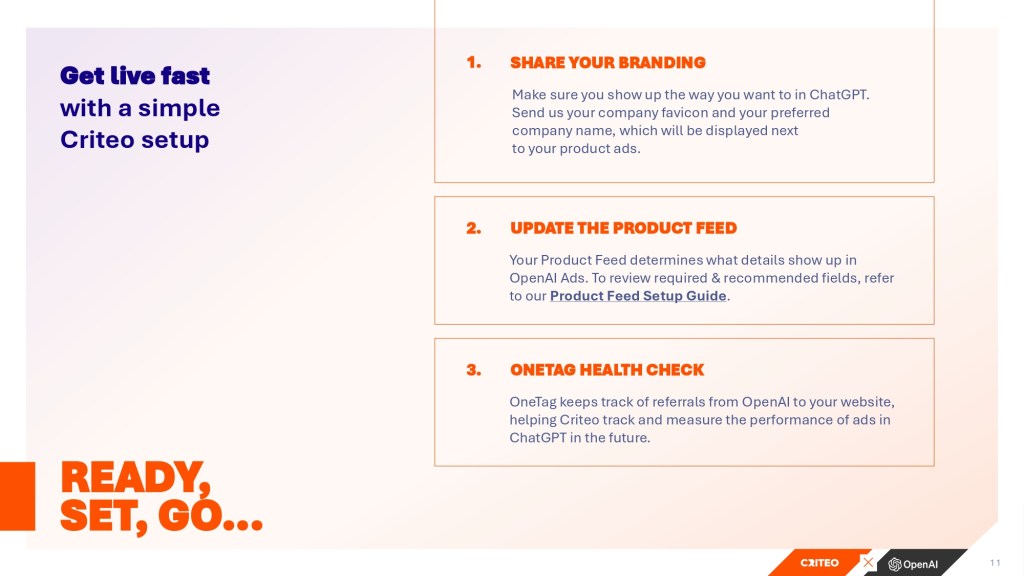
Once set up, advertisers have the ability to update the product feed using the OpenAI guide, while Criteo’s OneTag tracks referrals from OpenAI to the advertiser’s website, so they can begin to measure performance.
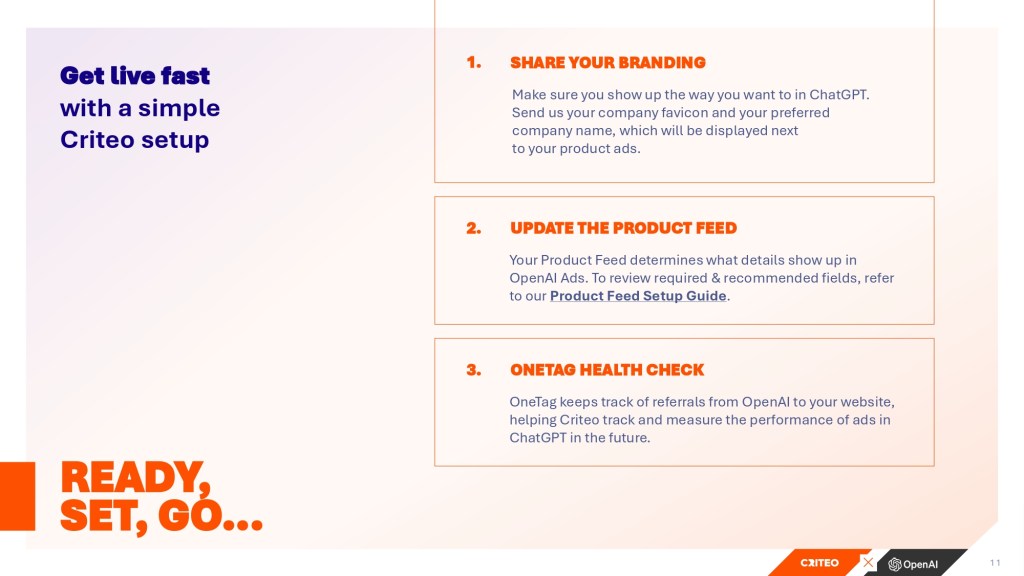
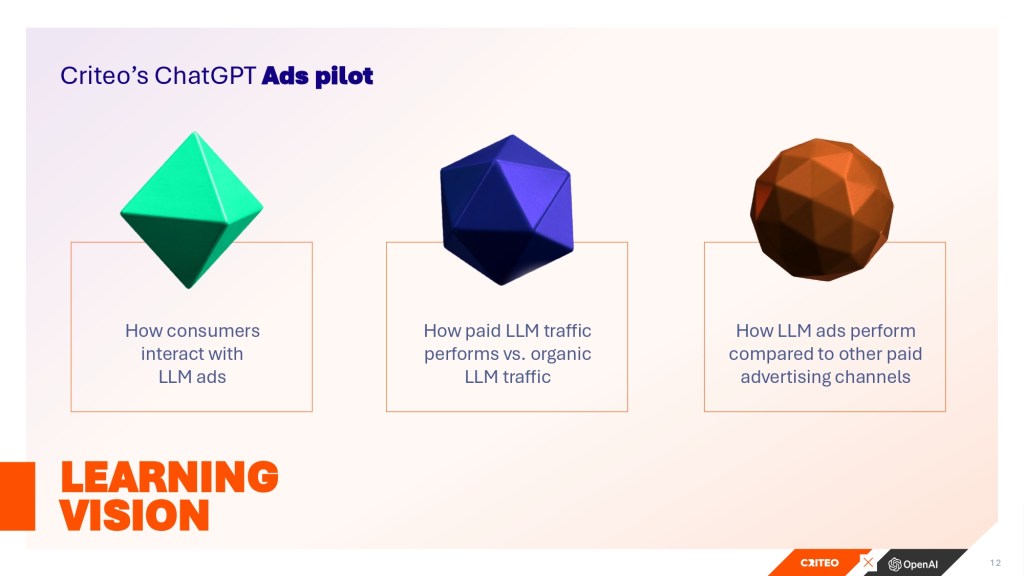
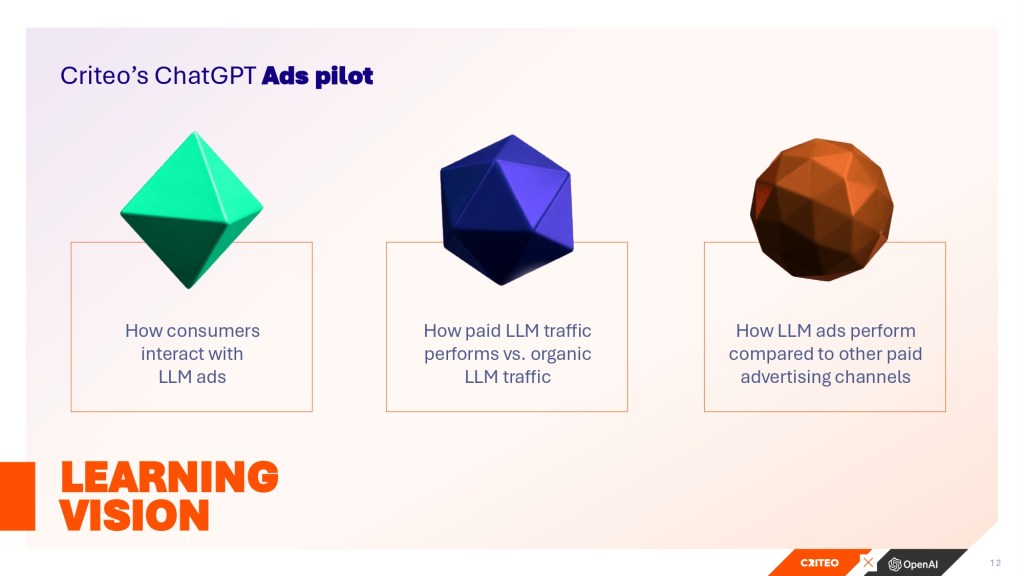
The final slide gives viewers a rundown of what marketers can expect to get in terms of learnings should they choose to be part of the pilot.
OpenAI and Criteo did not immediately return a request for comment.
Click through the below to view the full deck:








More in Marketing

Ruggable’s new ad spend strategy shifts focus to ShopMy creators
Ruggable is shaking up its marketing stack, pulling dollars our of Meta and into ShopMy creators ahead of a potential IPO.

Future of Marketing Briefing: The holdcos long, awkward courtship of the C-suite
What holdcos risk when they go over the CMO’s head.

Brands turn to content series and Jimi Hendrix to improve AI search performance
Guitar brand Fender and amp-maker Marshall both recently launched content series aimed, in part, at improving their visibility in AI search answers. It’s part of a greater pattern.