Join us Sept. 24 in NYC to connect with execs from Digitas, Claire's, Marriott, Havas and others
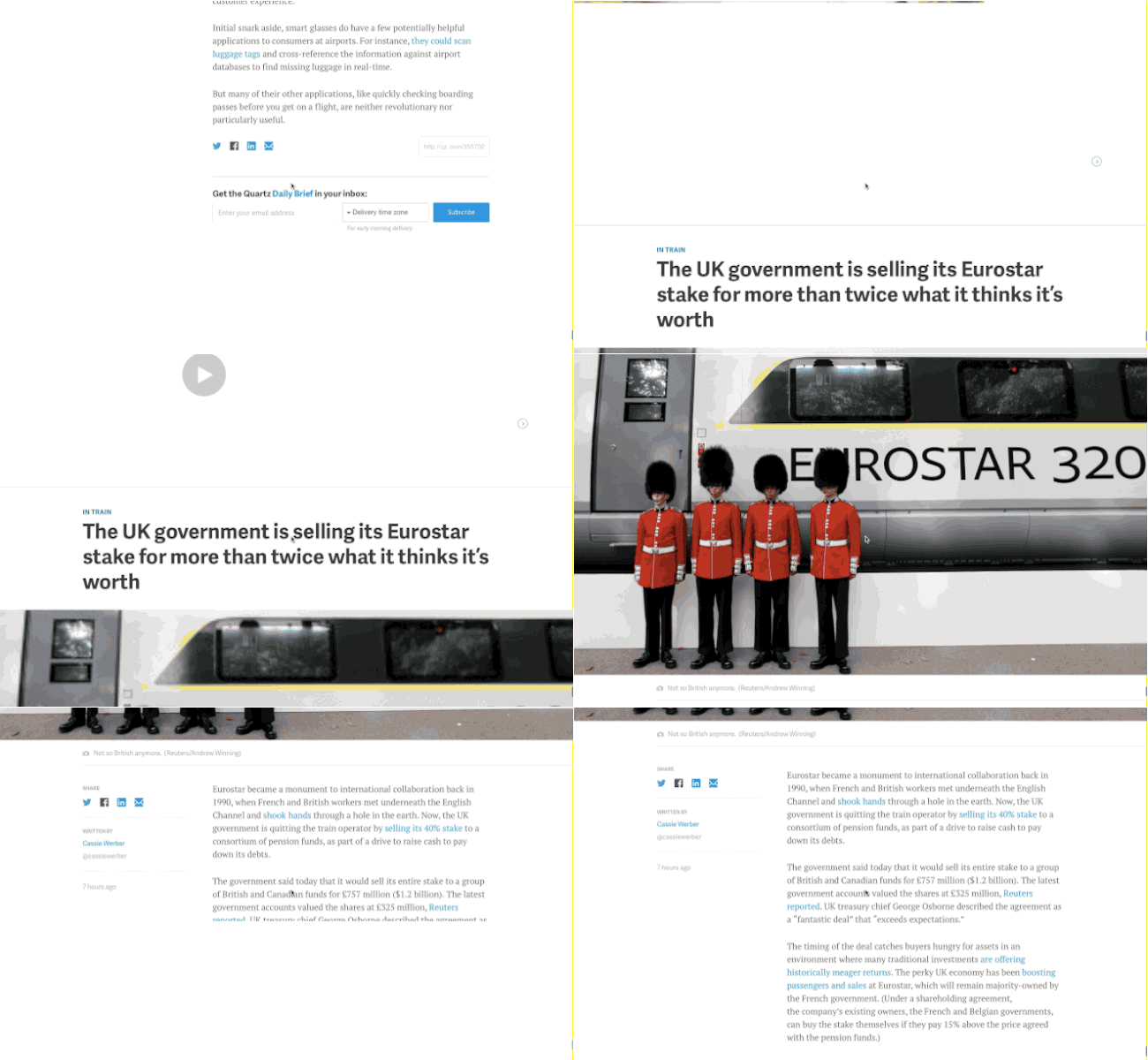
Publishers are in a battle for people’s time and attention. And one of the more popular weapons in their arsenal is the infinite, or endless, scroll. Made popular by Facebook and Twitter, it loads content continuously as the reader moves down the page. Quartz, Time and Bloomberg are among its adopters, and executives there say the endless scroll induces people to view more stories than they would have without it.
But there’s a tradeoff. Publishers also face pressure to make sure ads are being seen by humans as agencies push new viewability standards. And infinite scroll can be another hindrance to that already complicated process. When people scroll quickly down the site, it’s harder for ads to load in time.
While infinite scroll “helps with time on site and engagement, it can present issues with viewability,” said Brian Fitzgerald, founder and president of Evolve Media. Ads can be preloaded, but that can slow down the load time, giving readers another excuse to move on.
Publishers and viewability vendors say the key is “lazy loading,” where an ad isn’t loaded until the article it belongs with is in view or about to be in view. Another tactic is to have the ad in a fixed position in the sidebar. “Lazy loading is a way to maximize viewability by waiting until the consumer is ready to view that portion of the page, and it conserves loading effort,” said Matt McLaughlin, COO of DoubleVerify.
But for infinite scroll’s detractors, there are other issues. Chartbeat compared several sites that use either infinite scroll on article pages or story recommendation links. It found only “slight evidence” that sites with infinite scroll have higher daily depth of visit and site engagement times than sites without it, but no definitive evidence that infinite scroll improves depth of visit. And critics of endless scroll say it leads to a feeling that the user is drowning in content with no end in sight and causes them to get lost on the page.
Tim Nolan, group creative director at digital agency Huge, said the endless scroll was a natural evolution as the adoption of tablets and smartphones have made swiping with fingers a more-standard way of navigating. But when users scroll quickly, ads can suddenly interrupt the flow of content. “The constant jump or interruption is frustrating,” he said. “It’s even more pronounced with endless scroll, because if you go too fast, it’s going to push an ad down to make sure you see it.”
It’s easy to see how endless scroll could be used to game the numbers. According to Chartbeat, publishers typically count an article as being viewed when the article is about two-thirds of the way up the page, but it’s up to the publisher to decide when to count a view as a view. An infinite scroll-generated pageview is more passive than one someone actively clicked on, which may have implications for how advertisers value those pageviews.
With all these user and advertising issues, some sites including CNN and Forbes are eschewing the endless scroll.
There’s no endless scroll on Wired’s just-unveiled Web redesign. The site uses a format that integrates ad units organically — an approach that’s not possible with endless scroll, said vp and publisher Kim Kelleher.
Forbes uses endless scroll on its article pages, but there was no significant uptake in pageviews or time spent, so the publisher plans to eliminate the endless scroll from its article pages when it redesigns them later this year, said Mark Howard, CRO there. In so doing, Forbes is taking a page from apps like Snapchat Discover, which delivers users a set number of articles each day. “We almost feel like when putting more content out, it’s up to us to not give infinite, but finite choice,” he said.
CNN considered using endless scroll in its recent redesign but abandoned the idea and is experimenting with a side-to-side scroll that takes the readers to related articles instead.
“My general feeling and the feeling of the team is, the Internet is already an endless scroll of content,” said Dewey Reid, vp of digital design at CNN. “We want to make it very clear that there’s a beginning, middle and end. When you have an endless scroll, you don’t really get that.”


More in Media

Walmart adds marketplace data, deeper AI features to Scintilla insights platform
The upgrade includes access to marketplace data, customizable dashboards, custom alerts, a deeper version of its Marty agent and a closer link with the Scintilla data platform.

How women athletes are betting on the creator playbook
Women athletes are increasingly leaning on content creation to build their brand, grow their sports’ fandom, and help close salary gaps.

Axios preps new Axios Direct feeds for AI models, agents as revenue tops 2026 goal
Axios has reached its revenue goal for 2026. Now the news publisher is building a new revenue stream to keep up the pace in 2027 and beyond.