Join us Oct. 26-28 in Newport Beach for the Digiday Media Buying Summit
Brands turn to creators to build World Cup buzz amid a logistics nightmare
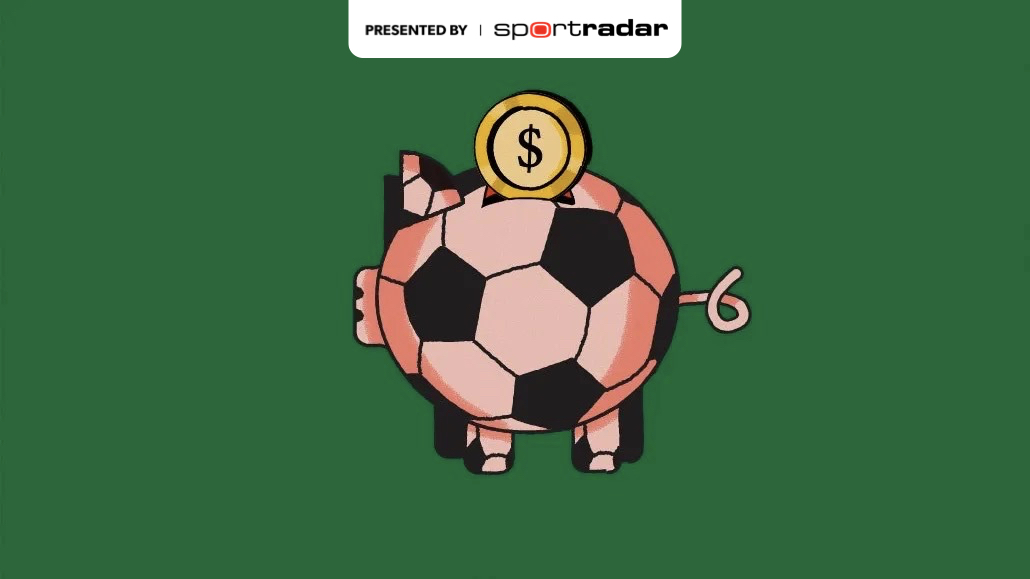
The 2026 World Cup kicks off on June 11, and the global soccer event is posing thorny challenges for brands looking to activate around it. With games spread across the United States, Mexico, and Canada, transportation difficulties and rumors of shady ticket reselling, there’s a growing tension between the scale of the event and how accessible it actually feels to fans.
Layer on the U.S.’ massive creator economy (forecast to reach $37.1 billion this year) and the reality that soccer still trails far behind America’s dominant sports, and you get an unusually tricky marketing environment. Rather than just centering activations in and around stadiums or relying on fans to tune into television broadcasts, brands are investing in creators ahead of kickoff, commissioning bespoke sponsored content, branded long-form series, and more, to drum up World Cup buzz from afar.
“Creators are going to be the key to success of how to build the fandom,” said Matt Grandchamp, svp and head of revenue at digital media publisher NowThis. “The logistical nightmare that is the World Cup in New York and New Jersey… what can brands do?”
With a geographically dispersed, month-long tournament, brands can’t just rely on staging sponsored events in host cities as they do with F1 or the Super Bowl and hope creators capture the cultural moments on site. They also need creators who can build World Cup buzz away from the host cities.
According to Cameron Adjari, CEO and founder of creator management agency Currents, brands have already been trying to capture soccer culture in the run-up to the tournament.
“There’s been some soccer events that our creators have tapped into with Major League Soccer or even lower divisions in the U.S. that have ramped up their league promotions…people were trying to talk more about soccer and the build up to the World Cup,” he said. “Now, they’re asking ‘how can we be involved in what’s happening culturally with the World Cup without activating day of at the game?’”
Two of Currents’ creators, Julie Sousa and Kenzie Williams, were hired to do just that: get their largely non-sports audiences excited for the World Cup from home. Sousa, who has 2.4 million Instagram followers, built her following on home event planning and decor, and has recently expanded into sports-themed parties. She’s created NFL-themed content and been hired by brands like King’s Hawaiian and Direct TV to produce party decor around the Super Bowl, the U.S. Open, and MLB games.
Sousa’s themed parties aim to help ease FOMO around big sporting events by encouraging people to gather and watch from home — which is crucial for an increasingly difficult-to-attend World Cup.
“A lot of people can’t afford going to an expensive football game, especially the World Cup, right now. The tickets are over $1,000,” said Sousa’s manager, Emma Clarke. “So how can you still make this an experience without having to actually be at the field or at the stadium? That’s really where Julie has thrived right now.”
The Athletic reports that the majority of 2026 World Cup tickets cost hundreds of dollars, with upper-deck seats in the several thousands. Group-stage tickets ranged from $60 (a price fans reportedly struggled to secure) to $620 apiece. In the months leading up to the games, ticket scandals have clouded the conversation, with both New York and New Jersey’s attorney generals subpoenaing FIFA as part of a joint investigation into the ticket process.
Sousa was approached by Ferrero to create two World Cup-themed party videos at home: one that launched ahead of the tournament and another set to go live in the coming weeks. Clarke told Digiday it’s one of Sousa’s higher-end deals, though she declined to share financial details. Sousa was also approached by Sutter Home Wines to publish a branded post ahead of the World Cup. She didn’t share the metrics they’re using to judge success.
Elsewhere, official FIFA sponsor Quaker Oats commissioned Williams, who makes family-focused, lifestyle content, to show how she “fuels” her day. Williams was also approached by Best Buy and electronics maker Hisense to promote its new line of televisions.
“We don’t have to be at a game to enjoy it, we can stay at home and watch it on the TV,” Williams said of her partnership.
That logic is playing out at a larger scale for rights holders, too. Sports streaming platform DAZN has been activating creators globally for months to capitalize on the first-ever 48-team World Cup In April, it launched a worldwide search for soccer creators, choosing one “correspondent” from each country for its DAZN48 initiative.
“This is all about how we tell the story of the World Cup through the fans’ eyes…not just what’s happening on the pitch,” chief revenue officer and president Walker Jacobs told Digiday “Everyone can watch the matches – but understanding the sort of cultural phenomenon of the World Cup is what this program is all about.”
Winning the two-screen World Cup
Watching the World Cup on home televisions presents a big opportunity for brands, according to Scott Sutton, CEO of influencer marketing platform Later. Sutton believes the earlier stages of the World Cup (which have more than one game a day for weeks) will be a “two-screen viewing experience,” with viewers passively watching games while also looking at their phones. That kind of dual-screen behavior isn’t new, but it reinforces that the classic big TV spot can’t be the only marketing play.
“If I’m a brand advertising early on in the World Cup, most of my users are living in a two-screen world, they’re half into what they’re watching, I can’t be super targeted, and I don’t have great attention,” he said. “That’s where social media and the creator economy come in. A lot of these companies are really engaging with more targeted, personalized content, hitting specific audiences in this two-screen world.”
COPA90’s executive creative director Shawn Francis shared similar sentiments, suggesting that this will be the “creator’s World Cup” with more people getting updates and highlights from creators rather than traditional broadcasters.
“The average person will probably spend more time interacting with this tournament on social media than they will spend time interacting with it on the television,” Francis said.
Building off of that two-screen experience is Lay’s, which is doing its own version of the friend group chat via WhatsApp chat with celebrities like Lionel Messi, Alexia Outellas, Steve Carell, and David Beckham during the World Cup. The first-party data is marketing gold, but it also allows the snack brand to extend its reach beyond televisions and into the conversations that happen around and away from the game itself.
Since this year’s World Cup is spread across three countries and 16 cities, activating in-person is all the more difficult (and Sutton suggested those attending the matches will be much more “generic” audiences instead of soccer die-hards), but snagging attention during a two-screen sport that’s broadcasting in a country largely ambivalent to it is a different kind of tough.
“With the geographic dispersion, it’s all over the place,” Sutton said. “It’s harder to try to hit any one kind of audience…the population is so heterogeneous. Major sponsors have to be ubiquitous brands that every human on earth could potentially want to buy.”
Sutton says those brands that aren’t ubiquitous are avoiding “untargeted blasting” across digital and social and are instead using creators to do more targeted advertising.
According to three different marketing execs who spoke with Digiday, World Cup-related briefs are still landing on their desks. That signals that both official FIFA sponsors and non-sponsors alike are waking up to the need for a creator-led, multi-layered strategy around a logistically difficult, but globally significant event. One layer is partnering with creators who can build interest from home before and during the tournament; a separate layer is bringing creators into on-the-ground activations and matches themselves.
“Creators aren’t just extending reach — they’re closing the distance between fans and the World Cup,” said Jacquie Kostuk, vp of strategy at FUSE Create. “This year, that role feels more necessary than ever.”


More in Media
Ad industry tallies early losses from Apple’s Safari tracking block
A week after Apple’s Safari block, the ad industry is still waiting for the other shoe to drop.

Welcome to Creator University: Inside the colleges building creator economy programs
As more young folks seek to enter the creator economy, universities are offering classes covering every layer of the still-growing ecosystem.
For some publishers, agentic advertising is still a question of ROI
Despite the hype around agentic media buying, some publishers remain skeptical of its potential to deliver meaningful revenue.