Join us Dec. 1-3 in Nashville for the Digiday Programmatic Marketing Summit
Omnicom Media digs into the reasons people avoid ads — and offers solutions for clients
Keep up to date with Digiday’s annual coverage of Advertising Week in New York. More from the series →
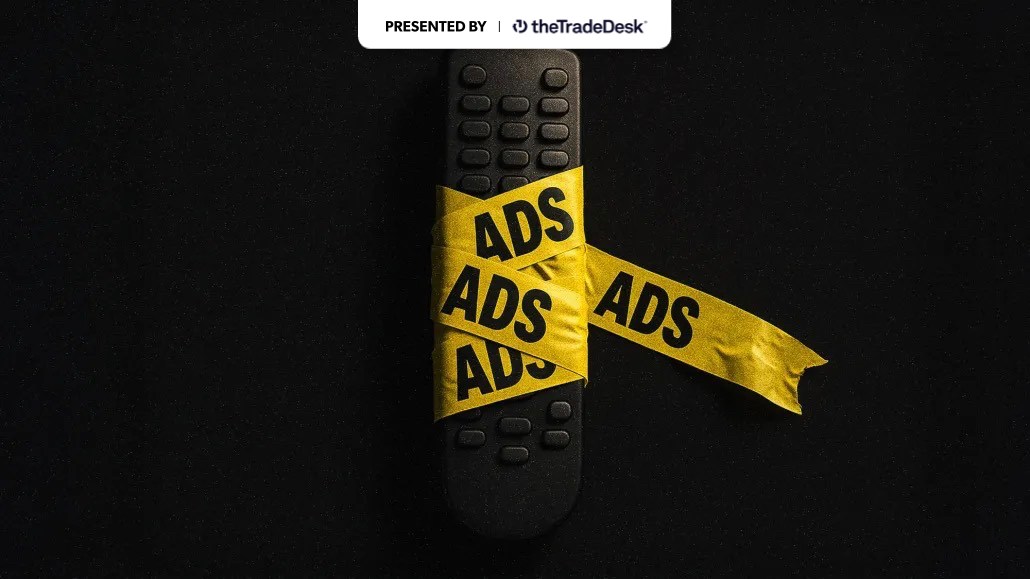
It’s no secret that the avalanche of advertising that’s descended on consumers in the last decade has sent millions of them scrambling for ad blockers and other ad-avoidance tools.
Omnicom Media set out to dig deeper into the causes and the solutions around it, having brushed up against this topic in prior research it’s done over the last two years.
The resulting research has yielded a study called From Tuned Out to Leaned In: How to Combat Ad Avoidance, which Joanna O’Connell, chief intelligence officer at Omnicom Media North America, explained to Digiday in advance of Advertising Week, when the holdco’s media arm will present the research.
The study from Omnicom Media Intelligence found that 65% of U.S. consumers avoid advertising to some degree, with audiences using a range of tools and tactics to control when, where and how they encounter ads. It surveyed 1,136 adults 18-plus in August, but also conducted behavioral research with eye square among 1,200 U.S. consumers, testing four video-based creative executions across product placement, brand integration and augmented reality. The research examined conscious and non-conscious responses to advertising, including attention, emotional response and post-exposure perceptions.
One inescapable conclusion, which sounds more obvious than it is, is that ad avoidance is not a cohort but rather a set of behaviors — such as blocking or skipping an ad as well as a broader spectrum of active and passive behaviors. And, as anyone can tell you, behaviors can be modified.
“We very deliberately called it ad avoidance, because what we’re looking at is actually a spectrum of behaviors,” said O’Connell. “How do you get people to want to experience your [client’s] advertising? How do you get them to feel like it’s augmentative — that they don’t want to skip it, or or even as importantly, just kind of tune it out?”
Omnicom Media Intelligence defined avoidance as a consumer mindset in which the goal is to evade exposure to advertising, through active or passive means and whether consciously or non-consciously. One out of four consumers describe themselves as very or extremely active in avoiding ads, while another 40% are somewhat active.
Active avoidance includes choosing ad-free services, using ad blockers, avoiding cluttered environments, and skipping, muting, scrolling past or closing an ad. Just over two-fifths of the respondents (41%) said they pay for subscriptions to avoid advertising.
Passive avoidance is less deliberate. Consumers may turn to a second screen, redirect their attention to another task or automatically filter out familiar, repetitive, or irrelevant advertising. The common thread is not an aversion to brands, but to advertising experiences that feel interruptive, repetitive, irrelevant, or not worth their attention.
So what can brands do to fight these varying levels of ad avoidance? Omnicom Media Intelligence pointed to these four avenues for marketers and their agencies to ponder:
- Planners should use frequency, context and creative together so each ad exposure goes beyond just repeating the same message — which is arguably one of the worst aspects of traditional reach and frequency thinking.
- Design the experience, not just the ad by considering where and when a brand enters the consumer experience, how much attention it demands and whether it adds value to the surrounding content.
- Move beyond traditional advertising by using product placement, brand integration, sponsored content, immersive experiences, and other emerging formats to be additive rather than disruptive.
- Think holistically and connect all efforts, since consumers don’t experience content, creators, commerce, sponsorship, media, and analytics as separate work streams. Employ a shared strategic playbook through activation, optimization, and measurement.
“Consumers are saying brands have permission — they just want it to be good,” said O’Connell. “They just want to enjoy it. They want it to be value adding to them, and so that feels super important.”
Megan Pagliuca, Omnicom Media North America’s chief product officer, said the work builds on the holdco’s prior research efforts and the actions that resulted from them. “We’re evolving the ecosystem to make it better for consumers to mitigate [ad-skpping] behavior. Two key examples are our work we did around frequency and negative reach, particularly in CTV, which is very important. Because, as we’ve talked about in the past, CTV has a huge frequency problem… But we also then did the connected content work” that Omnicom rolled out at Cannes Lions this year.
The holding company will release details of an ad-tech partnership on Wednesday during Advertising Week that aims to get its clients to that more influential place in front of consumers.


More in Media Buying

Ad Tech Briefing: Stagwell’s Freestar deal brings buying and selling under one roof
The acquisition expands the holding company’s publisher monetization business, making fees, incentives and inventory selection a test of transparency.

Stagwell buys Freestar, putting publisher ad sales inside a holdco
Publishers have long wished agencies would put their money where their panel talking points are. Stagwell has done something adjacent.

Midterm political spending throws spanner into regional advertiser holiday plans
Rising political ad spend is making life harder for regional and local brands hoping to use CTV ads to reach consumers in Q4.