Media Buying Briefing: How the 4As’ Justin Thomas-Copeland is updating the org’s mission
This Media Buying Briefing covers the latest in agency news and media buying for Digiday+ members and is distributed over email every Monday at 10 a.m. ET. More from the series →
As industries change — and which industry isn’t undergoing massive transformational change right now? — so must their industry associations.
Look no further than MMA, which started out as the Mobile Marketing Association during the decade that was “the year of mobile!” – then subtly became the “modern marketing association” – and is now simply MMA, dedicated to unlocking the power of AI for marketers.
Well, if you haven’t noticed, the agency world is in the midst of tectonic change the likes of which it’s never experienced before. Holding companies are now fewer and flaunt their massive scale, while independents try to compete using bristling tech and antelope-like agility. And AI disrupts everything from entry-level staffing to synthetic audiences.
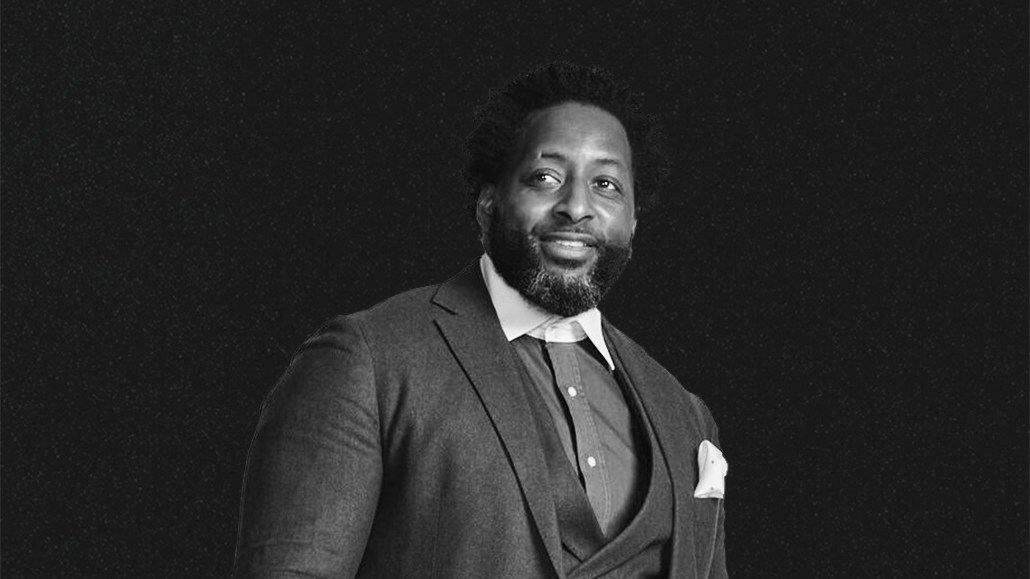
Enter Justin Thomas-Copeland, who took over as CEO of the agency world’s industry association, the 4As (which used to stand for the American Association of Advertising Agencies, then crunched it to 4A’s, a possessive that never should have been, and is now back to 4As.) Thomas-Copeland is on a mission to update what the 4As does for its membership.
“More than an inflection point, I think it’s almost like a mini rebirth of our industry,” said Thomas-Copeland, who was North American president/CEO of DDB, but has held executive roles at Rapp, Wunderman, Omnicom Precision Marketing Group and Novartis.
He cited the rise of platforms, the explosion of creators/content, the rise of AI and tech and macro-economic pressures all adding up to fresh challenges for CMOs, which then extends to their relationship to agencies. So he’s set out to reinvigorate what the 4As does for its more than 600 members.
“We have to relearn — we have to go back and ask new questions of ourselves,” said Thomas-Copeland. “We have to ask how we’re supporting our members, because our members are in right in the thick of this, and they’re looking for us to help them. We’ve somehow got to understand this rebirth and be a step ahead of the rebirth in order to do that well.”
The following is an edited conversation of how he plans to go about it.
Where do you start this undertaking?
“The one-sentence brief that I’ve given ourselves was to build the new era of relevance for the four As. Don’t get me wrong — some things do work, and they’ll continue to work. But there’s a velocity in this industry now, where even those things that are tried and tested, you need to also step back and say, ‘Is there a 10% pivot that we need to do based on where we’re at?’ We have got a new plan that we are calling 4As-as-a-service. We’ve named it, because the name of it had to really communicate our intention as an organization. That, just by inference, tells you we’re trying to be useful. We’re trying to be scalable, we’re trying to be smart. Technology is going to be integral to how we think about ourselves and how we service our members.”
The pillars on which it’s building 4As as a service:
Expanded Audiences
“The 4As is very good at engaging the C-suite. But we wanted to broaden out those audiences to think about middle managers. If you’ve been in the industry 10 years or so, you’re probably thinking, ‘This is a whole new day, and I’ve got to relearn all these skills. AI has really changed everything. So, what am I doing today, and where is my trajectory for tomorrow?’ It’s even more acute, arguably, for the new entrants to the industry — think 24 months and below. Because they’re probably entered the industry thinking it’s one thing, and in the last six to 12 months, it’s become something altogether different.
We have a pilot program called I Am New Here. It’s a platform that is aimed for those 24 months and below, newish into the industry people who maybe are trying to find their feet. And this platform does three things: It tells you what you need to know [the ABCs of business etiquette for the post-pandemic generation], tells you what you need to grow [a guide to upskilling], and it tells you what you need to succeed [a guide to how to get a promotion]. Those are the three sort of monikers of this platform.’
Talent
“Talent is a founding pillar of the 4As. We want to ensure that we are driving and helping agencies to drive their talent strategies. I recruited an evp of people talent and upskilling [in Sylvia Banderas Coffinet]. We changed the focus of that role, and it’s really to understand people and inclusivity, and navigating a career, and then upskilling, because we’re in a time where you have to just upskill all the time. We’re getting questions from members on organizational design — what does that need to look like? How much do I put into more people, or is this now becoming more of a revolving door industry? What are the things that I should do to keep people? And how do I give them experiences where they want to stay in the agency?”
Connected services/AI
“We’re looking at how we can bring in AI and agentic services to help service our members better — to give them what they need when they need it, and to give them a service layer that is responsive and scalable. This will be web based to start with, but we want to, if it’s successful, migrate it to like an app based service.”
Brand and Growth
“There are things that we now need to do to move and extend out into new communities, switching on new audiences. We’re always going to be member-focused as an organization, but we also need to be a reflection of the industry. So we need to also look at acquisition and how we build and extend our brand through digital content. We have a growth strategy as one of the pillars, where we’re looking at how we organize for growth. We’re looking at how we create ongoing flywheels of acquisition that will drive through into membership.”
Product/Productization
“We do studies and research and surveys, and events are a big part of what we do. As we move forward, we’re going to have a real product mindset to those things. Because there is so much velocity in the business world and the cycles of change. By having a product mindset, it allows us, on an ongoing basis, to look at all the things that we do and ask questions. Is this fit for purpose? Does it need to be pivoted? Do we need to take a more strategic view? Do we do the next wave of a research paper, or do we pivot to something else? Do we keep with the same partner, or do we go to another partner? It allows us — and this is a really important part of that strategy — to start to value map. So we can say, this goes with this and that with that offers real value to our members.”
That’s a lot
“We won’t land all of that in a day. Strategy meets reality when you start to execute. But you can see how we’re starting to think strategically about doing pilots that can give us a lot of these multi functional learning and give us an understanding of the appetite for the 4As showing up in these types of areas. “
Color by numbers
The playwright George Bernard Shaw once said that Britain and America were “two countries separated by a common language”. Turns out our viewing habits are different too. A new McKinsey report on media consumption behavior, points to key differences in how much media British and Americans watch — and the degree to which it’s commercialized. The study was based on a survey of 7,000 consumers, with 1,000 U.K. based. Some stats:
- $4.56 per hour: the average media revenue generated by U.S. consumers, versus $3.33 for the U.K.
- Monetization of the U.K.’s audio market, including podcasts, is 2.7 times lower than the U.S.
- 634 minutes: how long Brits spent spent watching, listening or reading media in 2020. Two hours less than American consumers, McKinsey estimates this has plateaued and expects it to begin declining soon as the return-to-office gains ground. — Sam Bradley
Takeoff & landing
- Havas continued its epic buying spree with the purchase of Kaimera, an independent media agency that helps to boost Havas Media Network’s reach and access to the Australian and New Zealand markets. Acquisition terms were not disclosed.
- Horizon Media’s AI driven Blu platform (see below for a story on Blu) is adding advanced audience and ID matching capabilities from Nielsen. The measurement firm also said it is making its audience segments from Nielsen Marketing Cloud available across the Amazon Ads marketplace (the DSP and data clean room).
- Account moves: WPP’s Wavemaker won the U.K. government’s giant media business, said to represent close to $400 million in media spend annually, with an emphasis on social media, and taking it from Omnicom … IBM put its global media into review with incumbent WPP Media declining to defend the business … Dentsu pulled a hat trick last week: iProspect won media AOR duties for retailer Floor & Decor, while sibling Dentsu X landed digital media lead duties for cosmetic surgery brand Sono Bello, and Merkle Singapore landed digital marketing strategy for Royal Brunei Airlines.
- Personnel moves: Gravity Global promoted Kyle Allen to executive managing partner of Connection + Media Analytics, replacing him in his former role with Andy Blotner as svp, head of media … Horizon Media tapped Emily Malloy to be evp of client value for MX, its principal buying arm in Canada … Serviceplan Make UK hired Daniel Lipman as managing director, part of the agency’s UK launch, coming over from VML where he was Coca-Cola client lead for Europe … Publicis Creative U.S. hired Ogilvy executive Charlotte Tansill, a strategist behind the “Michael CeraVe” campaign, as its first president of social, creator, and earned.
Direct quote
“Using commerce data to target and measure shoppable TV is something that just wasn’t possible a few years ago … That reality has opened up a world where now even non-endemics like those in financial services are building audiences based on commerce data from Amazon, Walmart, Target and others to target and measure video advertising. This is definitely shifting dollars that would have historically gone to traditional TV into targeted STV powered by commerce signals.”
— Ryan Walker, head of retail at PMG, as told to Sam Bradley
Speed reading
- Sam Bradley laid out charts and graphs from a number of prognosticators, including WPP Media, Dentsu, Madison & Wall and WARC, to weave a sense of what media should expect to see grow or shrink in 2026.
- Bradley also looked at media buyer reaction to Google’s AI Max services, finding some mild disappointment in what it says it can do and what it actually can do.
- I took a look at Horizon Media’s AI-driven connected marketing platform Blu, and how’s it’s helping the indie giant to become as much a consultancy to clients as a media investment arm.
- And I also spoke with a few agencies that are using Knower Tech’s AI overlay, AdsCopilot, which the company is offering for free.


More in Media Buying

Media Buying Briefing: What will Meta’s and YouTube’s legal losses mean for the marketplace?
As Meta and YouTube suffer defeats with damages in court, will media buyers steer clients away from them? Unlikely for now.

Genius Sports opens up real-time live sports targeting to brands
The live sports data firm is working with Publicis and a laundry list of SSPs ahead of major sports tentpoles like the NBA Finals and World Cup.

Future of Marketing Briefing: A cynic’s guide to the most transparent dispute in programmatic history
No, the industry doesn’t need another hot take on The Trade Desk’s standoff with the agency holdcos. I’m going to give you one anyway.