Join us Dec. 1-3 in Nashville for the Digiday Programmatic Marketing Summit
Media Buying Briefing: How Publicis keeps winning clients without pitches

This Media Buying Briefing covers the latest in agency news and media buying for Digiday+ members and is distributed over email every Monday at 10 a.m. ET. More from the series →
PepsiCo’s surprise appointment of Publicis marked the fourth time in the last year that the French agency holding company has managed to bag a major media client without having to participate in a competitive review.
A week after the PepsiCo raid, luxury conglomerate LVMH appointed the company to run its media investments in Asia-Pacific and assigned it the Tiffany account in the U.S. In April, Publicis was appointed by Microsoft, while it picked up a big slice of Paramount’s business last June, also without formal reviews.
The no-pitch wins aren’t limited to media; in 2024, Publicis creative shop Leo Burnett won B&Q without a pitch.

Agencies and clients both count the cost of competitive reviews, which can be time-consuming and expensive affairs. But few public companies are content to commit to a partner as important as their media agency without going through a formal process. Publicis appears to have turned that discontent into a sharp new business tactic.
According to CEO Arthur Sadoun, the company is taking on more clients without pitches and opted to duck six competitive reviews this year alone that its execs suspected would be decided on price.
“Pitches are shorter, they are more on capabilities… so that in some cases, actually, we are not pitching anymore and winning without a pitch,” Sadoun told analysts during the company’s July earnings call. More clients, he said, were opting merely to “kick the tires” on Publicis’ offering before appointing them.
In isolation, that sounds like a CEO talking up his business’ growth prospects. Next to the PepsiCo win, it’s confirmation of a broader pattern.
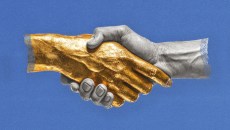
While they lack the structure of a formal pitch, ad-hoc reviews for advertisers do still follow a predictable path.
Initial contact is made at the C suite level, often between agency CEOs and brand CMOs; the agency presents its tech, its ideas and its staffing proposals; they negotiate on price or rates. According to Steve Boehler, co-founder of consultancy Mercer Island Group, it’s a stripped-down version of the traditional review that condenses that process from its usual 18 months down to just two or three.
“From the agency standpoint, it’s perfect,” said Boehler.
It certainly suits Publicis, currently the industry’s most profitable agency group. The company possesses a stable operating margin, and a charismatic CEO flanked by upper management like Publicis Media boss Dave Penski or strategy leaders like Esther Franklin and Carla Serrano that can sing from the same hymnsheet. And it has a well-practiced narrative centered around its media and data capabilities in the present, with its own remodeling work firmly in the past.
“They’ve got the best story, and they’ve been working on that story for several years,” said Boehler.
With its closest competitors WPP, Omnicom, Dentsu and Havas each grappling with internal disruption of one flavor or another, the French company has something of a free hand. It can choose to leave its competitors to race between themselves to the bottom — and in the meantime, execute an aggressive prospecting strategy, identifying clients that might be poached from rivals and then making an approach.
(No one company only wins all the time, of course – and in 2025 Publicis did lose LVMH’s European media business to Havas’ Forward Media unit.)
In the case of the PepsiCo win, a little detective work reveals Publicis’ likely initial route in. Although OMD had held the soda- and snack-maker’s global media business for the last two decades, Publicis won a three year brief for China in 2022, which it retained at the end of 2025.
In China, Publicis’s media shop Zenith developed a bespoke business unit called “PLUS+” for Pepsi, Mirinda, 7Up, Gatorade, Bubly, Lay’s, Quaker, Doritos and Cheetos that was designed to provide “an ecosystem of media, creativity and technology for positive impact on business outcomes,” per a company statement. It sounds remarkably similar to the “One PepsiCo” unit Publicis is now building for the client’s global business.
That visible trail hasn’t made the switch any less bitter for OMD; Omnicom’s CFO Phil Angelastro called the loss “disappointing” and “unfortunate” in remarks made last week.
Gartner analyst Andrew Frank suggested that pitches may be ill-suited for clients shopping for a media or AI platform offering like One PepsiCo, or for advertisers with mature in-house capabilities of their own.
“They’re not really buying the vision of a campaign strategy,” he said. “They’re buying the capabilities that Publicis has assembled to support campaigns. The whole buying criteria framework has changed.”
But while agency execs often complain about time spent pitching — a 2023 MediaSense survey found 86% of agency execs said pitches were “excessively time and cost-exhaustive” — industry observers don’t expect that more clients will follow PepsiCo or Paramount’s example.
“It is extremely attractive to think that you can evaluate quickly and not have to have a disruptive process and make decisions fast,” one consultant, who spoke on condition of anonymity, told Digiday.
But there is a huge risk attached, they added. The CMO that chooses an agency without the usual level of diligence will have few excuses should shareholders or internal stakeholders begin asking questions.
“I am surprised that these moves stand up to internal audit,” said the consultant.
Should they find themselves nursing a case of buyer’s remorse, that CMO will likely find themselves running a review process from scratch just a few short years later anyway, they noted.
Given the average tenure of CMOs, don’t expect to see them gambling openly on slimmed-down agency reviews. If the pace of no-pitch wins picks up, it’ll be due to agency new business aggression rather than client corner-cutting.
Color by numbers
Here’s a quick analysis using Comvergence data on just how much Publicis is actually winning with the PepsiCo account, as it resigns the Coca-Cola North American business it landed just 18 months ago. PepsiCo’s total global media spend in 2025 is estimated at $1.7 billion, but Publicis already had the APAC portion of that business, which means Publicis netted $1.1 billion with last week’s win. With Coca-Cola preparing to move out of Publicis due to the conflict with its rival, that North American media spend is estimated at $805 million, leaving Publicis with a $295 million gain. Not half bad for a no-review win, but a lot less than the $1.7 billion that’s been bandied about.
Takeoff & landing
- B2B growth marketing agency Bol acquired Brandcave, a product consulting and design agency founded by Cody Miles, who will join Bol as chief AI officer.
- Account moves: BarkleyOKRP won media and creative duties for PetSmart … Accenture Song won media and planning duties for health insurer Medibank in Australia from Dentsu … French dairy firm Lactalis (brands include Président, Galbani, and Parmalat) put its European media business up for review, and incumbents include Publicis’ Zenith … Tinuiti landed AOR duties for sneaker brand Snipes in the U.S. … Fabcom landed media duties for Club Med across the APAC region
- Personnel moves: Butler/Till named former 4As CEO Marla Kaplowitz to its board of directors … Tinuiti named Havas And R/GA vet Wes Harris its global COO … Independent Method1 named Jessy Magor its head of growth, a new position.
Direct quote
“It was a kick to the gut.”
—An Omnicom executive on losing the PepsiCo global media business to Publicis with practically no warning.
Speed reading
- Another reaction to PepsiCo’s move from Omnicom to Publicis came from Omnicom CFO Phil Angelastro, who Seb Joseph quoted in his story reporting from the Goldman Sachs’ Communacopia and Technology Conference.
- Seb Joseph also covered the news of Amazon cutting a deal to let its advertisers buy ads from ChatGPT via its DSP.
- Kimeko McCoy looked into how agencies are folding AI into their working habits, but are less sure of how to adapt their master service agreements with clients.
- And I analyzed why two different prognosticators revised their 2026 media spend upwards as we barrel into fourth quarter of 2026.


More in Media Buying
Omnicom lands Coca-Cola’s North American media business, as WPP retains its global remit
The beverage giant’s US and Canada media move to Omnicom as the holdco’s CEO John Wren made the case it would build a bespoke team, not a Pepsico holdover.

Omnicom said its integration of IPG is nearly done, and the results are starting to show it
As organic revenue grows and margins increase, Omnicom CEO John Wren said the fruits of the effort to buy IPG are starting to pay off.

Media buyers chart path for brands and sponsors through high NBA demand
Brands looking to push more dollars towards NBA audiences must choose between spending on a sponsorship, or funnel budget into TV, streaming and social.