for the Digiday Programmatic Marketing Summit, May 6-8 in Palm Springs.
Media Buying Briefing: Horizon’s Bob Lord on the ways agencies have to adapt to survive today
This Media Buying Briefing covers the latest in agency news and media buying for Digiday+ members and is distributed over email every Monday at 10 a.m. ET. More from the series →
The word transparency is bandied about across the media and marketing world, with marketers demanding it (or so they say), and agencies and tech firms insisting they deliver it. But it all feels sometimes like kabuki theater, with larger-than-life protestations and apparent action, but little substance behind what’s being expressed.
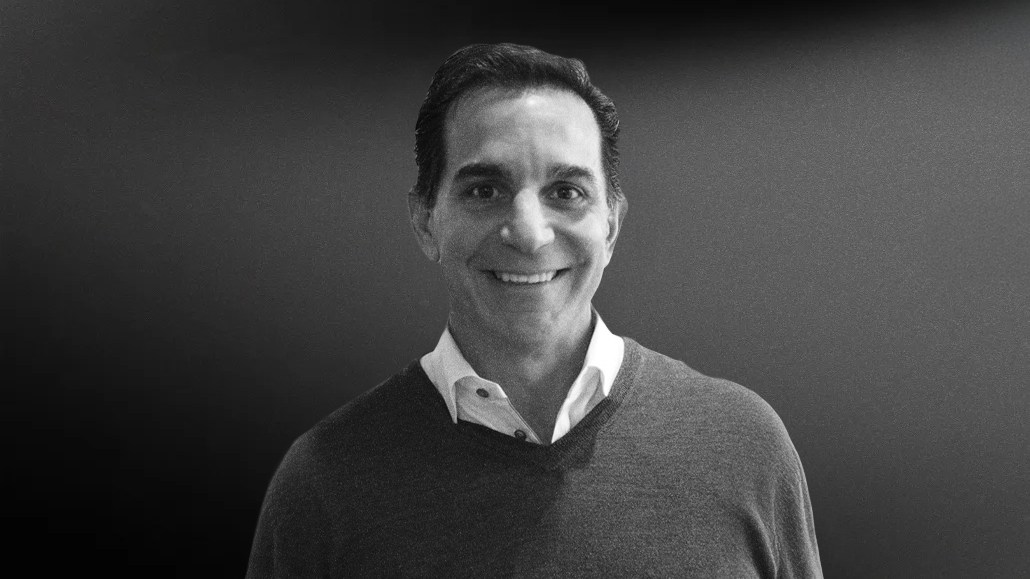
That’s been a bugaboo for Bob Lord, veteran media executive who a year ago joined Horizon Media Holdings as president and has been a principal architect of the independent media agency group’s AI strategy. Lord delivered a keynote address to the Advertising Research Foundation’s Audience X Science conference in New York last week, addressing what he sees as a lack of transparency in the entire sector — but something that AI can address and improve.
In his speech, Lord decried the fact that agencies largely haven’t changed their ways since the 1960s (he showed a clip from Mad Men when the first IBM computer was installed at Sterling Cooper) and with changing relationships with their clients, agencies have turned into self-serving vendors more than growth partners. To his argument, lack of transparency is a big contributor to this reality, and AI will only make the workings of an agency even more opaque.
“The problem is, most agencies are thinking about AI in the wrong way. They’re focused on reducing costs, not thinking about how they use AI to grow the client’s business,” Lord told the audience. “AI isn’t simply about disrupting marketing. It’s exposing agency models, the inertia of their current business… And the question shouldn’t be ‘how do I use AI?’ that marketers ask. It should be, ‘who am I partnering with?’ Marketers should be asking, ‘Is my agency built for the future? Is it built to drive my growth?’”
“Over time, we have become vendors,” said Lord in a Q&A with ARF president Scott McDonald. “And I think with this advent of bringing data insights and media insights about how consumers are behaving through AI, we are going to be growth partners again in five years.”
But transparency is in the eye of the beholder sometimes. “Transparency is a major narrative coming from independent media agencies, as an effort to position against holding company media scale,” noted Jay Pattisall, vp and senior agency analyst at Forrester. “The choice marketers face in buying media services is one of scale vs. skill. But the two are not mutually exclusive.”
To Pattisall’s thinking, AI may actually muddle the transparency issue even further. “With agentic media planning and buying on the immediate horizon, agent-to-agent media buying has the potential to be even more opaque given the volume of transactions and impressions that can be handled at any given time,” he said. “Yet, agentic buying could also reduce the number of hops [added steps] and adtech fees, increasing clarity and reclaiming some working media budgets.”
Digiday sat down with Lord to get more thoughts from his presentation.
The following conversation has been lightly edited for space and clarity.
What’s the fundamental change that needs to happen for agencies to design themselves for tomorrow?
Let me first say that I don’t think all of them will make it. That’s because the economic models that they’ve built are antiquated, and it’s ‘the more effort I do for you, the more I will get paid.’ It’s not about whether or not it drove your results. Those those agencies will fail. The agencies that will survive are the agencies that will say, Okay, I will align with your performance and these are the tools I need to drive that performance.
The agencies that survive are the ones that will hit a reset button, [but] they’ll get killed [in the short term]on the stock market, because they’re going to reset their technology investment, or they’re going to write off the technology investment, and they’re going to build anew. The economics behind it is really hard to pivot to this new model.
In the next year, we’ll see whether they can actually launch an operating model that is more transparent in an open ecosystem, and they’re true partners of clients. I think a smaller agency will have an easier time to do it.
Where else do you need to be transparent with clients?
Normally, agencies create a contract with a platform vendor. They use that contract to have fee transfer. Sometimes, agencies will mark up those fees to the client because they’re managing those fees. We don’t do any of that. We are transparent about the technology fees that come to the client, so there’s no pass through up-charge there. Then you talk about the data fees. Yes, we have our own Blu fee [Horizon’s AI platform], but we’re very transparent about what that fee is. But there are other data fees that that flow directly from our contract with the data company. Other agencies mark those things up. So think about markup after markup after markup. I call that the tech tax. There is a tech tax that happens on these platform and data fees that are not transparent to the client.
With AI technology, now we have to have transparency in how the model is created, how the decisions are made in that model, and then how the model is trained — the explainability around the models. When I understand some of the other competitive tools, they’re not showing what the explainability is around those models.
How is that affecting your business with clients?
It’s been leading to more outside the retainer work. [Clients are asking] ’Can you set up this project management office for me? Because I want to take this media platform and I want to connect it into my CDP, can you help me get a bunch of technologists that sort of can create that PMO?’ It’s adding incremental revenue outside the retainer, which is exactly our plan of becoming a growth partner, because the more tentacles I have in their organization, the more that I can actually help them with their core business.
How do you transition from an FTE model to outcomes/earnings per share [EPS] model? You said onstage you lost a potential client because they said it would decimate their marketing budget in favor of the tech budget.
They did give us a consulting engagement though.
So they gave you a different remit?
I probably should’ve said that part. I’ll still be around the hoop [to win their media business]…
When I have an operating system model that I can point to, it’ll really start to flip. And I’m still in the process of getting it done. It’s only been a year since I’ve been here, so I think another 12 months from now, we’ll have two or three that are on that operating model … I think it’s our jobs to help our clients with build[ing] an operating marketing platform that has the data intelligence layer, it has the tools and technology, and then has a human intelligence layer. Those three layers, if they work in sync, can create this learning system for the marketing organization that you currently want to have today. I need to build one or two of those.
Color by numbers
As media agencies large and small work to incorporate more generative AI into their operating systems, marketers aren’t exactly sitting still. A new report from SaaS marketing firm Keen Decision Systems found that (44%) of advertisers plan to in-house more of their media planning functions. Just over one in four (26%) of marketers are actively testing or spending on advertising within generative AI interfaces like ChatGPT or Gemini. Another 23% of advertisers are researching it but haven’t invested in ads yet. Other stats:
- Brainstorming campaign ideas (47%), media planning (47%) and campaign creation (44%) are the most popular current use cases for AI among marketing teams.
- However, marketers are hesitant to fully buy in, as 33% say the loss of human connection is their biggest concern regarding the rise of AI.
- The good news for media sellers (although this research was conducted before the war with Iran) is 62% of advertisers expect to see their budgets increase in 2026 over ’25.
- Among media channels, social media is seeing the biggest increase in investment at 63%, followed by retail media networks (56%) and AI chatbot advertising (50%).
- Surprisingly, CTV may see the lowest increase in investment, at 19%.
Takeoff & landing
- Dentsu launched what it calls a Global Media Planner as part of dentsu.Connect operating system, enabling retail and shopper environments, in-store and in-bar activation, paid media, branded content, sponsorship and experiential across 15 global markets. It’s powered by an attention database built in partnership with Lumen.
- New independent B2B agency Multiply, which bills itself as the first AI-native media agency, secured $9.5 million in funding (from early-stage VC firm Mayfield, with participation from Sorenson Capital), and is launching what it calls Self-Learning Advertising, where ads use internal data to continuously get better on their own.
- Account moves: Dentsu won media duties for luxury fashion firm Tapestry (which owns the Kate Spade and Coach brands) in all regions outside the U.S. … Dept landed integrated agency of record duties for INEOS Automotive, which makes the Grenadier Station Wagon and Quartermaster pickup variant. Duties include media, creative, digital, and social … Press reports indicate that burger chain Wendy’s has put its media into review, and that Publicis’ Spark Foundry won’t be defending the business.
- Personnel move: Sightly hired Dave Otis to be svp of sales, coming over from a similar position at Seedtag.
Direct quote
“The perception is that [principal media] will provide you a cost value and cost efficiencies. The question comes down to: does it really?”
— Jason Trubowitz, svp, media and measurement leadership Initiative lead at ANA, which released an updated report on principal media.
Speed reading
- Trubowitz was quoted in Sam Bradley’s Future of Marketing briefing, which mainly focused on how agency holding companies are trying to differentiate themselves with their AI-driven operating systems.
- In his Future of TV briefing, Tim Peterson looked at how Netflix is bringing bigger and broader branding deals to bear to this year’s upfront marketplace.
- Sam Bradley also broke some news on how independent media agency Butler/Till is employing programmatic agentic media buys to cut down on intermediary fees.


More in Media Buying

Ad Tech Briefing: Disney and Mediaocean sound the death knell for the I/O
The pact suggests the insertion order is on borrowed time and is a pitch to the CFO as much as it is to the CMO

Media Buying Briefing: Instrument’s CEO on how agencies need to lead clients on AI
Part of Stagwell’s Code and Theory Network, Instrument has been able to help clients imagine projects not doable just a handful of years ago.

Transparency brought down The Trade Desk’s Publicis deal but it may not be enough to win its other clients
Nexxen’s launching new AI features. Amazon’s broaching streaming partnerships. And Viant, Blockboard and Stackadapt are setting out their stalls.