Join us Dec. 1-3 in Nashville for the Digiday Programmatic Marketing Summit
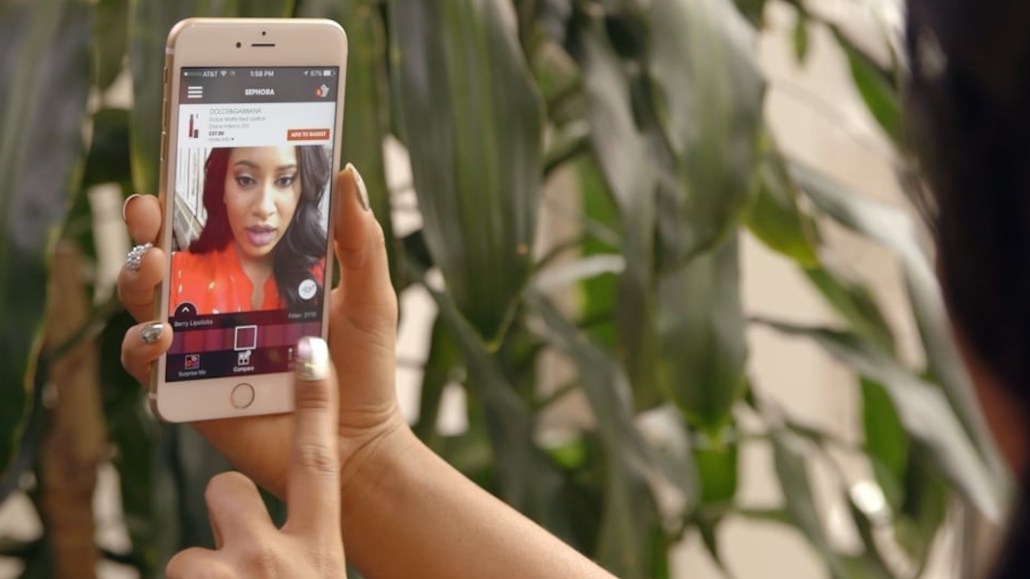
Bridget Dolan and her team at Sephora’s Innovation Lab, based in San Francisco, were a year into developing a new virtual reality tool for the retailer’s mobile app when the technology used to power the experience saw a breakthrough.
“When it comes to augmented and virtual reality, it can only be successful if it’s truly useful,” said Dolan, Sephora’s head of innovation. “We weren’t interested in just buzzy. A lot of things like technical accuracy and timing had to come together, and there was a time last year when, during testing, we hit a tipping point.”
Sephora’s team and its technology provider, augmented reality platform ModiFace, had pushed facial recognition technology to a new point of sophistication. After months of development, the technology can break down one virtual makeup application into a step-by-step layering process, while maintaining critical accuracy and reaching mass scale.


More in Marketing

AI boosts discovery but reviews still seal the deal, new research shows
ChatGPT is where 16% of shoppers start looking for products. However, only 9% go there to actually buy something.

Future of Marketing Briefing: Advertisers have more ways than ever to choose a holdco, and free holdcos to choose from
Fewer holdcos, more ways to pick one: inside the changing agency pitch.

Walmart Connect pitches brands directly as it pushes lift studies ahead of holiday ad deals
Walmart Connect is using lift studies to prove ad performance directly to brands ahead of the holidays, signaling a tighter race with Amazon.