Join us Oct. 26-28 in Newport Beach for the Digiday Media Buying Summit
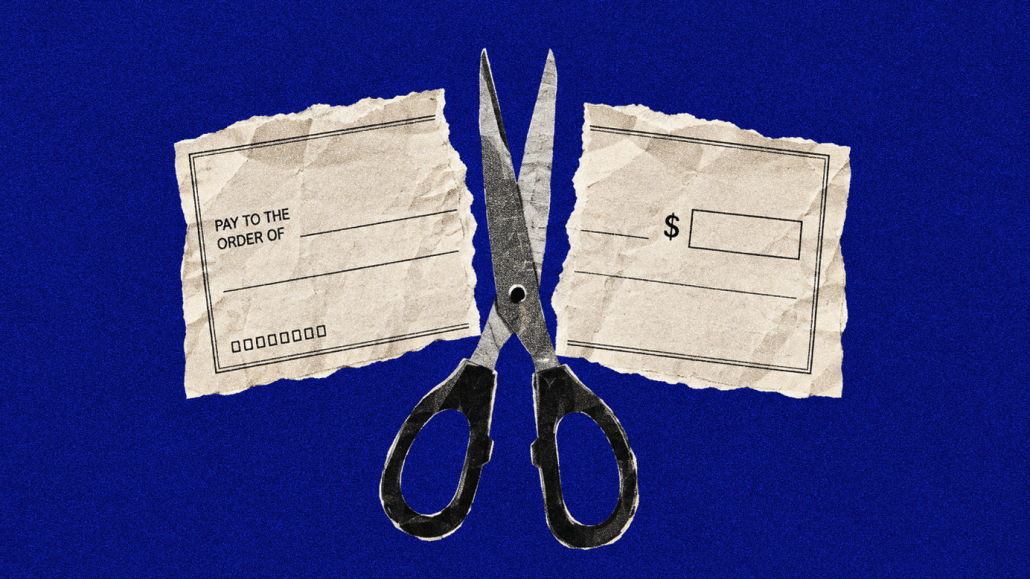
Last week, European creator management firm Arcade held the region’s first-ever media upfront in London. It’s a sign of where the creator economy is headed: over the last year, creators have been pulled into TV and streamers’ upfront and NewFronts negotiations, while companies like Spotter, Forbes, Walmart, and the International Advertising Bureau (IAB) have held their own creator-centric versions of the traditional media sales event.
Those experiments are exposing a structural problem: the traditional TV upfront model doesn’t map neatly onto the creator economy. Creator inventory is effectively unlimited and scattered across thousands of channels, so the creator upfront negotiations that are starting to emerge are being built by creator-first firms and aggregators around small rosters of marquee talent, not the broader creator economy.
Arcade’s Sept. 17 event was both a sales pitch for several of its biggest creators and the company’s take on the future of creator media. IAB’s CreatorFronts leaned more toward a state-of-the-market update and the limitations of the creator economy’s half-built infrastructure. Spotter’s CTV event earlier this year was about selling its YouTube inventory.
The creator upfront doesn’t slot neatly into a traditional media upfront, and it’s increasingly feeling like there needs to be a new approach, according to marketers, agents, and creator economy experts.
“It’s not an upfront in the traditional sense,” said Lauren Lyster, vp of social media at marketing agency Go Fish. “When you look at NewFronts, you’re talking about something that has a very finite amount of inventory…Creator inventory is neither finite nor seasonal. It is, in the broad sense, effectively unlimited, and it is therefore then also spread across hundreds or thousands of ‘sellers.’”
Lyster said that difference makes it hard to compare and conflate creators with traditional TV content, and suggested the creator pitch process will evolve in the near future.
“Talent agencies, creator networks, they are going to be the ones who will truly be the origin of the real creator upfront, and it’ll probably be in smaller rosters,” Lyster said. She suggested those rosters will also likely only feature the top one percent of creators with massive followings, and that the upfront model won’t work for most people in the creator economy flywheel.
“If we do get to an upfront style [creator event], it is going to be a small group of select creators that are going to put scarcity on their calendar, who are going to have that industry exclusivity,” Lyster said.
Spotter co-founder and president Nic Paul thinks the creator upfront model is evolving.
“The first phase was really about introducing brands and agencies to the creators and the programming. The next phase is about making it easier for them to actually invest and show up within the ecosystem,” Paul said.
Arcade CEO Matt Elek told Digiday Europe is still figuring out the delineation between creator and influencer and is working towardsclosing the gap between traditional media, advertisers, and creators. Arcade’s pitch is as much about clearing up confusion as it is about selling inventory.
“We’re using it as a moment to also talk about the wider roster we’ve signed, and start testing it like a broadcaster would do a prime time buy back in the day,” Elek said. The creator economy in Europe is still, according to him, a bit of a “Wild West” with brands throwing out prices seemingly at random and creators still trying to secure more consistent partnerships.
“There’s defined output, defined metrics, defined pricing…organizational structure in a way that makes it more viable and palatable to advertisers,” he added. “To a large extent, that isn’t happening in the U.K.”
The creator upfront as an educational marketplace
Even in the U.S., where the creator economy is operationalizing at almost every level, there’s still a need to educate buyers on what exactly creators can bring to the table. That was clear at the IAB’s CreatorFronts, which focused on building better infrastructure around the creator economy so as to more easily convince CFOs to buy in.
Shaun Newsum, co-founder of creator media and tech company Culture Genesis (itself a creator aggregator), told Digiday he brought creators to the IAB event to get in a room where people were looking solely at the creator economy, not bundling it together with digital media publishers or brands.
Still, he noted the challenges of events like IAB’s, which feel more like corporate conferences than spaces where creators are used to communicating and collaborating, making it harder to get talent fully engaged. He said they plan on coming to future CreatorFronts, but also want to do their own upfront with some of their “marquee creators.” Culture Genesis works with mega creators like Kai Cenat, T-Pain, Hasan Minhaj, and iShowSpeed.
You can already see those upfront-style plans taking shape in Culture Genesis’ recently released CG Guide, which it’s calling “the creator economy’s upfront calendar.”
“It’s a programming schedule for the creator economy…it will obviously start off with our creators, because we have about 200-plus YouTube channels that are assigned to us,” Newsum said. “It’s like, ‘hey, they’re going to be at Coachella vlogging or they’re going to be at the Grammys on the red carpet or they’re going to be doing a huge live stream with the NFL.’ That’s what is missing from the creator economy.”
Creator-focused companies are, in theory, a more efficient way to bring on new buyers and sell creator inventory. Instead of creators being tacked onto TV or streaming upfronts as an add-on or other existing media upfronts that treats them as the sprinkles rather than the ice cream in a sundae. Events like Arcade’s put them and their programming front and center. For buyers, that’s simpler than chasing individual creators across platforms.
“If you want to reach mass amounts of Gen Z, you’re not getting that on broadcasters, you’re not getting that on mainstream media, this is the only way of reaching them,” Elek said. “[Creators] deserve their own airspace and they deserve their own oxygen.”


More in Future of TV
Future of TV Briefing: Hispanic TV-and-streaming viewership in 4 charts
This week’s Future of TV Briefing looks at how Hispanic audiences spend their time between traditional TV and streaming.

Future of TV Briefing: TV ad industry’s measurement currency frustrations hit (another) boiling point
This week’s Future of TV Briefing looks at a new task force being formed by the Coalition for Innovative Media Measurement to tackle the TV ad industry’s measurement currency conundrum.

YouTube invests in AI agents, live ‘gamification,’ and editing tools to keep creators close
Made On YouTube announced a spate of new features for the creator platform; here are the most important ones and what they mean for creators.