This Future of TV Briefing covers the latest in streaming and TV for Digiday+ members and is distributed over email every Wednesday at 10 a.m. ET. More from the series →
This week’s Future of TV Briefing looks at signs that influencer marketing may be on the precipice of an economic correction.
The economics of the creator economy
Netflix’s ad leadership shakeup, the FTC’s YouTube probe, Google’s Hollywood AI pitch and more
The economics of the creator economy
I haven’t been able to shake something that ur-creator Emma Chamberlain said on Emma Grede’s podcast about a month ago. She was talking about influencer marketing and the creator economy, an economy that she very much helped build over the past decade as one of YouTube’s biggest breakout stars.
Here’s what she said:
“The bubble seems to be bursting. But it’s not fully bursting yet. It’s like it’s bursting in slow motion. And it’s like right now the needle is in it, all the way in the balloon, right before it’s about to burst. And it hasn’t quite burst yet.”
Maybe it’s too early to be alarmed, but creators should be on alert: The branded content side of the creator economy, at least, seems on the precipice of a correction.
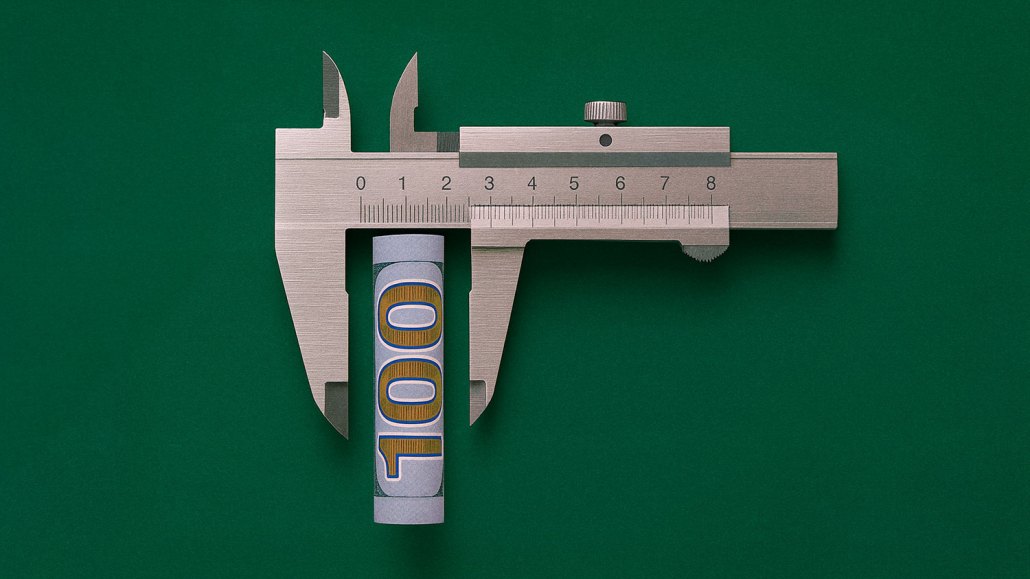
“Half of marketers misprice creator fees and 40% of them feel like they overpaid, according to 1,000 marketing and procurement leaders surveyed by Billion Dollar Boy. Danielle Wiley, CEO of influencer marketing agency Sway, said anecdotally that brands pay too much 90% of the time.”
It’d be easy enough to read those lines as the marketing version of a friend saying, “Damn, I can’t believe I paid $10 for this coffee,” with your reaction being some version of, “Did you not see the price when you ordered it?” And that’s a valid reaction.
But, maybe because Emma Chamberlain’s quote keeps rattling around in my head, I had a little bit of a different reaction. Mine was more along the lines of “Oh, marketers are looking to lower creators’ fees.”
See, Billion Dollar Boy and Sway are influencer marketing agencies. While they operate networks of creators to pair with brands, their primary customers are the brands. The companies’ respective homepages are aimed at brands, not creators. So when they say marketers feel like they are paying too much for creators, it reminds me of when I talk to media agency executives about how high streaming ad prices are: It’s a business tactic as much as it may be a fact.
Which makes sense. The creator economy is a business, after all. A $43.9 billion one this year. But the creator economy is starting to bear closer resemblance to a business I’ve been reporting on for 15+ years: the programmatic advertising business.
Companies including Dentsu, L’Oreal and LTK are increasingly automating dealings between brands and creators in a similar way to how ad tech firms automate dealings between advertisers and digital publishers. I mean, creator networks are effectively new-age ad networks, with companies like Sway touting the 50,000 creators in their network like so many ad tech pitch decks in the era of President Obama’s first term.
The automation of influencer marketing isn’t inherently bad. There’s a case to be made for it, as my colleague Kimeko McCoy outlined in an article last week. That case can be a double-edged sword, though, for creators. On the one hand, automation makes it easier for brands to identify smaller creators to work with, creating opportunities for more creators. On the other hand, automation makes it easier for brands to work with more creators, potentially spreading thin the money going to individual creators.
More to the point, the more creators a brand can work with, the less leverage individual creators have. It’s the law of supply and demand. This automation of influencer marketing creates more supply, and unless advertiser demand outpaces that supply, prices will drop. Which seems to be what the influencer marketing agencies and their clients are angling for.
OK, but let’s not be all doom and gloom here. Setting aside, you know, the history of the digital ad market, there is reason to believe things don’t have to go all the way south for creators’ brand deals.
Marketers’ saber-rattling about influencer pricing could just be a function of influencer marketing’s measurement and attribution systems being underdeveloped. Brands feel like they’re overpaying simply because they don’t have a good sense of what they’ve gotten in return for their money. That’s a reasonable reason. I mean, Kimeko wrote about this exact issue a year ago.
Conceivably, once marketers have the means for better aligning creators’ fees with business results, disaster avoidedproblem solved issue addressed. So then it’s just a matter of the means surfacing. Which could come soon enough.
The Interactive Advertising Bureau has been working on measurement currency guidelines for influencer marketing deals, and late last year the effort’s co-lead Jamie Gutfreund said those guidelines were expected to be ready by … this month. An IAB spokesperson said they are slated for release in October.
What we’ve heard
“Creators are not interchangeable media inventory.”
$14.99: New monthly subscription price for Apple TV.
13.7%: Percentage share of cord-cutters that signed up for Paramount+ Premium within the first month after canceling pay-TV subscriptions.
>100: Number of free, ad-supported streaming TV channels that Sony is adding to its PlayStation 5 gaming console.
What we’ve covered
How every major platform pays creators:
Every major social media platform has its own creator revenue program, and the details and requirements of those programs vary greatly.
Digiday broke down the monetization rules and requirements for Instagram, YouTube, TikTok, Twitch, X, Facebook, and Snap.
Read more about platforms’ creator payment models here.
How a content marketer became an award-winning cannabis creator:
Gotham Cannabis Dispensary hired Rachel Bell as director of content and engagement in 2023, ahead of opening its first location in Bowery, to grow its social media and brand awareness.
Tasked with creating a brand series, Bell pitched “Hi, I’m High,” a web series in which she travels New York City visiting events and landmarks while under the influence of Gotham’s products.
Read more about Rachel Bell’s career trajectory here.
Creator industry admits that fee pricing is out of control, but can’t agree on a fix:
Half of marketers misprice creator fees and 40% of them feel like they overpaid, according to 1,000 marketing and procurement leaders surveyed by Billion Dollar Boy.
Harley Block, CEO and co-founder at brand strategy company IF7 said bluntly that creator pricing is “out of control.”
Netflix’s ad boss Amy Reinhard decided to drop vp of ads product Jon Whitticom, and the company is looking for a permanent replacement, according to Business Insider.
The U.S. regulator is looking into whether the Google-owned video platform violated consumer protection laws by suspending user accounts, according to Bloomberg.
The company is talking with film-and-TV studios, including Disney, Universal Pictures and Warner Bros. Discovery about licensing character and film libraries to train its AI models, according to the Los Angeles Times.
WBD’s lawyers made sure the company’s sale agreement with Paramount gave the former some wiggle room to continue to mind its own business including striking some partnership deals — rather than sit in a complete holding pattern — while waiting for the deal to go through, according to CNBC.
The studio behind “Cocomelon” has drafted an AI policy for animators to use generative AI tools as part of their work but with clear restrictions around what kind of work can be outsourced to AI, according to 404 Media.
This week’s Future of TV Briefing looks at a new task force being formed by the Coalition for Innovative Media Measurement to tackle the TV ad industry’s measurement currency conundrum.