Join us Dec. 1-3 in Nashville for the Digiday Programmatic Marketing Summit
Future of TV Briefing: Every major streaming subscription price increase since 2019

This Future of TV Briefing covers the latest in streaming and TV for Digiday+ members and is distributed over email every Wednesday at 10 a.m. ET. More from the series →
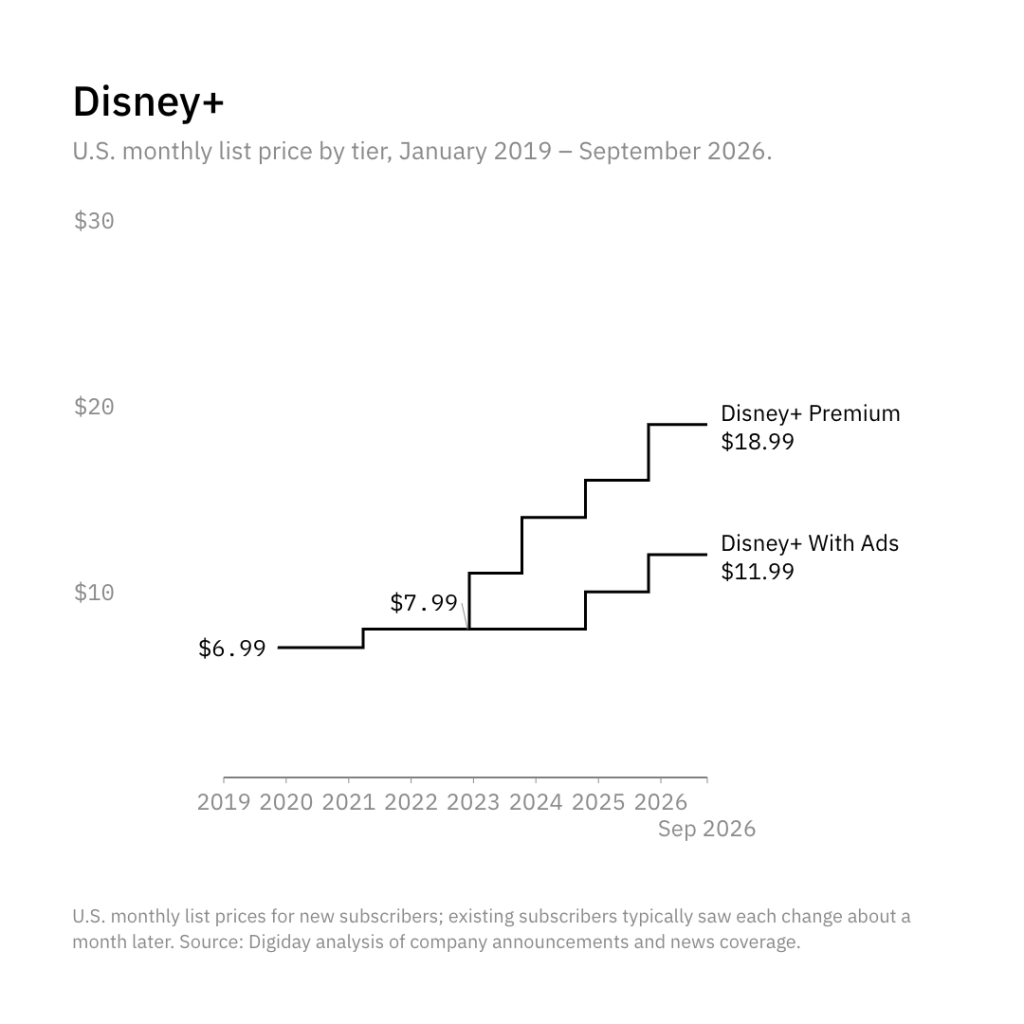
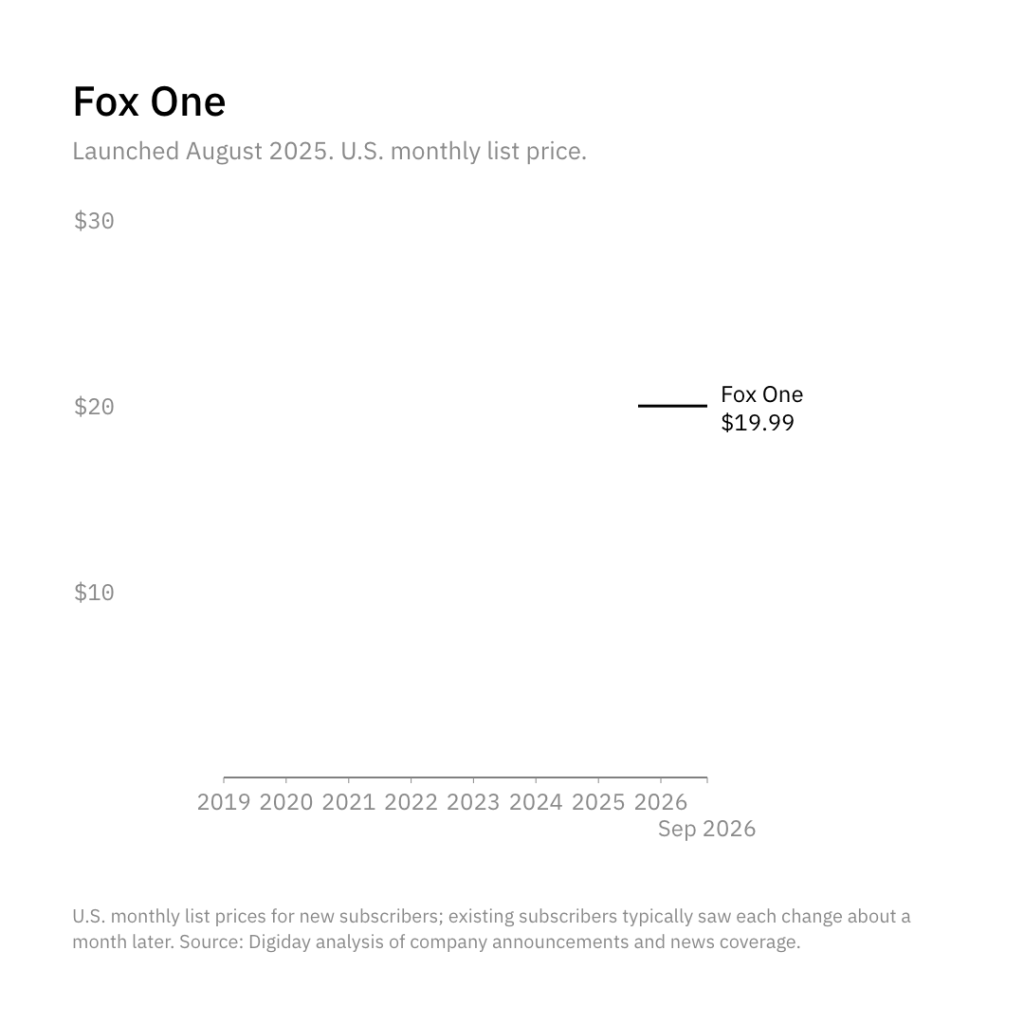
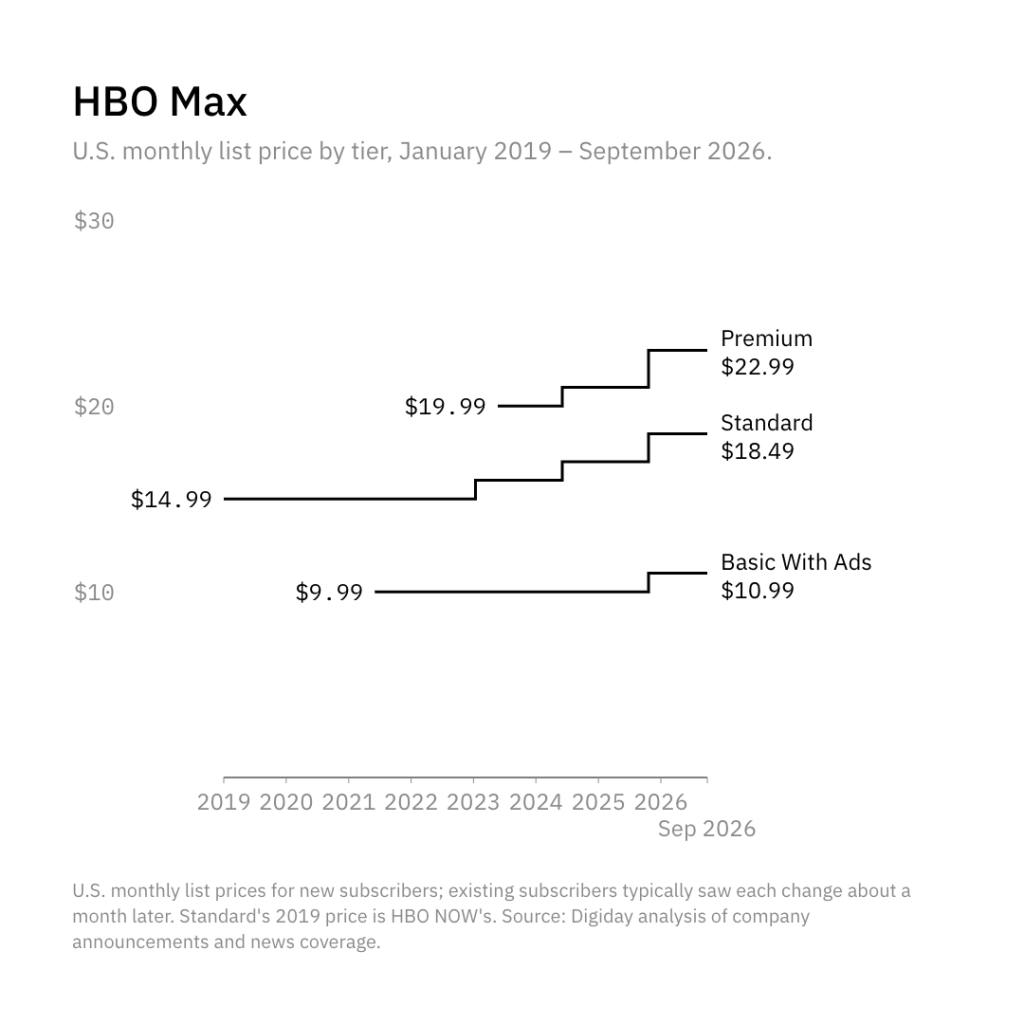
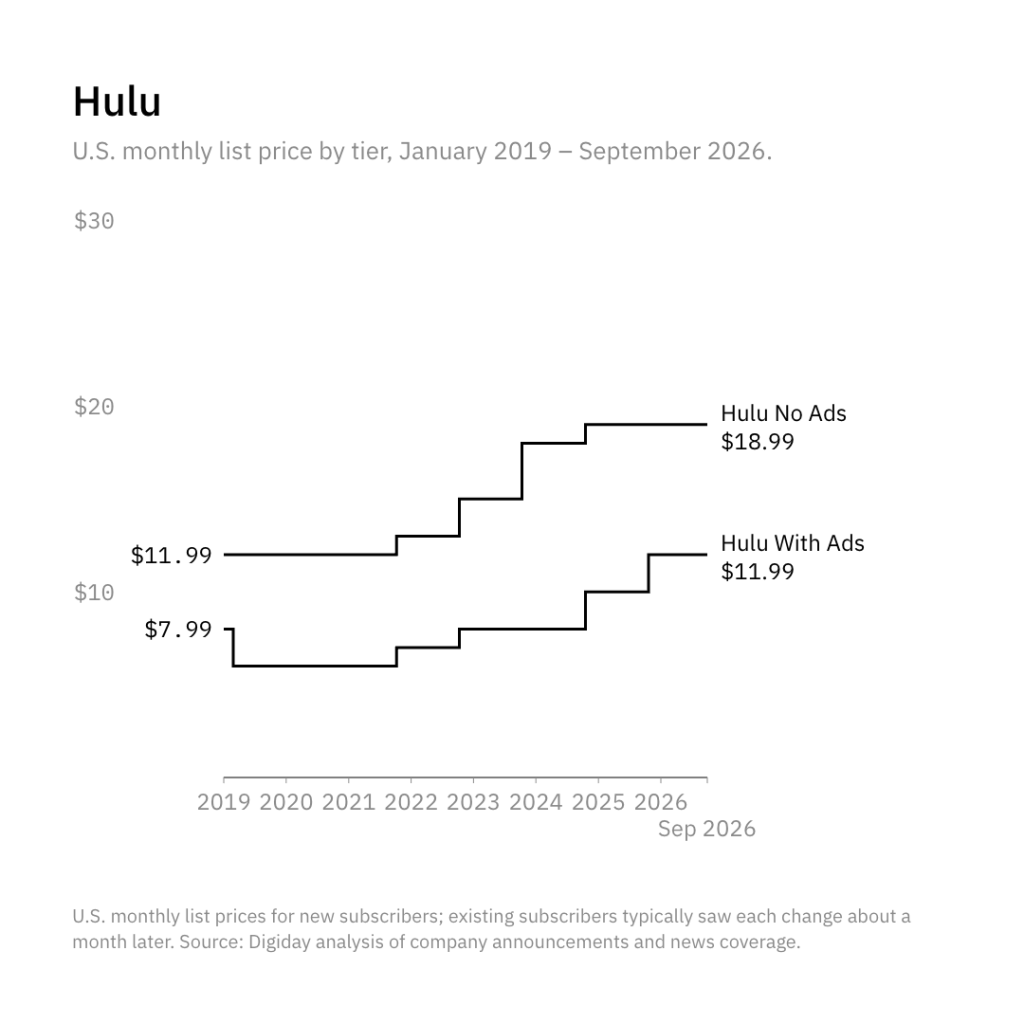
This week’s Future of TV Briefing features charts breaking down every monthly subscription price change since 2019 across ad-free and ad-supported tiers for nine major streaming services.
- Price check
- NFL’s next rights deals, YouTube’s questionable co-viewing metric and more
Price check
Stream-flation is real. For the past several years, major streaming services have increased their subscription prices like clockwork. Or like cable TV providers.
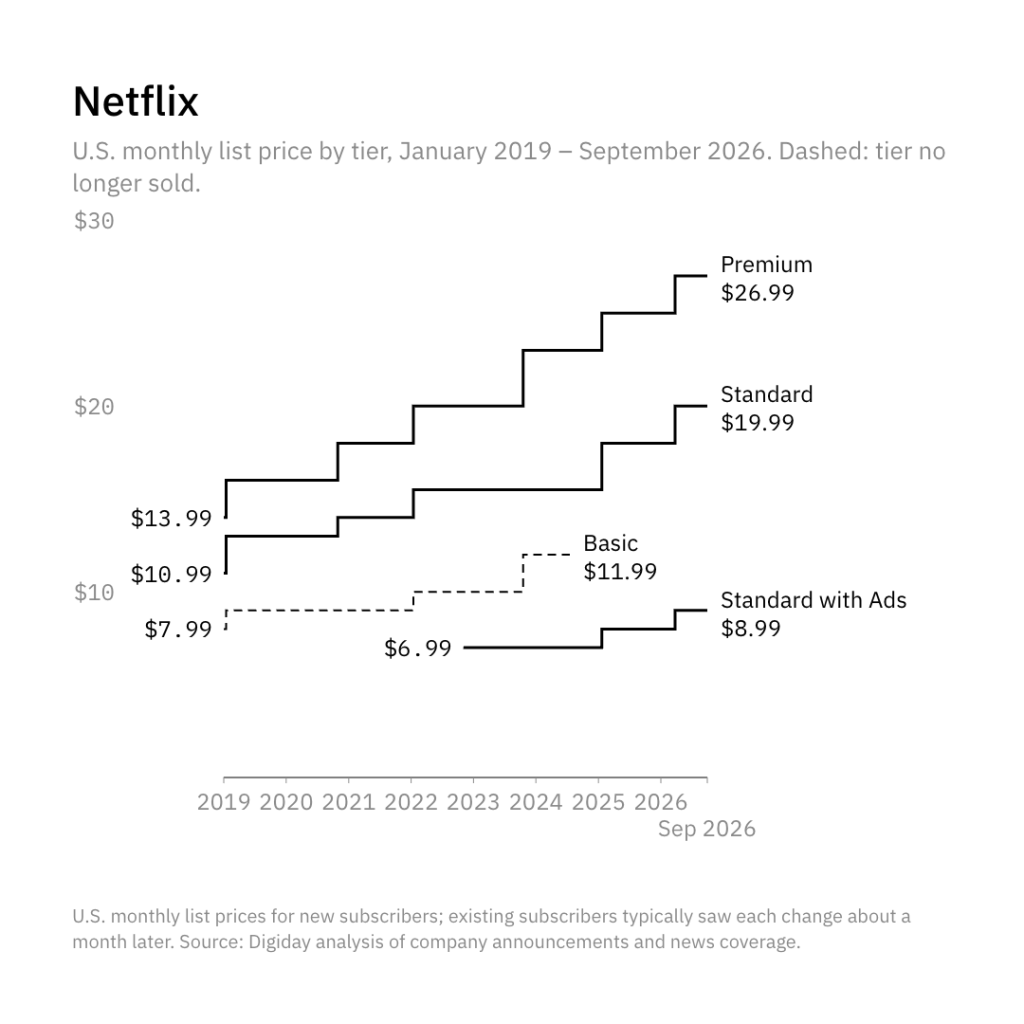
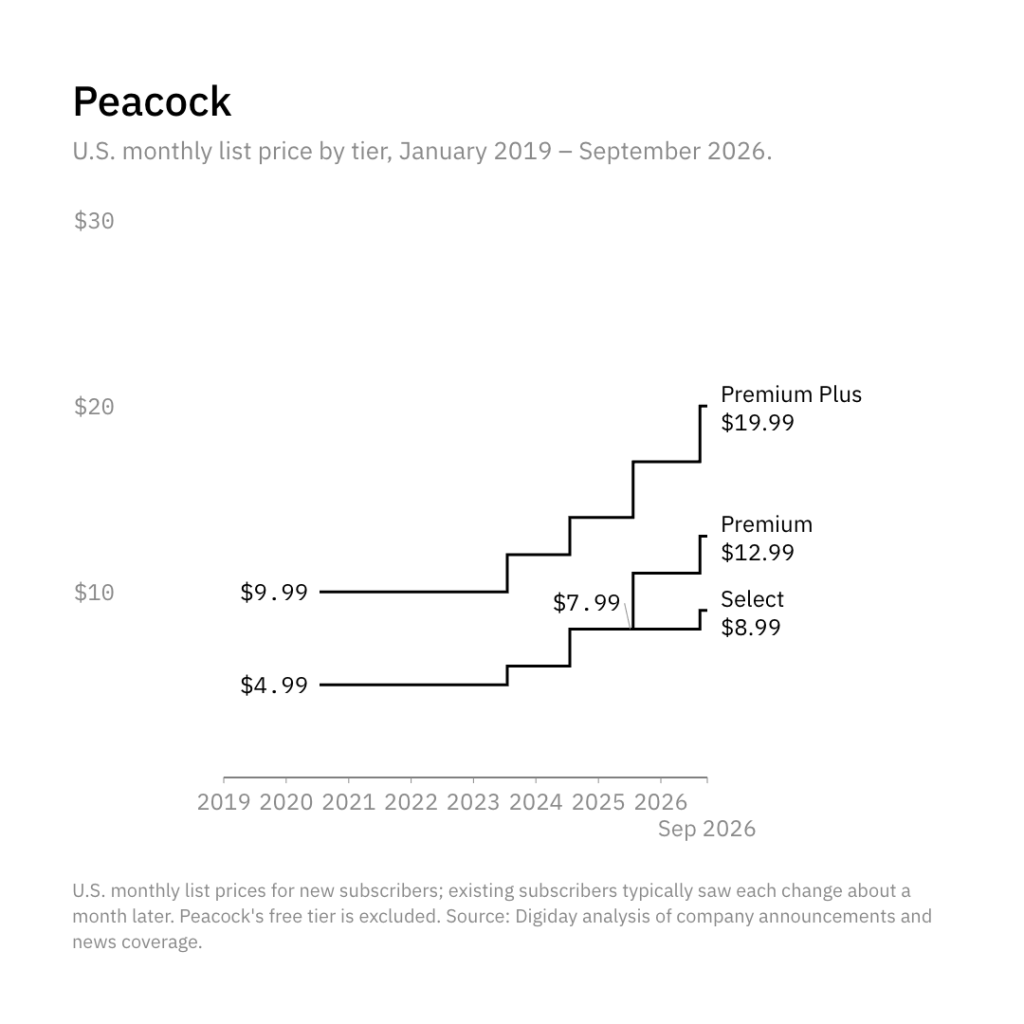
Since 2019, Disney+ and Netflix have raised the monthly subscription prices for their respective standard ad-free tier five times. Apple TV and Peacock have done so four times.
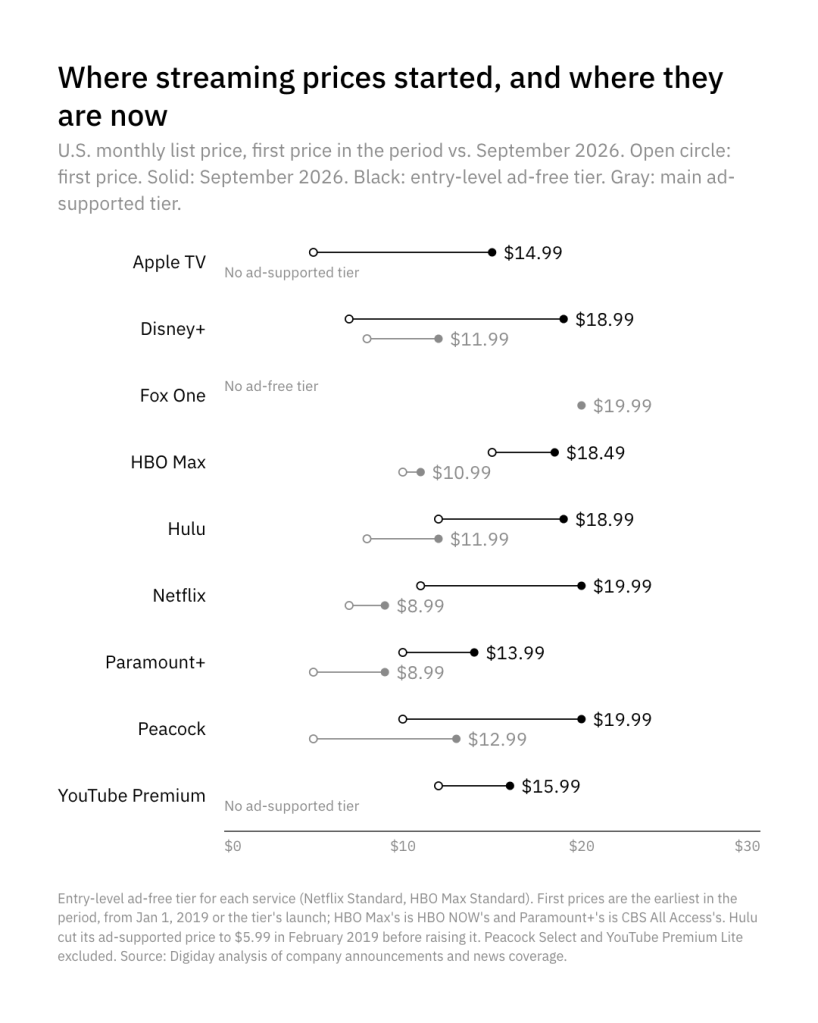
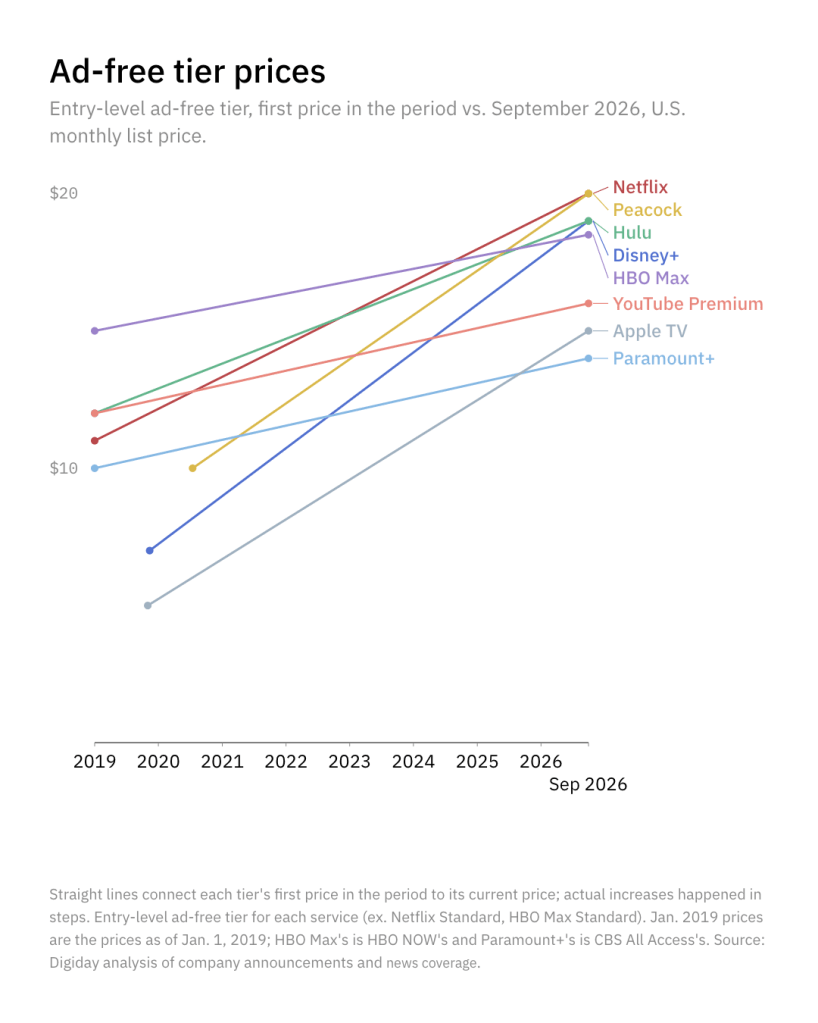
But it’s not only the regularity of the price increases; it’s also the steepness. In 2019, a subscription to Netflix’s standard ad-free tier cost $10.99 per month; in 2026, it costs $19.99 per month. Disney+’s ad-free tier’s price has increased even more precipitously, up 172% from its $6.99 launch price in 2019 to $18.99 as of this writing.
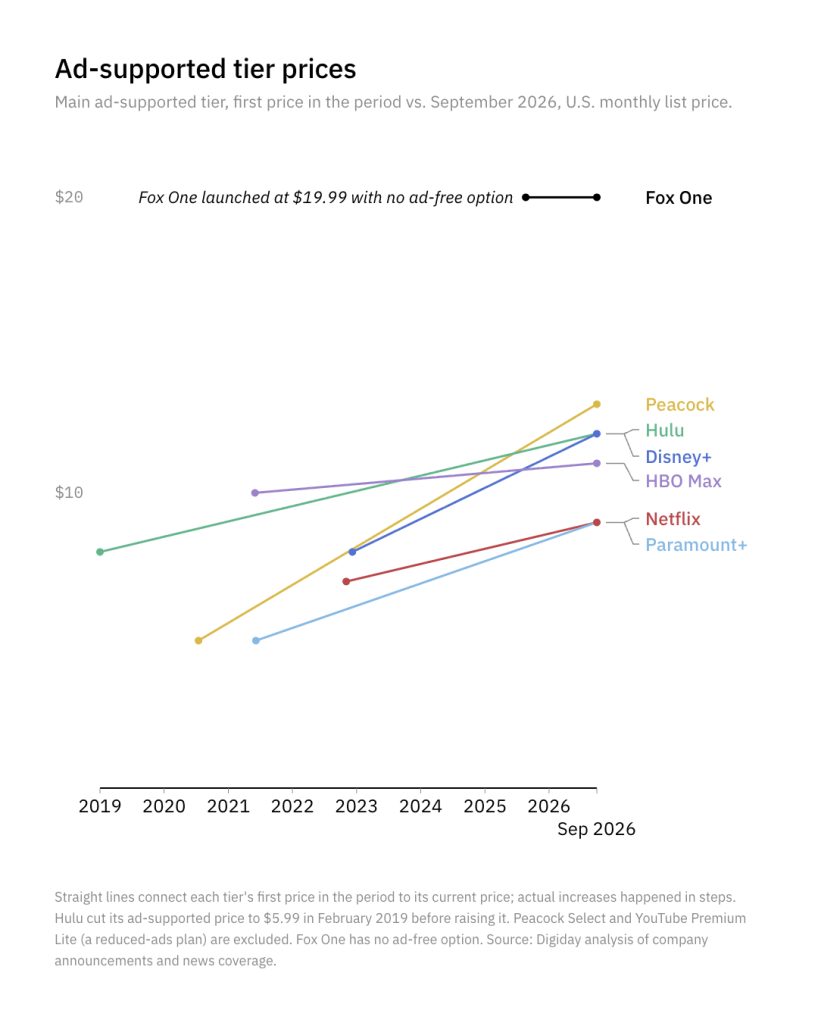
Even the cheaper ad-supported tiers aren’t so cheap anymore. Peacock’s premium ad-supported tier has seen its monthly price shoot up by 160%, from $4.99 at launch in 2020 to $12.99 as of this month. That’s more than the price of Peacock’s ad-free tier three years ago.
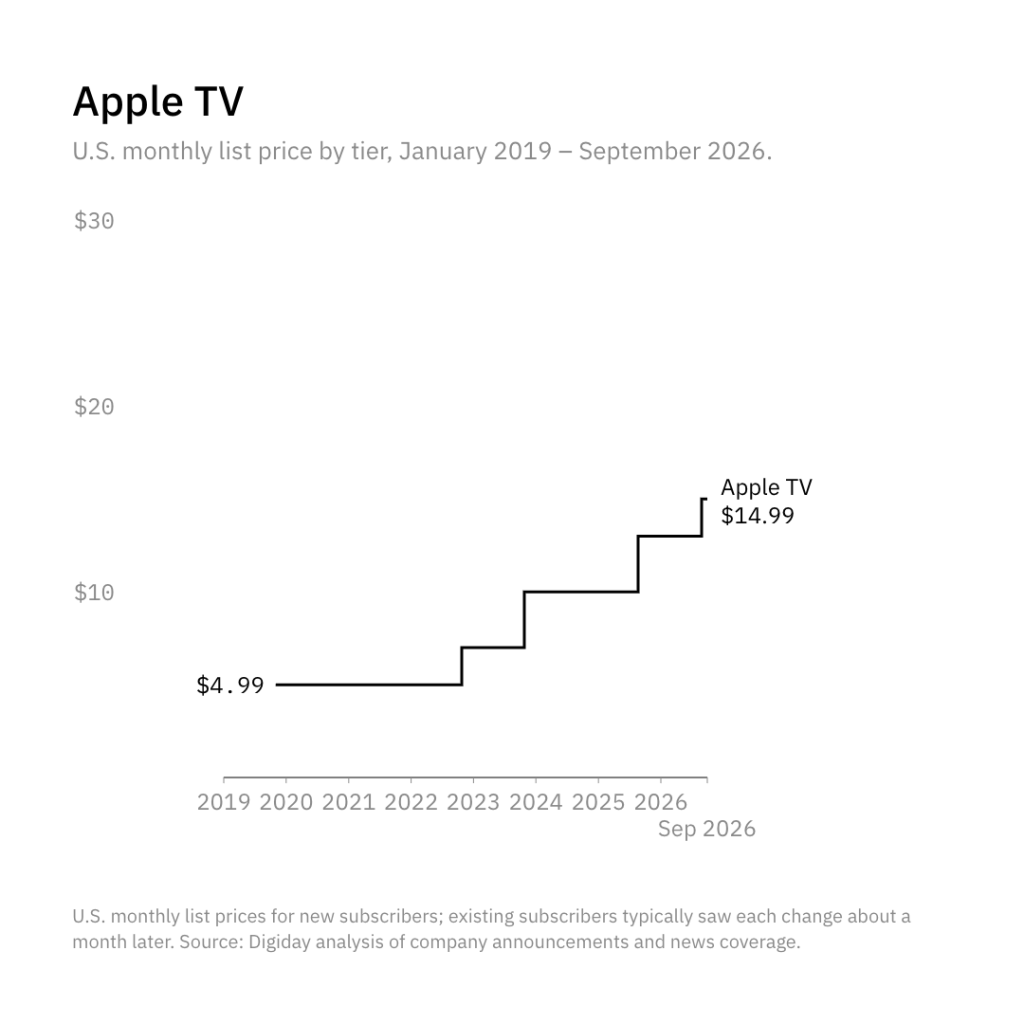
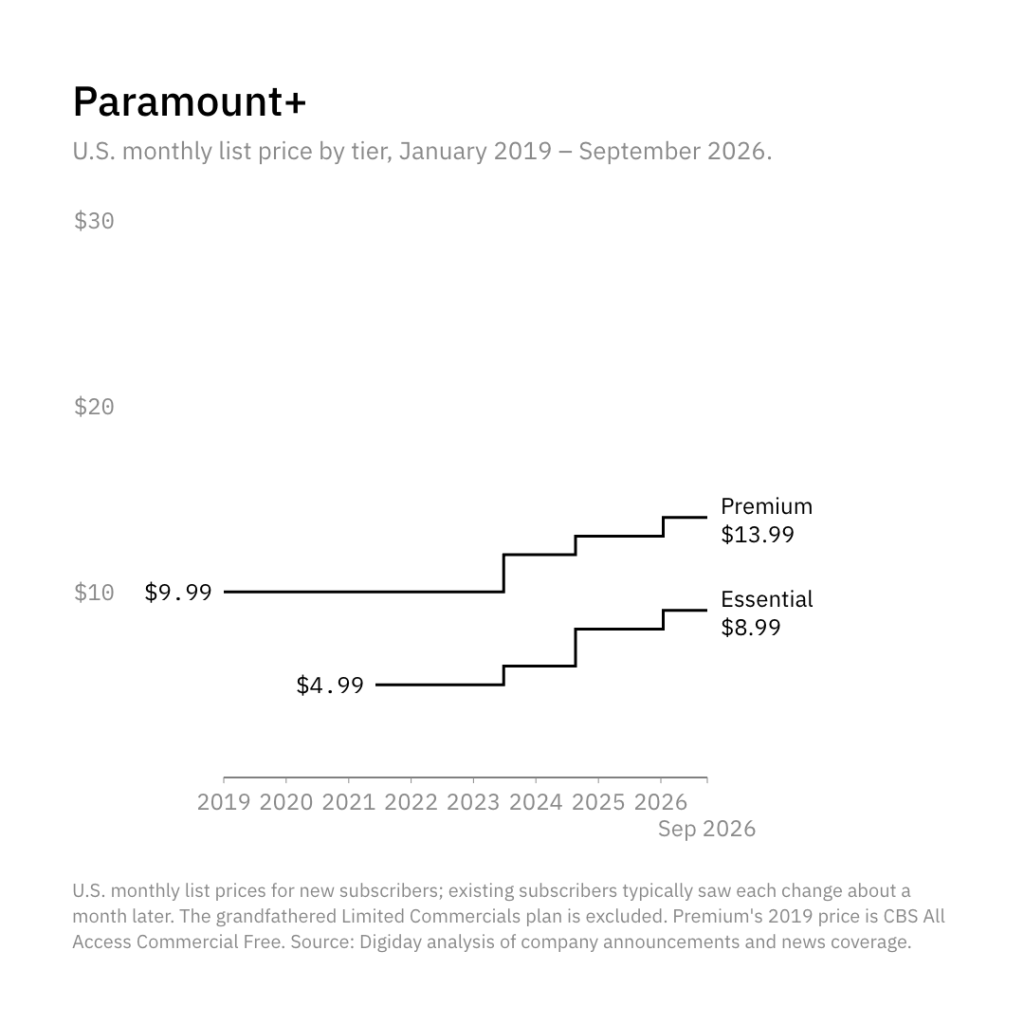
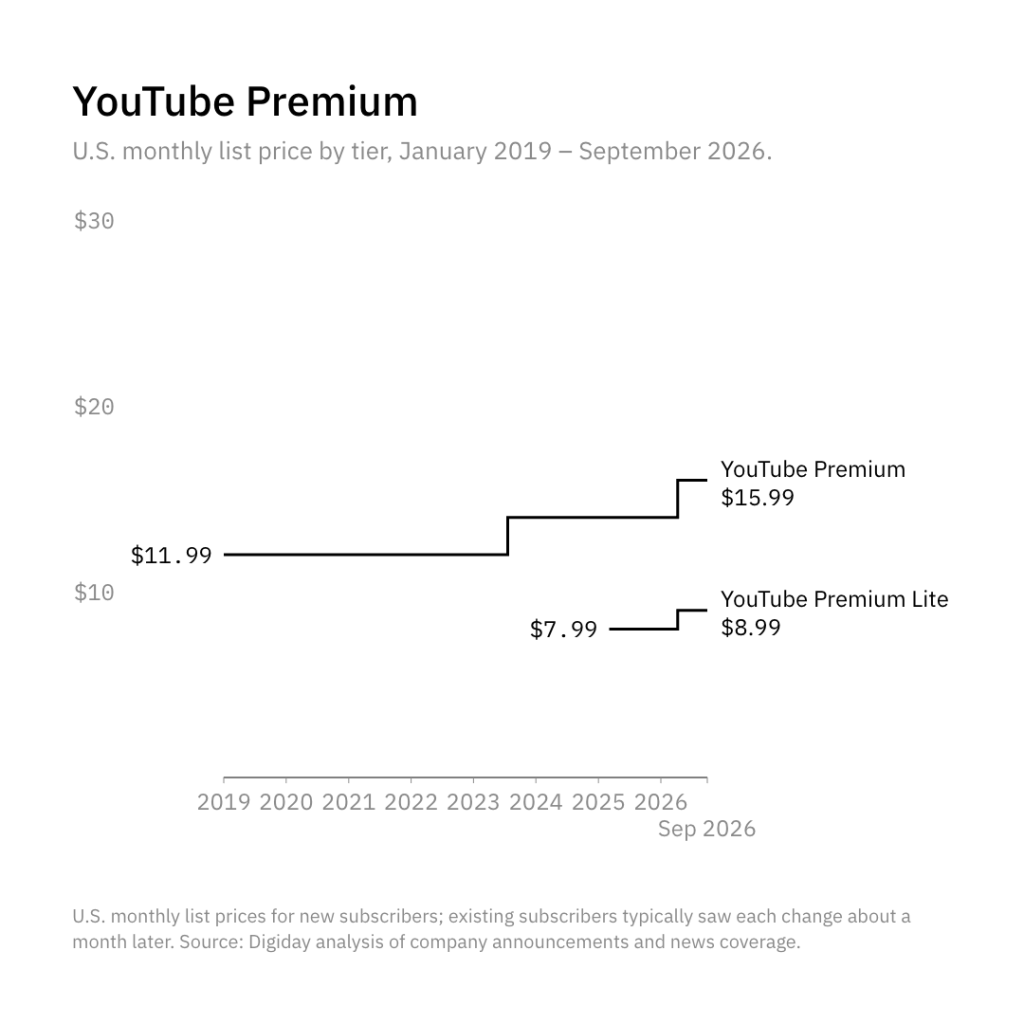
Here is the full breakdown of monthly subscription price changes for nine major streaming services since 2019. The data is based on an analysis of company announcements and news coverage.
What we’ve heard
“You can spin up a bunch, and hope that one hits, and if it hits, you did your job, and you might kill the campaign once it’s done.”
— Riddance’s Jeremy Carrasco on “ghost creators”
Numbers to know
$151: Monthly cost for subscriptions to eight major streamers’ ad-free tiers without bundle discounts.
57,980: Number of jobs in California that could be lost if Paramount moves out of the state.
~200: Number of games that NFL Sunday Ticket is expected to carry this season, down from 211 in 2021.
What we’ve covered
What we’ve learned from the creator snafus at this year’s US Open:
- This year, the United States Tennis Association (USTA) invited around 100 credentialed creators to attend matches.
- The six marketing execs and creator agents Digiday spoke with agree the backlash is mostly an overreaction, but that there are some key learnings.
Read more about creators at sporting events here.
Molson Coors ditches its TV-era workflow to move at creator speed, quadrupling engagement:
- Beverage giant Molson Coors is overhauling how its legal and marketing teams work with creators, shifting from its traditional TV-style approval process in favor of faster, looser briefs.
- The company began working on the new approach in March, along with its creative agency Movers+Shakers’ new consultancy group The Shake Squad.
Read more about Molson Coors’ new creator marketing strategy here.
WTF is a ghost creator?:
- A ghost creator is a creator hired by brands to produce content that often follows hyper-specific briefs, usually under a pseudonym or anonymous persona that doesn’t map back to their real identity.
- They’re not creators, per se, but executors – hired to hit a brief, not build a personal brand.
Read more about ghost creators here.
What we’re reading
The league may switch up its game packages when the NFL signs its next rights deals, which could happen as soon as 2030, according to CNBC.
YouTube’s questionable co-viewing metric:
The Google-owned video platform is starting to report co-viewing as a measurement to account for instances when multiple people may be watching a YouTube video together in the same room, though the company isn’t saying how it is calculating that figure, according to Tubefilter.
Amazon, Netflix and YouTube have formed a “policy coalition” to lobby lawmakers and regulators on their interests in the streaming business, according to Axios.
The U.S. Department of Justice is looking into Fox’s acquisition of Roku, but Fox still expects the deal to close in the first half of 2027, according to The Hollywood Reporter.


More in Future of TV

Future of TV Briefing: YouTube, Tubi top streamers’ share of ad exposure time
This week’s Future of TV Briefing looks at Comscore’s new Score Report that gauges TV and streaming companies’ share of audiences’ ad exposure time.

Future of TV Briefing: TikTok Shop success = small creators + more videos
This week’s Future of TV Briefing looks at how “more videos from smaller creators” is the recipe for success on TikTok Shop.
Future of TV Briefing: Hispanic TV-and-streaming viewership in 4 charts
This week’s Future of TV Briefing looks at how Hispanic audiences spend their time between traditional TV and streaming.