Join us Dec. 1-3 in Nashville for the Digiday Programmatic Marketing Summit
Creator industry admits that fee pricing is out of control, but can’t agree on a fix
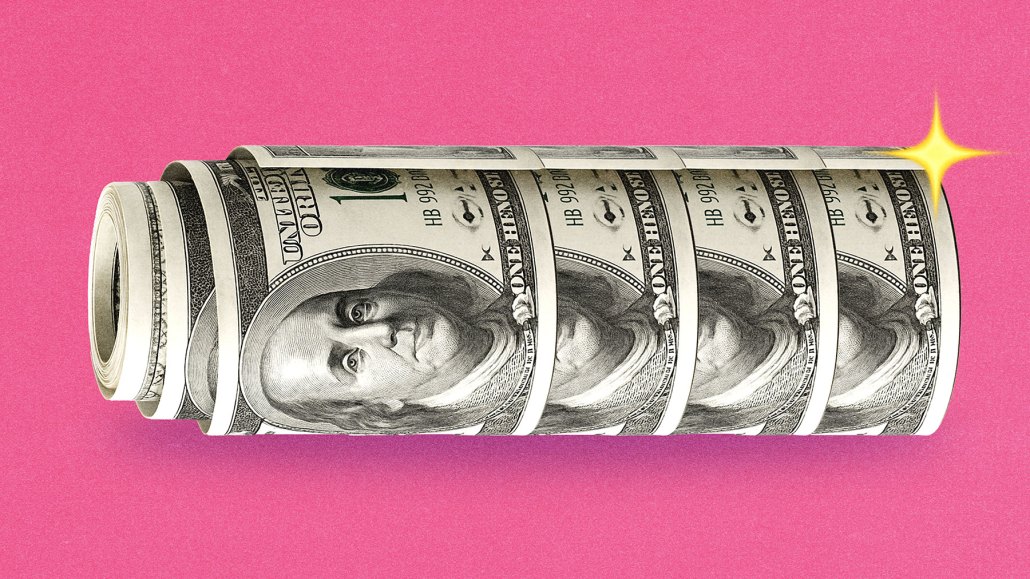
Bigger budgets, bigger campaigns, bigger partners, bigger goals — marketers are starting to feel that the price to work with creators is out of control.
Half of marketers misprice creator fees and 40% of them feel like they overpaid, according to 1,000 marketing and procurement leaders surveyed by Billion Dollar Boy. Danielle Wiley, CEO of influencer marketing agency Sway, said anecdotally that brands pay too much 90% of the time, and though creators are happy to get more money than they may be worth, it creates an expectation problem.
“Imagine the real estate market where you could never look up what a house on your street sold for,” said James Nord, founder of predictive creator-marketing platform Fohr. “It’s about transparency and clarity and building more trust into this market.”
Harley Block, CEO and co-founder at brand strategy company IF7 said bluntly that creator pricing is “out of control.”
“This is not a functioning market,” Nord said. “Prices never go down… there’s no clearinghouse, there’s no transparency, so it creates this information asymmetry.”
Jamie Gutfreund, founder of creator marketing consultancy Creator Vision, told Digiday data is siloed for a reason — which gives agencies more power. “They [brands] have no historical benchmarking, which means they can’t do anything predictive,” she said.
But there is no industry standard. Without guidance from an entity like the IAB, brands and creators need tools to help cut through the noise and act as a reference point or benchmark. The IAB has presented creator economy definitions and taxonomy, but as of yet no pricing guidelines.
“There is concern on both sides of the negotiation table,” said Thomas Walters, chief innovation officer at BDB when discussing the launch of a new pricing feature on Companion, the company’s tech platform. Whether it’s creator agents undercutting proposals or brands not having enough exposure to negotiation in the creator space, he believes there’s a dire need for guidance.
Some creator economy agencies and tech platforms companies like Fohr, Billion Dollar Boy, and AI-powered assistant Nutcake are advocating for creator pricing transparency, with calculators that pull in thousands of previous deals or prediction models that show whether that $20,000 YouTube post from the hot new lifestyle guru is worth it.
Nutcake automates the operational complexity of finding creators, providing them briefs, managing contracts, paying creators and delivering campaigns. And Fohr’s recently launched Rate Check tool lets creators and brands plug in a creator, an offer amount and the required deliverables. It then calculates if the offer seems fair.
Gutfruend said these tools are helpful, but narrowly applicable. And nearly everyone spoke of the variables, whether it’s a Q4 price increase or a Love Island creator who is particularly hot right now. Paul Benigeri, co-founder and CEO at AI-powered creator marketing company Archive said the tools often don’t take crucial variables into account.
“Creator pricing is such a variable exercise right now with so much fluidity, I find it difficult to see how a piece of technology, rigid or fluid, could be the way, “ Block said. He offered a hypothetical where a brand runs a calculator through one of the many tools on offer and the tool spits out a rate that they bring to a creator’s manager.
“The manager goes, ‘that’s nice, I’m glad your calculator said that, but he’s double’,” Block said.
A chief strategy officer, who spoke to Digiday anonymously as they work with both brands and creators, said that creators often turn down seemingly generous offers.
But it’s not all overpaid creators running away with precious brand dollars. The creator economy is growing rapidly and smaller or marginalized creators may not get a fair shake. This is where these calculators and comparison tools might help the most: the mid-tier creators, not the macros.
Osman Badat (known online as The Social Accountant) offers financial advice and management for creators, while being a successful one himself. He told Digiday that he often sees two creators with similar engagement rates get completely different fee offerings for the same deliverables, and that it’s a common issue particular for POC creators who are being underpriced — not over. He thinks tools like BDB’s can only help.
“There needs to be a place where people could go and say, ‘Wait a second, this was the benchmark. Why are you only offering me this?’” Badat said.
Ultimately, these tools can help everyone approach the negotiation table with an understanding of what’s on offer. But like every other cog in the creator economy machine, it can’t automate away the need for a human touch.
“Technology can be helpful in informing negotiation, but it’s never going to be the driver because the people that are making these tools don’t set the prices,” said Block.


More in Media
The Hill adds interactive election tools to subscription offering ahead of the midterms
The Hill is betting on interactive subscriber-only features to help grow its new subscription business ahead of the 2026 midterms.

The Daily Mail tests GEO with brands ahead of AI visibility product
The Daily Mail is running around a dozen GEO tests to work out what works before turning its AI visibility offering into an official product early next year.

Meta delays rollout of updated commercial terms amid publishers’ collective pushback
Meta’s updated commercial terms have galvanized publishers into a coordinated pushback over the company’s use of their content.