Join us Dec. 1-3 in Nashville for the Digiday Programmatic Marketing Summit
In data-obsessed marketing landscape, Hinge CMO Jackie Jantos talks brand building
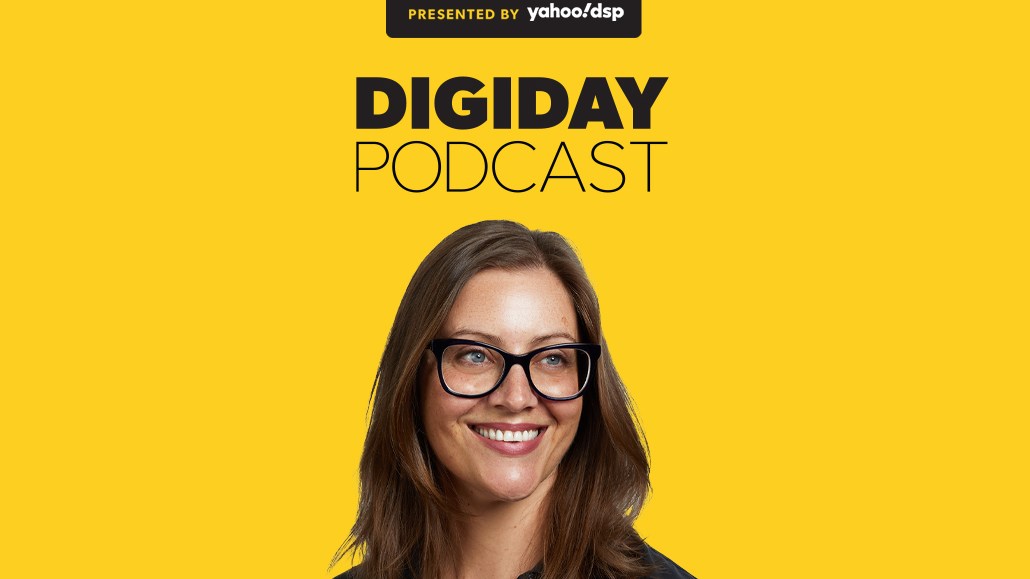
Subscribe: Apple Podcasts • Spotify
CMOs are once again grappling with the age old question of their role in the C-suite. The job has gotten more difficult in today’s business landscape as marketers face increasing pressure to tie marketing to business results (all while being asked to do more with less money). In some cases over the last few months, companies like Hyundai and Starbucks, have eliminated the CMO role entirely.
The role with all of its changes can be challenging, but Jackie Jantos, CMO of Hinge dating app, says it’s a challenge she welcomes, pushing back on short-term metrics in favor of long-term brand building.
“But ultimately, if your goal as a CMO is to build a sustainable long-term business, then you need to be shooting the arrow sort of 10 years out,” Jantos said on a recent episode of the Digiday Podcast, “and better understanding how your product will navigate that and how your brand will stay relevant along that way.”
Here are a few highlights from the conversation, which have been edited for length and clarity.
The debated role of a CMO
CMOs take on many different shades within the organization where they’re based. For me, I think as a CMO, my role is to orient the organization, the strategy around long-term growth, and to be paying attention to where consumers and audiences and culture is going. Ultimately, the CMO and their team are the ones who are the closest to the audience themselves. They’re the most connected to creativity. They’re most connected to how culture is taking new shape and where audiences are going and where the world is evolving.
Changing tenure
For me, the CMO role, its naming, and also its remit in general, should be both a healthy mix of short term and sort of immediate goals and priorities. But importantly, it should also be a very healthy mix of long-term goals and long-term priorities. And one of the challenges with the short tenure is, can you see impact to a brand at global scale based on harder and longer out things to measure, like reputation in a year’s time? I don’t know you can. In some ways, if you really are focused on the long term, you tend to be perhaps the kind of CMO who wants to stick around for a period of time to see that through fruition.
Marketing social impact
The other reality is we know that Gen Z audiences feel more connected to brands that are doing right by the world and doing right by them. And they are more connected to brands that share their values. So if you’re a marketer focusing on a Gen Z audience, or a product developer focusing on a Gen Z audience, if you’re not also thinking about their whole lives and how you can better serve them and serve some of the most impactful realities that are shaping how they’re feeling and showing up every day, then you probably won’t be likely to play a really relevant role in their life.


More in Podcasts
Media buys and mega partnerships: How the creator economy is splitting in two
There’s a growing bifurcation in the creator economy. While the Alix Earle’s and Mr Beast’s of the world take on the role of agencies, nano and micro creators have become media buys. “Brands are increasingly approaching the space just like they would traditional channels with a media mix that reflects what they’ve done historically,” said […]
From The Brooklyn Nets to The Golden Girls, Digiday editors break down the state of ad agencies
On the Digiday Podcast, Digiday staffers break down the state of play among major agencies using sports analogies and The Golden Girls.
Here’s what OpenAI needs to do to reach its billion-dollar ad ambitions
OpenAI has billion-dollar goals for its ChatGPT ads by the end of this year. But can it woo advertisers enough to make good on those goals?