Join us Sept. 24 in NYC to connect with execs from Digitas, Claire's, Marriott, Havas and others
Wired’s Nick Thompson: Facebook needs to pivot news feed to quality
Subscribe: iTunes | Google Play | Stitcher
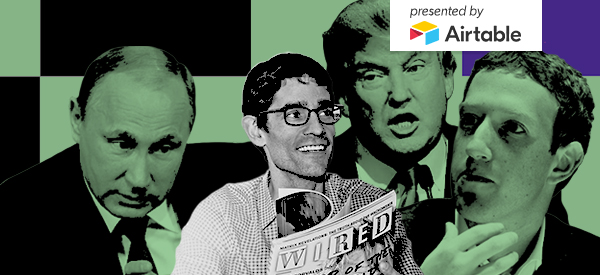
Nick Thompson, editor-in-chief of Wired, recently co-authored a story on how the 2016 election shook Facebook and catapulted them into an identity crisis. As he investigated this story over two years, it refined his own digital strategy and views towards Facebook’s role in the business of news.
“The fundamental thing I want Facebook to do is change news feed so that it rewards quality content,” said Thompson on this week’s episode of the Digiday Podcast. “If you write a story that isn’t on the moment, it will not travel on Facebook, even if it makes people feel informed and educated. By changing the way news feed is measured and changing the data points that go into creating the news feed, I hope the news feed is where quality thrives — focusing on time well-spent, prioritizing trust-worthiness, informed-ness, quality content.”
Thompson discusses the story, what it means when the world of Silicon Valley collides with Washington, why he remains optimistic about Facebook’s interests aligning with publishers’ interests, and more.
Edited highlights below.
Facebook didn’t want to control the news cycle.
“They didn’t get into the news business with the expectation that they would become the most powerful force in American media. They got in because they wanted to quash Twitter. Facebook is really good at quashing threats. They tried to recreate Twitter inside of Facebook. They did it very well and generated tons of power and suddenly they control the flow of news in America. They woke up one morning and said ‘oh no! we own the news.’”
Facebook is at the stage of acceptance.
“The 2016 election was a real shock. The executives had known Trump was using Facebook more effectively than Hillary [Clinton] was but they didn’t think it would lead him to win. Zuckerberg asked people who run the news feed for the percent of content was fake news. He gets back a small number. Then in an interview, he said that the idea that fake news affected the election is “pretty crazy”. But the last two years have been an education about their influence, their power, their ability to possibly flip an election and a lot of understanding on how to work with the government.”
The relationship with media is difficult but Facebook has listened.
“They have an incentive in cultivating us to make sure we don’t write ‘Break up Facebook.’ Facebook has listened and changed. Zuckerberg was opposed to paywalls within Instant Articles. Campbell Brown goes on a listening tour. Publishers are pushing paywalls. Facebook listens, they allow paywalls in Instant Articles but they set it to ten articles a month, which is an impossible level because nobody will ever hit it. Then last week, Facebook lowered it to five because they feel pressure from the publishers.”
Getting carriage fees from Facebook could create serious consequences for the media.
“On one hand, it is recommended that Facebook pays media content for their content. Facebook has actively taken away most of the ad market. On the other hand, is it good for the media industry to be getting checks from Facebook? Then what happens to our independence? If Murdoch gets that, and we do start getting carriage fees and it’s a significant portion of our budget, then think about the crazy dynamic that will have, the threat. Then they will not only have a dial over our traffic, but they will also have carriage fees.”
Google is way ahead of Facebook in working with publishers.
“The way the Facebook Journalism Project was explained to us as a way to copy Google’s News Lab. Google is years ahead of Facebook in a lot of ways, like ranking publishers by quality. The trustworthiness stuff that Facebook is introducing now, Google has had that for years. Facebook is just coming around subscriptions, Google put them right into AMP. Google has much better relationships with industry, they have made it easier for publishers. Google’s fundamental incentive is to make the open web a good place, Facebook’s incentive is to get everything to move inside of Facebook.”


More in Media
Walmart adds marketplace data, deeper AI features to Scintilla insights platform
The upgrade includes access to marketplace data, customizable dashboards, custom alerts, a deeper version of its Marty agent and a closer link with the Scintilla data platform.

How women athletes are betting on the creator playbook
Women athletes are increasingly leaning on content creation to build their brand, grow their sports’ fandom, and help close salary gaps.

Axios preps new Axios Direct feeds for AI models, agents as revenue tops 2026 goal
Axios has reached its revenue goal for 2026. Now the news publisher is building a new revenue stream to keep up the pace in 2027 and beyond.