Join us Dec. 1-3 in Nashville for the Digiday Programmatic Marketing Summit
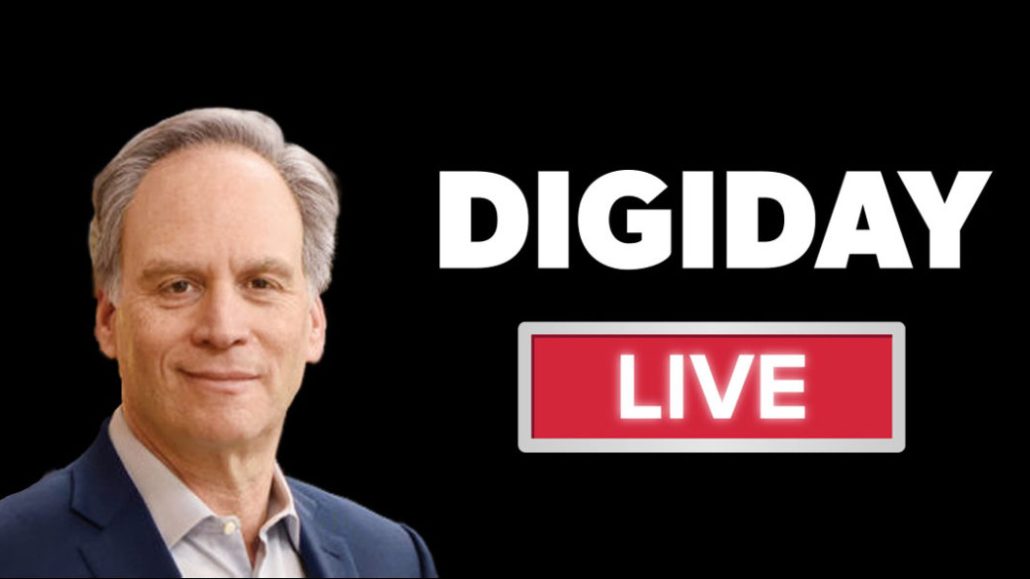
Harris Diamond, CEO of McCann, joined our managing editor Shareen Pathak at Digiday Agency Summit in Nashville, Tennessee, to talk about the myths and realities of the agencies in the marketing business. Here are the highlights lightly edited for clarity.
New platforms are a great opportunity for marketers to reach out.
“I can’t think of a time when the agency and marketing business has been as good as it is today. Our business is fundamentally about figuring out where consumers get information, and delivering it to them. There are more places for us to reach consumers, more opportunities to speak to them, and more places to show our creativity.”
Agencies do not have a talent problem.
“The only way we’re successful is by finding the best, the brightest, and the people who want to work the hardest; the ones who understand culture, the ones who understand what it is that makes a person pay attention an idea. The reality is that yes that’s a problem, and there are a few people who actually have that skill. But those who do, generally end up working at the agencies.”
We have to do something about the low salaries.
“Even though starting salaries are low, agencies generally have a pretty rapid advancement rate. And the reality is you generally leave those salaries behind. But there is no doubt that lower level people do not make significant money as compared to what they can make at other places.”
Agencies have a diversity problem.
“Bias in historical terms, frankly, is gone. I think unconscious bias still exists. We have to be more welcoming, and recognize that different people at different times in their life cycle have different abilities to work. And we have to figure out ways to make sure that everyone gets the opportunity to contribute. We have to care about a good idea.”
In the relationship between client and agencies, trust goes both ways.
“Trust is an agency understanding how we can actually impact a client, how it can help a client, how does it become part and parcel of a process by which the client delivers its products to the marketplace. And that requires clients to sometimes think: how much information am I giving to the agency? Am I showing them my true sales goals? Am I showing them my true sales reports? How often am I actually talking to them?”
We have to rethink the agency model.
“What agencies do best is we adapt. We learn that [medium] which it takes to communicate information. We’re always rethinking the model because the technology is always changing in the way we communicate. But the basics have never changed, which is what does it take to get a really good idea, that is gonna be strategically sound, creatively attractive into the marketplace such that consumers will buy products.”


More in Marketing
In Graphic Detail: What Apple’s identity block means for the ad money
How Apple’s identity block hits publishers’ wallets, and why Apple can afford it.
Anthropic’s ad bill is soaring, according to IPO filing
Anthropic’s IPO filing shows an ad-free AI company with a fast-growing ad bill.
Salesforce’s $5.7 billion Braze deal puts marketers at an ecosystem crossroads
The deal promises faster, more connected marketing, while raising questions about vendor lock-in and how brands stand out as AI automates campaign execution.