
The state of online ad viewability is bad and possibly getting worse, at least judging by a clutch of recent reports.
The percentage of ads that are technically viewable in Europe — 50 percent viewed for longer than a second — has fallen from 63 percent in the third quarter to 58 percent in the fourth quarter of 2015, according to ad verification company Meetrics. Split out by country, Austria slipped the most, from 70 percent viewable ads to 65 percent in the quarter. In the U.K., the picture is bleaker. In the final quarter of 2015, only 50 percent of its display ads were viewable by the IAB and the Media Rating Council (MRC) standards.
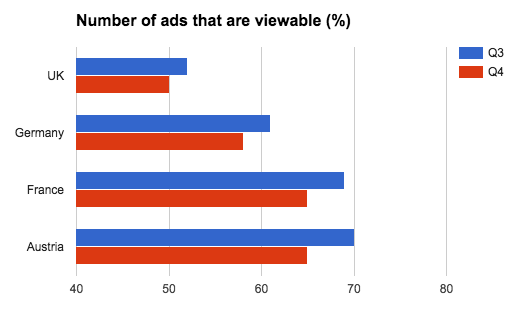
While viewability is not only a problem for programmatic ad buying, it does correlate. In the U.K., programmatic ad spend is higher than in Germany or Austria, which is having an effect on the results, according to Anant Joshi, director of international business at Meetrics. Equally, the rise in longer-loading HTML5 ads means fewer are being seen as users scroll down before the ad loads, he added.
That means there is scarcity in digital media — of ads people see. Quantcast, which took in 5 billion monthly impressions across over three years from 10,000 publishers, shows that only 3 percent of European ad inventory is available at 80 percent or above viewability.
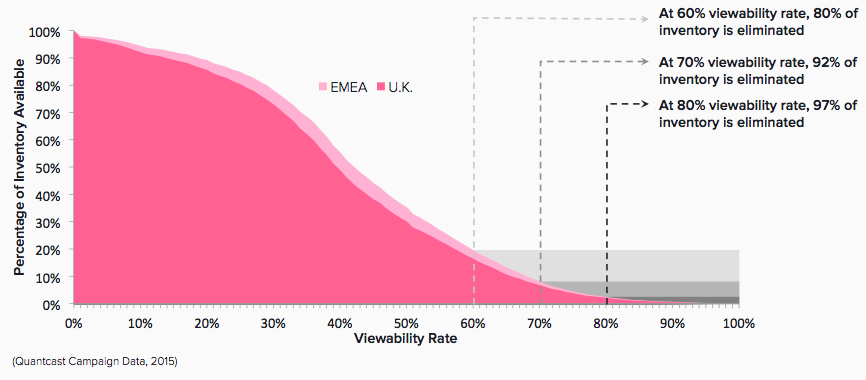
“It’s a natural predilection for advertisers to say, ‘I want 100 percent viewability,’” said Matt White, U.K. managing director at Quantcast, “even though that’s not what you would have got in TV, but because it’s online [and] everything is held to a higher standard.”
“The problem is needing to set realistic goals based on state of play of the market,” he continued. “Half of it will go on gaming sites in front of 15-year-old boys who aren’t even old enough to buy your product. It’s a case of diminishing returns.”
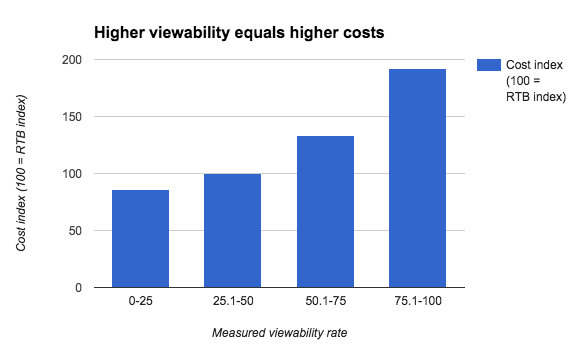
That brings up an inconvenient truth: If advertisers want guaranteed viewability, they’re going to have to pay more. Quantcast found that for ads that guarantee over 75 percent viewability, the cost is twice as much as buying regular RTB inventory. Ouch.
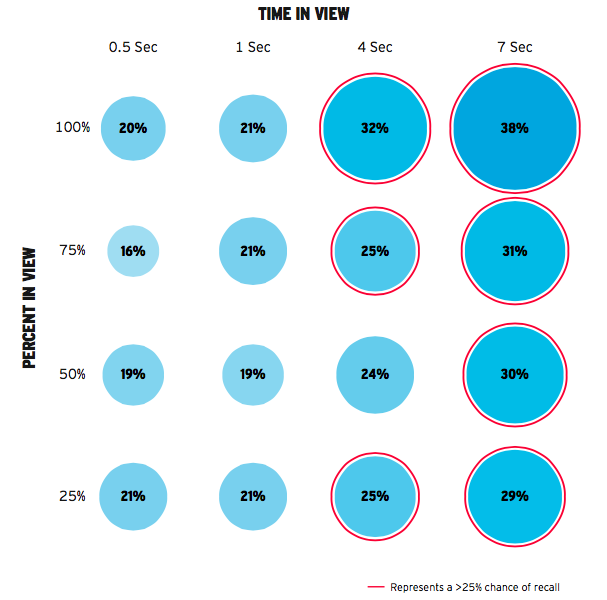
Viewability is just table stakes, of course. Advertisers want their ads seen for longer than just a second. The ideal: 10 to 20 seconds, according to Meetrics research. In a study with IPG Media, analysts at Integral Ad Science found ad recall increases to 38 percent when a display ad is in view for seven seconds. For rich media ad formats, this is 39 percent when in view for seven seconds. However, ads that barely make MRC standard, while “viewable” aren’t recalled by over 80 percent of people.


More in Media

People Inc.’s Jon Roberts on the AI licensing boom – and the revenue lag
People Inc’s Jon Roberts discusses the boom in AI content licensing marketplaces — and the revenue that could materialize for publishers.

YouTube is building infrastructure for the full creator-brand partnership life cycle
YouTube’s Gemini-powered Creator Partnerships promises to alleviate pain points in the influencer marketing pipeline.

Joint signings highlight growing convergence between creator and Hollywood agencies
What a spate of joint signings between Reign Maker Group and Paradigm Talent Agency tells us about diversifying talent and owning media in the creator economy.