Join us Dec. 1-3 in Nashville for the Digiday Programmatic Marketing Summit
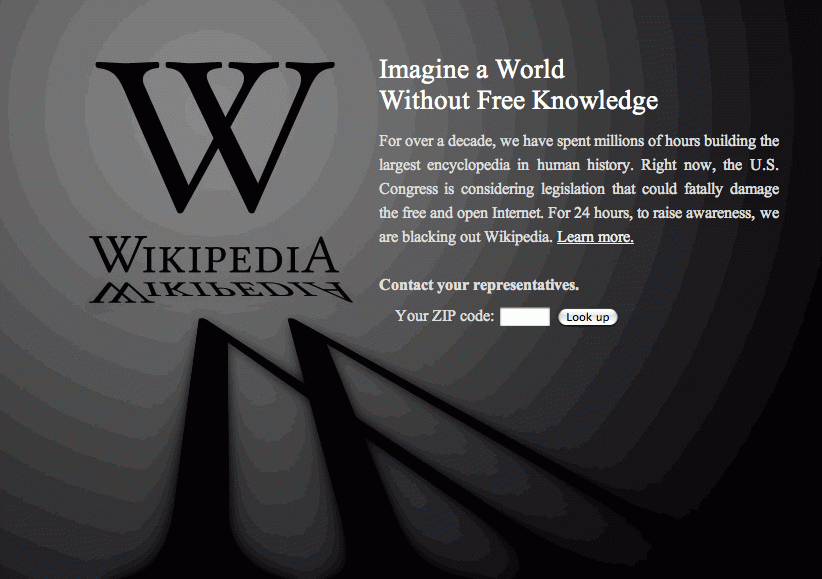
The Internet was abuzz last week with reaction – much of it hysterical – to SOPA and PIPA, the copyright and intellectual property-related bills that were introduced to Congress late last year. Numerous high-profile companies and sites including Google, Facebook and Wikipedia are firmly opposed the bills, as it seems are the majority of those working in the digital media industry, judging by reaction on Twitter. As Forrester analyst Josh Bernoff points out, though, many people are confused about what actually constitutes piracy, and most of us – even copyright holders – violate copyrights routinely.
Digital piracy is frictionless and nearly riskless. We all do it. And all of us who create content are victims. We all value our own content more highly than content from others –that’s clear from the stories I’ve heard. Here’s the difference between fair use and a copyright violation: When I use your content it’s fair use. When you use mine, it’s a copyright violation.
Read the full article at AdAge.


More in Media
The Hill adds interactive election tools to subscription offering ahead of the midterms
The Hill is betting on interactive subscriber-only features to help grow its new subscription business ahead of the 2026 midterms.
The Daily Mail tests GEO with brands ahead of AI visibility product
The Daily Mail is running around a dozen GEO tests to work out what works before turning its AI visibility offering into an official product early next year.
Meta delays rollout of updated commercial terms amid publishers’ collective pushback
Meta’s updated commercial terms have galvanized publishers into a coordinated pushback over the company’s use of their content.