
The Wirecutter has made a business out of obsessively reviewing the minutiae of gadgets. Now, it’s offering its services to other publishers.
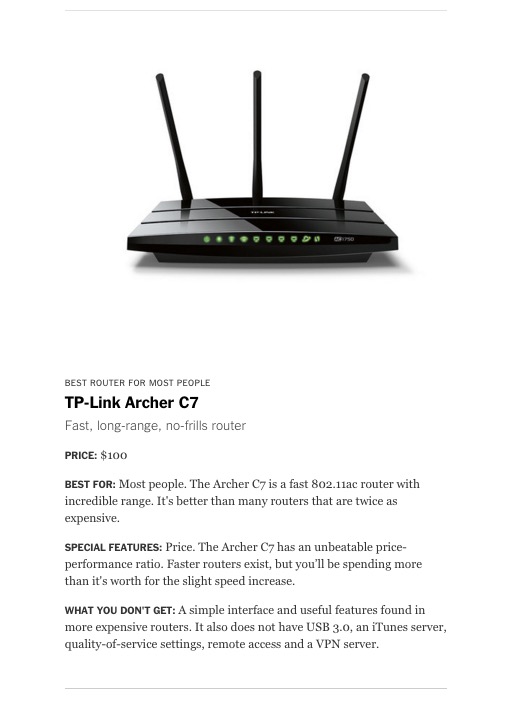
Last week, Vulture published a Wirecutter gift guide to the best gadgets of 2015, which included headphones, Amazon’s Kindle and a Bluetooth speaker. The guide, produced by Wirecutter’s own writers and photographers, is one of a handful of similar partnerships The Wirecutter has created over the last six months. The biggest of these came in October, when the site worked with The New York Times on a guide to the best wireless routers. That piece, which also appeared in print, was the most-emailed New York Times story on the day it was published. The Wirecutter also regularly runs features on Ars Technica and Engadget.
Wirecutter, which has drawn comparisons to the research-heavy Consumer Reports, spends hundreds of hours on its reviews. It’s a time-intensive process that’s tough for most publishers to replicate. That makes it inherently valuable and worth pitching to other sites, said Andrea Mathias, the site’s head of growth and partnerships. “Our partners work with us because they trust us and know we have the right expertise to make the right recommendations for their readers,” she said.
This is true even for gadget-review sites such as Engadget and Ars Technica, which have tapped Wirecutter to fill in their own coverage gaps.
“Here at Engadget, we review gadgets too, but we mainly stick to a handful of categories — you know, phones, tablets, laptops, smartwatches, etc. Even then, there aren’t nearly enough of us to test all the interesting stuff out there,” Engadget’s managing editor, Dana Wollman, wrote back in March. (The site declined to comment for this story.)
No money changes hands with the publisher deals, but the 4-year-old Wirecutter is using its custom product guides to both raise its profile and build its audience beyond the core audience of tech diehards. In 2013, it launched its second site, The Sweethome, which applies the Wirecutter approach to home goods such as bedsheets, trashcans and flatware. The site hopes that its expertise on this front will help it publish gift guides focused on topics such as running gear and bathroom accessories.
The Wirecutter’s custom product guides also serve to drive readers back to its own site. The bulk of the site’s revenue comes from its affiliate linking deals with sites such as Amazon. When a customer reads a Wirecutter recommendation and then buys a product, The Wirecutter gets a small slice of the transaction. So, the more readers The Wirecutter finds, the more money it stands to make.
“The primary goal is to get those new readers back to read those full reviews,” said Wirecutter’s Mathias.


More in Media

Creator mentors Colin and Samir want to turn their followers’ ideas into productions
Creator mentors Colin and Samir teamed up with Adobe to fund a creator’s project; the first step towards the duo’s new production era.

How a fashion creator turned audience demand into a 500+ client styling business
A creator with a fashion merchandising degree speaks on her quest to diversify revenue fast, from styling to sweat equity investment.

Forbes looks to Google AI pilot for insights as publishers seek value beyond the click
Forbes has joined Google’s paid News AI pilot that gives Google expanded rights to its content to test new ways of providing readers with context about stories before they click through.