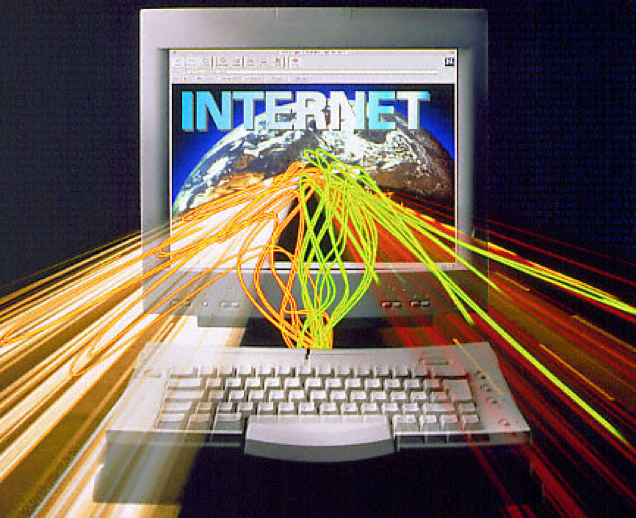
Is The Last Mile here? Two weeks ago, Google dipped its toes into the competitive distribution universe with the launch of Google Fiber in Kansas City, Missouri. The promise: deliver super-high speed Internet. So now the search giant is competing against big telecom and cable broadcast companies like AT&T, Verizon, Comcast.
TV operators, says SNL Kagan, should be very afraid. At $120 per month, Google Fiber subscribers get Internet speeds 172 times faster than the average broadband connection, a 2 terabyte DVR box and some basic cable channels. But the underlying implication for Google is that by speeding up the Web, it can increase ad impressions, which leads to more revenue. Of course, Google believes a faster Internet will make everything — from businesses to education to city development — better.
Google’s dominance is search has led the company to creating hardware and platforms and software and now distribution. In other words, Google owns us. But as long as we have super fast Internet, who cares, right?
Internet connectivity issues have been a long and tiring discussion, and Google Fiber could be the answer. Now, if they could only develop the one futuristic thing we all need: a hoverboard.


More in Media

Time pitches GEO insights into a new brand offering
Time is turning its AI insights into a new product, selling branded content to shape how brands are talked about inside AI-generated answers.

Why The Guardian’s first reader-facing AI product isn’t a chatbot
The Guardian has begun to roll out its first reader-facing AI product. But it doesn’t really look like an AI product.

CreatorIQ and Sprinklr bet they can solve creator measurement’s fragmentation problem
CreatorIQ and Sprinklr are joining forces to bring creator intelligence, social media management, and paid amplification onto a single platform to try and solve a creator marketing problem.