Join us Oct. 26-28 in Newport Beach for the Digiday Media Buying Summit
‘It’s a CEO conversation,’ Accenture and Whalar on their playbook for the creator economy
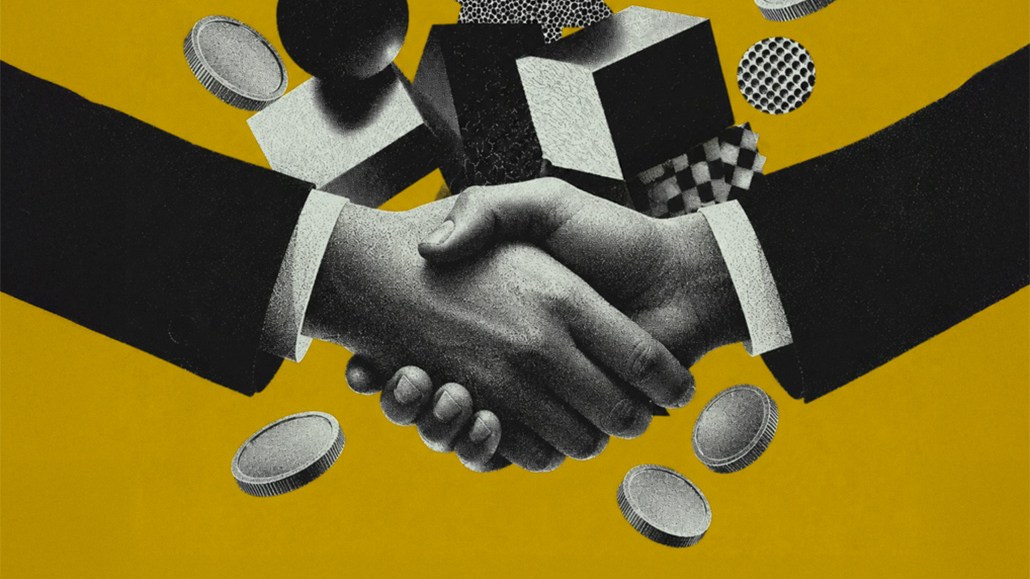
Last month, Accenture Song acquired creator and social agency Whalar along with its scaled creator engagement tools and growth capabilities. Without providing details, Whalar told Adweek it was the “largest creator economy transaction,” which puts it at least at the $500 million mark, based on Publicis’ 2024 acquisition of Influential.
Whatever the cost of the acquisition, it marks another major shift and investment in the creator economy. Accenture didn’t buy Whalar for its creator relationships, it bought the operational layer that makes those relationships more tangible and sellable — the sourcing, vetting and campaign execution that turns individual creators into something an advertiser can plan and budget around. As more and more creators look for long-term partnerships rather than one-off deals, this is a crucial building block.
After the initial press around the announcement, Digiday caught up with Bryan Yasko, managing director at Accenture Song, and Emma Harman, co-CEO of Whalar, to learn more about the partnership, what Accenture is building in the creator space, why they see creators as a CEO conversation rather than a CMO one, and what they’re working on building, now together.
What Whalar gives Accenture
Digiday asked Yasko what Whalar’s extensive creator agency offers it that it doesn’t already get from Unlimited and Superdigital which Accenture Song acquired in 2024 and 2025 respectively.
“The way we view the Whalar acquisition and our future partnership is we don’t view the creator economy as just another, ‘Oh we have this capability.’ We fundamentally believe the growth is going to continue and the influence it has on not only brands but growth for clients is going to be immense,” Yasko said. “The creator economy is a CMO conversation, but really it’s a CEO conversation, and they need to rethink how they develop products, what their supply chain should look like, how they should handle marketing. The days of building brands, doing certain communications, going after repetition, and dominating shelf space – that playbook is expiring.”
Whalar is giving Accenture important pages in the new playbook centered around creators and the tools needed to measure their effectiveness.
“The creator economy is not just about great content and creativity, but it’s really a huge, huge transformation…From a marketing standpoint and even a product standpoint, the creator economy is a built-in daily relevance. You know if your product is relevant or not instantly. You don’t have to wait,” Yasko said. “It should be the expectation of businesses today, that they can get that real information and insights in order to fuel future growth… so that’s pretty much the excitement [with the acquisition].”
The C-Suite is leaning into creators
Building off of Yasko’s comment that the creator economy is a CEO conversation, Harman said the C-suite is leaning in hard.
“The data is in, we’ve proven that. We’ve been part of MMM, the measurement, and the traditional measurement people are getting involved in the space, whether that’s Kantar, Nielsen, they’re all coming in now and giving us this ability to measure this space,” she said. “CEOs are starting to think, ‘How do we make an investment around this? What type of infrastructure do we need to build to be more social first and creative first? What are the people we need internally? What are the agencies that we should be working with? […] How, as a brand, do we become more culturally relevant? How do we have this more personalized relationship, this more relevant, in tune relationship?’”
Harman continued: “What we’re seeing from CEOs and CMOs is this idea of how do we build the cultural the operational structure that we need to really do this in a meaningful way…when we were looking at potentially who would we work with, who we could partner with, that’s where Accenture really excited us because that’s exactly what they’re doing. They’re putting in that infrastructure that’s now really needed, that then gives us this ability to build this creator ecosystem around that.”
The people layer
The creator economy has grown so rapidly so quickly that it’s now in its automation phase, with companies like Unilever using AI to manage its army of 300,000 creators. Digiday asked Yasko and Harman how important the operational layer is in this space, and if it helps them better compete for ad accounts increasingly predicated on an agency’s ability to build that layer. Yasko didn’t address this, so much as pull focus towards the people layer of the model, and how Whalar understands it better than most.
“The creator economy was built on people connecting with people…you can’t forget what the basics are. These are people talking to people. It will always be that. This isn’t static content. This is the human aspect,” Yasko said. “Whalar is the best at understanding that and putting it in the center of everything that they do and being supporters…Whalar has to be incredibly relevant to the platforms and the creators and and clients. That triangle is the heart of everything that we are going to do in the future.”
For Yasko, the creator economy will influence every form of marketing, and beyond, and Accenture has already banked on serving the full enterprise – Whalar just helps them progress that even further.
On creator strategies
Yasko compared the creator space to the heyday of advertising, before the media landscape was fractured, telling Digiday that creators can connect with consumers in even more spaces, overcoming the problem brands initially faced when TV began to falter.
When strategizing for this new heyday, Harman stressed the importance of variety, and using the most appropriate approach for the right goal.
“You could work with thousands of creators at any one time on a social commerce strategy that’s driving through TIkTok shop or Amazon Live…this becomes your huge, global sales force driving retail and e-commerce,” she said. “Then you’ve got the top-tier, creators producing entertainment…creators are getting more into this media and entertainment space, and brands will start leaning into that…You’ve got the social commerce piece, the top-tier entertainment piece, and these cultural collaborations, as well.”
Harman said there is a full stack of things they can do with creators at the heart of it – the question is how to operationalize and build infrastructure around that. “That’s a journey we go on together,” she said.
Are creators disrupting the agency model?
Creators are increasingly being tapped as new creative heads or content producers – not just temporary partners. Does this threaten to upend the creative agency? Yasko doesn’t think so.
“The success will be when they combine. I don’t think the collaboration model has been cracked yet, but I do fundamentally believe as AI and technology becomes more prevalent in our life, creativity is the secret sauce of how you can become relevant and you know connect with people,” Yasko said.
Those who think they know exactly how to tap creators don’t have the right idea.
“We connected with the Whalar team on not getting consumed by the short term…We’re trying to think long term and the possibilities of what it could be and what it should be, rather than saying we’ve got it all figured out,” Yasko said.
On measuring creator ROI
The C-suite elite and brands are well aware they can’t measure creators the same way they measure traditional marketing. But do Accenture and Whalar have plans to establish more consistent standards and metrics in this space?
Harman spoke to her work as the chair of the Influencer Marketing Trade Body in the U.K., composed of around 40 different agencies working to help set standards, propose regulation, and plan for compliance in this space.
“We want to have this as a very healthy and sustainable place where brands feel they can trust the work, that they trust the content, that it’s going to be regulated and viewed like other advertising content that’s out there,” she said.
Then there’s the major measurement companies’ movement in this space.
“Kantar and even Nielsen now are coming in hot with new products that help measure creator marketing, not just as a media solution, but as a cultural vibrancy, its algorithmic power, its brand power strengthening, its sales power,” Harman said. “All of these partners now are coming in and having meaningful conversations about how we build really sophisticated learning agendas, how we do testing and investing with certain creators, and not just looking at the baseline performance metrics or views, but really looking at brand power…This is an essential part of our brand-building architecture. This isn’t just about performance, and it’s not just about our social media team. This is something much bigger than that.”
Thoughts on the rapidly shifting creator space
Both Accenture and Whalar have had front-row seats to the rapid growth and evolution of the creator economy. When asked about that shift, Yasko said the most successful brands don’t consider creators to be just media channels anymore.
Harman said there will be an even bigger shift on the horizon.
“There’s going to be a monumental shift in how media is bought, planned, and thought about…The creator economy is driving a lot of that.” she said. With attention shifting more and more away from traditional media and towards social, brands are now looking at ways to move meaningfully in that space – not just quickly.
“It’s not just treating it as a broadcast approach,” Harman said. “It’s planning around different communities versus planning around audience demographics…social is being re-wilded a bit. You have to think and evolve your planning.”


More in Media
As creators increasingly move into Hollywood, deal terms can put their IP at risk
Advertising Week New York explored the business of creator-led programming across entertainment, and the problems arising within it
Apple’s Safari ad tech blocklist sends publishers back to IAB Tech Lab’s Trusted Server
What publishers once filed under someday now has a deadline, and Apple set it.
Media Briefing: As AI search shifts referrals, publishers revisit registration walls
As referral traffic declines, publishers are rethinking registration walls as a way to turn anonymous visitors into valuable known users.