Join us Oct. 26-28 in Newport Beach for the Digiday Media Buying Summit
Reach CEO touts Google AI deal as a template, steps up pressure on OpenAI over scraping
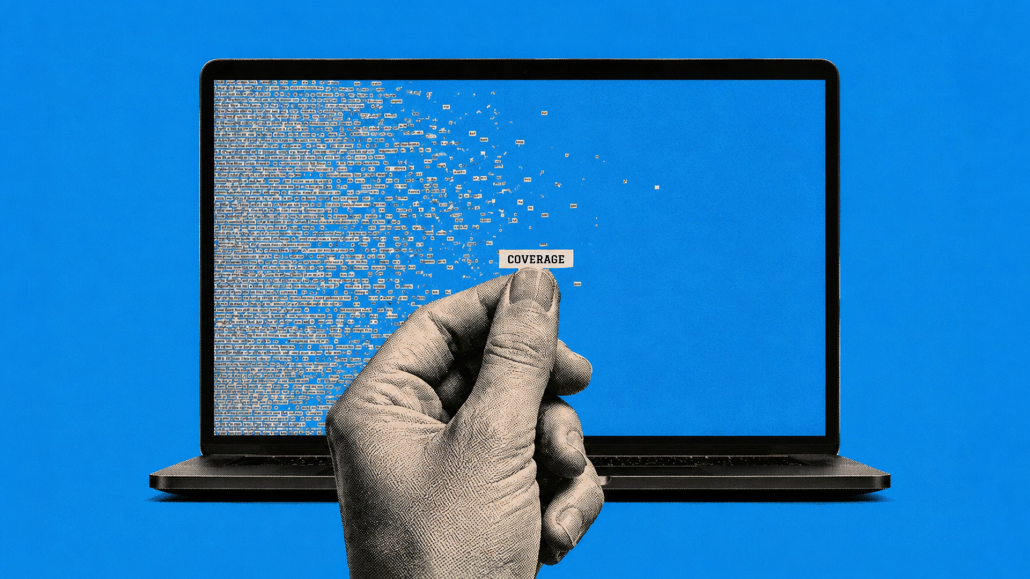
Reach’s CEO Piers North is positioning the publisher’s Google AI content deal as a model for future LLM partnerships and says it has sent OpenAI a cease-and-desist letter as it steps up pressure on AI firms using its content without a deal.
The U.K.-based publisher, owner of newspaper titles the Daily Express and Daily Star and OK! Magazine, has agreed to deal with Google, which Digiday understands has a two-year time stamp. The deal gives Google paid access to expanded rights to use news content from Reach’s UK and Ireland portfolio for its news AI pilot. In return, Google can use that content in experimental AI features and ways of delivering news, while the companies explore whether those features help engage audiences.
Google has a multitude of different AI pilot programs, including a pay-per-value AI contribution pilot it’s running with smaller publishers. It says that more than 200 publications globally have now joined its news AI pilot program. It also has its Google News Showcase progam.
Digiday caught up with North to ask how this fits with its wider LLM licensing plans and whether the deal is enough to compensate for referral traffic erosion. Reach has seen well over 100 million successful scrapes of its content across its portfolio over the last six months, per the publisher.
The interview has been lightly edited for clarity and flow.
What difference will the Google deal make for you, in terms of visibility, data, what do you hope to get out of it?
“We believe that what we do, and what other publishers do, has an inherent value to the AI companies. They recognize that as well. We have the value of the data, aka content, which they need to fuel the growth in that sector. We believe there’s a value exchange there. In the olden days, it was a very simple search: search results led to traffic. That paradigm shift has changed. Therefore, the market and the industry need to come up with a new one. We are willing to talk to partners who are willing to engage with us. And we’ve always had a very pragmatic relationship with Google, with ad demand and search traffic, and now that’s extended to AI. They have recognized in that formal agreement that there is a value exchange to be had.
What exactly does each party get from this deal?
It allows them to access our content. It allows us to monetize that content. It gives us visibility in the AI world about how our content is being used. That’s important for both parties, we can understand what value they can get from it and it allows the future relationship to go forward. As important as doing the deal is setting the framework for deal structure in place. We have set out the rules of the game. Our priority now is to encourage other partners that this is the right way to engage. And if they don’t, then we will take the necessary steps to make sure that they recognize the proprietary nature of what we provide.
What are your non-negotiables?
Everything is a negotiation if you can do a deal. The first principle is we need to agree on what game we are playing here. What are the rules? The rules have to be that the content that you wish to access and use, you cannot do that without our permission. What that permission will be, the cost and framework – the fundamental thing is that there has to be that consent and a framework that is right and fair. It’s not about not seeing AI companies grow. We’re fine to help them grow, but then you need to recognize the value we provide you.
What can you say about the Google deal’s payment structure and duration?
It’s a time-limited deal. So there will be a renewal conversation to be had at some point. A lot of AI companies are also figuring out the value of this. So it’s always hard for both parties to negotiate when neither side is entirely sure of the value. But again, it’s about setting the frameworks that we operate in.
This will inform how the content is being used. It will allow us to judge the value of the deal that we’ve struck and if it’s unbelievably smashing the numbers, then that puts us in a strong leverage [position] when we come to renegotiation and vice versa. If the content’s not working for them, we’ve got to think about how we can drive that engagement up; if it’s important to them, it’s important to us.
How are talks with other AI companies progressing?
We certainly feel the progress with the companies that we already operate with: Amazon, Google, Meta, Microsoft – we’re in discussions.
Others are not playing ball, and they’re the ones that we will seek to escalate. We don’t have that same relationship with OpenAI. They’re one of the parties we need to bring to the table. We have sent them the next stage in the legal process.
Why does Reach believe it needs to act?
We’ve got pretty good evidence – via our access logs – of how much they [OpenAI] are using our content. We put up plenty of ‘do not walk on the grass’ signs. And there’s a limit to how much technically you can do because the scrapers are getting much more sophisticated, and it’s hard to distinguish what is scraping traffic, what is bot traffic and what is human traffic.
If they don’t want our content, it’s entirely within their prerogative to go; ‘we’re not interested in Reach PLC,’ but we can see how millions of times a month your bots are literally all over our content. So that’s where our patience runs thin because they’re huge businesses that are driving huge change, and they’re changing consumer behavior. So we [we may be] criticized for not responding to new consumer behavior, but you are the new monopolies, and therefore consumers will change because you are changing them, and we’re ready to play our part in it. But we need there to be a fair and equitable conversation.
Does the value of these licensing deals really compensate for lost referrals?
Different publishers will take different positions because they’ve got different requirements or different strategic outlooks. My general view is these are time-limited deals. I actually think it’s incumbent on us to get these models proved so that all parties on whatever supply and demand side can understand what the framework we’re operating in is. We can hold out for an optimum time or invest time and money in legal and other routes, or we can get on in shaping the market and learning together with partnerships like Google.
You just simply can’t say, ‘I’ve lost a pound here and I want a pound over back there.’ That’s not a pragmatic solution. If I had huge legal resources and I was a global business, maybe we’d take a different view. But the deal is right for us at the time that we’re at; they’re time-limited deals and I’m excited about learning what the next steps are. We’re all agreed that we’re playing on a checkerboard. We’ve got to agree if we’re playing chess or draughts, but at least we have a game in front of us, and we know there are some rules in that game, and that’s a huge step forward for ut. We see this as the first of a number of deals that we will do.


More in Media

Social commerce edges past SEO at The Independent for the first time
The Independent’s social-commerce revenue edged past its SEO-based commerce revenue for the first time in September, CEO Christian Broughton said at Digiday’s Media Strategies event in London this week.

Ownership, control, margins: the brand playbook for microseries is still taking shape
Creator-led microseries are hot, and brands want in, but everyone’s still figuring out the structure of the deals and the content itself

Media Briefing: Overheard from publishers at Digiday London Media Strategies Town Hall
At Digiday’s Media Strategies London event on Tuesday, executives weighed new ways to measure audience value, the risks of blocking AI crawlers, the uncertain economics of licensing content to LLMs, and whether agentic media trading is ready for the real world.