Media Briefing: As Google traffic ebbs, some publishers see social platforms as real revenue lines
This Media Briefing covers the latest in media trends for Digiday+ members and is distributed over email every Thursday at 10 a.m. ET. More from the series →
This week’s Media Briefing looks at why publishers are once again turning to social platforms for audience growth and revenue as AI-driven search changes and declining Google traffic put pressure on their owned-and-operated businesses. But publishers have learned from the past, and the playbook is different.
- Publishers bet on platforms again
- Jeff Bezos on pushing The Washington Post to profitability, Business Insider CEO exiting, and more.
Publishers bet on platforms again
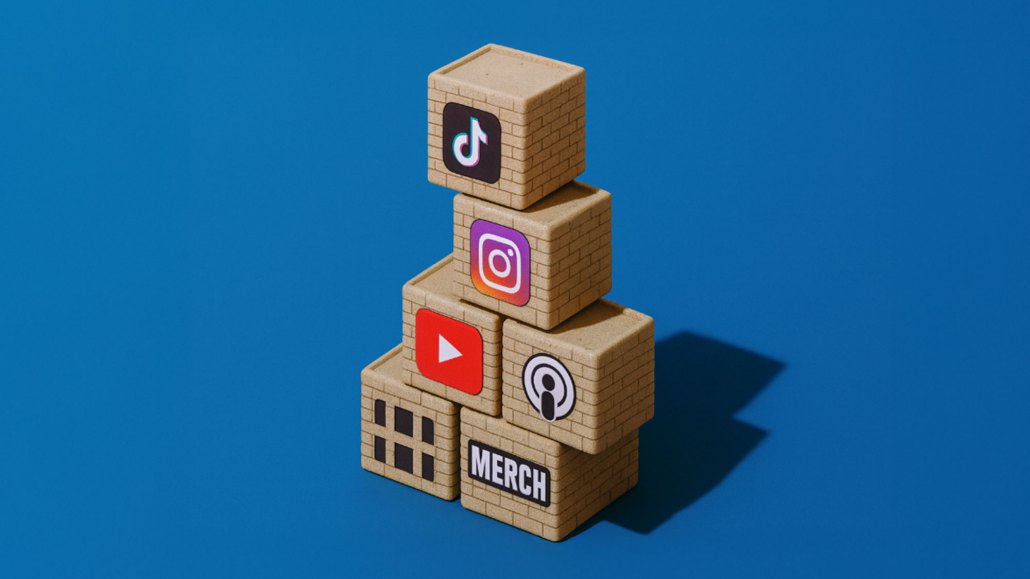
Publishers once got burned by over-relying on social platforms for growing their reach and revenue. But now, they may need them again. As Google referral traffic declines and AI adoption grows, some publishers are chasing off-platform revenue and views to offset onsite audience and digital advertising losses.
The playbook is a familiar one reminiscent of the platform-publishing era of the 2010s, when publishers built businesses around Facebook in particular to drive scale, only to see distribution tank once tech companies deprioritized publishers’ content and wound down partnership programs and their funding. That ecosystem ultimately contributed to the downfall of publishers like BuzzFeed as we know it.
And yet, publishers like People Inc. and Ziff Davis touted their off-platform success to investors and analysts in Q1 earnings calls earlier this month. Execs cited year-over-year growth in audience and revenue on platforms like TikTok, Instagram, YouTube, Facebook and Snapchat as a solution to the decrease in display advertising revenue as a result of traffic pressure.
Ziff Davis is actually getting more engagement off platform than on its own sites and apps, CEO Vivek Shah said during the company’s latest earnings call. “That can replace the… organic web traffic that’s under pressure,” Shah said.
So, is today’s off-platform push a sustainable diversification strategy? Or another cycle of dependency? Media analysts and consultants told Digiday that while direct audience relationships should still be the focus, the reality is publishers need to look beyond Google if they want to continue growing their audiences.
“You’re still playing by someone else’s rules,” said Adam Steingart, an independent commercial and growth executive with previous roles at the NBA, Paramount and Viacom. “If the algorithm shifts or priorities change, you adjust again. Different pipes, same landlord. The publishers who do best treat platforms as one lane in a wider plan, not the plan.”
What’s different this time around is that publishers have more diversified businesses, with revenue coming from a mix of advertising, affiliate commerce, licensing, events and subscriptions. They remember the pitfalls of putting too many eggs in one basket.
“The monetization infrastructure is mature now, and if you have the leverage you can tip the terms further in your favor. Done right, these platforms aren’t just distribution anymore. They can be forecastable revenue lines,” Steingart added.
In the 2010s, much of the approach was to use social platforms as a channel to drive eyeballs back to a publisher’s site, according to Craig Kostelic, former chief business officer at Condé Nast, who is now working on launching a start-up in this space — which he declined to name as of this publishing. Now, publishers are focused on treating platforms as destinations, which audiences may never leave, and figuring out how to best monetize them there.
“Advertising is turning more and more into a trading business,” Kostelic said. “You need very sophisticated media buyers in-house at these publisher teams to understand essentially how to buy low, sell high, while also delivering on the KPIs the clients have. And that’s a different construct than the 2010s, where it was like, ‘Let’s build out as big a follower count as we can, because the bigger our follower counts are, the more that we have organic reach on our posts, the more we can sell them for.’”
Publishers should focus on selling measurable advertising outcomes and their first-party audience data, rather than rely on “the old model” of selling ad impressions on a third-party platform, according to Gabriel Dorosz, advertising lead at INMA.
“Selling outcomes that happen to travel across platforms — branded video, affiliate-tagged content, app referrals, direct-sponsorship bundles anchored in first-party data — is the new and more durable model. Instead of building businesses on rented audiences, publishers are using platforms as a surface and monetizing through the assets they own,” Dorosz said.
People Inc and Ziff Davis declined to comment on this story.
The updated publisher platform playbook
Both People Inc and Ziff Davis saw programmatic and display ad revenue decline year over year in Q1 2026.
But at People Inc., non-session-based revenue (ad revenue from social or native campaigns, events, sponsorships, emails, ad targeting tool D/Cipher and licensing) grew 24% year over year in Q1. Non-session-based revenue grew as a percentage of People Inc’s total digital revenue, from 35% in Q1 2025 to 41% in Q1 2026.
“Core web sessions continue to be challenged. Google search traffic declined as expected, and we expect that will continue,” Neil Vogel, People Inc. CEO, said in a recent earnings call. “The driver of our growth continues to be through these off-platform audiences, which grew 27% in Q1,” he added.
For example, InStyle’s social-first video series called “The Intern” has brought in $500,00-$700,000 in sponsorships, according to IAC chairman Barry Diller, in a previous earnings call. Now on its eighth season, the show “cost nothing” to produce, he said.
“We’re creating more content today than we ever have in the past, and distributing it across more platforms with success than we’ve ever had in the past,” said People Inc’s CFO Tim Quinn in the most recent company earnings call. “We have the combination of brands, audience size and reach, data about those audiences, and — in the current incarnation — a sales team to go out and access advertisers to sell into those audiences. And so that’s where we can control our own destiny and grow the non-session-based revenue streams at really attractive rates, and that’s the future for us.”
Ziff Davis saw a similar pattern. Social video views for its shopping group of brands grew more than 75% year over year, according to Shah.
“We have pretty significant follower counts, and we’re able to leverage those follower accounts into ad programs and ad revenue,” Shah said in a recent earnings call. “Lower revenue came as a result of continued and expected traffic pressures across the segment, impacting affiliate, commerce and programmatic display advertising. These declines were partially offset by growth in off-platform monetization, licensing and sponsored content.”
The current iteration of the platform playbook doesn’t just rely on social media. Publishers are also seeing more revenue from content licensing deals, including agreements with AI and tech companies.
Publishers are also mapping back to where ad budgets already are, making content a “much easier buy” for brands on platforms like Meta and TikTok, Kostelic said.
Publishers with valuable IP and franchises will benefit from this environment, per Steingart. Curated deals between publishers and platform revenue share programs like TikTok’s Pulse get them prices above run-of-site programmatic, he said. “That’s a different game than chasing the feed in 2015. Margins are still tight though. [Revenue] share comes off the top and deals aren’t uniform across platforms,” Steingart said.
But ultimately, the dynamic is still the same as the 2010s, one in which publishers distribute content on a platform they don’t own and can’t control.
“Platform distribution can play a role, as a top-of-funnel tactic, but it’s not a strategy. We’ve already been in a similar situation in the 2010s, and the platforms haven’t changed — they still control the algorithm, the monetization, and the access. Distribution is important, but only if it helps the core,” said Dmitry Shishkin, a media consultant who works with companies like Swiss-based Ringier.
Shah himself outlined the potential risks with this strategy. He noted that affiliate commerce traffic (to buying guides or product reviews) has been harder to replace through an off-platform approach. And that the age-old problem of relying on platforms for revenue and audience growth comes with a pinch – or a ton – of salt. He likened a revenue share to a tax.
“There’s a platform tax in some form or fashion. So [we] recognize that,” Shah said in a fireside chat at JP Morgan’s TMT Conference last week. ‘But it’s still growth and it’s sources of growth, and we continue to see opportunities to grow.”
What we’ve heard
“I disagree with the perspective that I think Condé Nast had, which was, Google is treated as dead. It’s clearly not the case… Publishers should not rely on Google to the extent that they have. At the end of the day, what your publication should be really focused on is… using Google as a lever to acquire more audience.”
— A head of SEO at a news publisher.
Numbers to know
$81 million: The amount of revenue The Guardian generated in the U.S. in its most recent fiscal year, its highest level since launching on this side of the pond.
70%: The share of annual revenue The Guardian U.S. makes from digital reader donations.
1160,000: the number of instances where employees at The New York Times, The Wall Street Journal and The Washington Post had their data exposed to the dark web, according to a new study.
$80 million: Roughly the revenue Vox Media’s podcasts generated in 2025.
What we’re covered
Omnicom’s ‘fewer middlemen’ push is reaching publishers
- Omnicom’s drive to “reduce middlemen” is showing up in how its agencies talk to publishers. Buyers within the Omnicom holding group are being “heavily encouraged” to route more spend directly to publishers, rather than through layers of ad tech.
- Publishers aren’t convinced it will translate into a material shift – if any at all – in where the money goes.
Read more here.
Bleacher Report launches YouTube channel for its animations ahead of World Cup
- Bleacher Report is betting on its animated content to break through all the sports coverage around the FIFA World Cup tournament kicking off next month. The Warner Bros. Discovery-owned sports publisher has launched a dedicated home for its cartoon shows on YouTube.
- The move is also about deepening audience engagement, by giving the fanbase around B/R Cartoons a place to go for all the animated content, which has driven more viewership than any other original content franchise at the company.
Read more here.
WTF is viewbotting?
- Viewbotting, or the practice of artificially inflating viewer counts with automated software, is quickly becoming a major issue.
- Viewbotting is when live streams get an influx of artificial viewers powered by bots. Companies offer viewbotting services, with AI recently helping make the fake accounts seem even more legitimate by imbuing them with personalities and interests. Some streamers may pay for these services to increase their viewership hoping to get on a platform’s home page.
Read more here.
Inside the great digital media reckoning
- For the most part, the digital media darlings of the 2000s have been killed. Once valued at over a billion dollars each, BuzzFeed and Vox Media have seen their business models collapse.
- All signs point to a pivot from social, search, and scale strategies to distinctive media assets of value and diversified revenue streams.
Listen to the latest Digiday Podcast episode here.
What we’re reading
Jeff Bezos on The Washington Post: I don’t want it to be a charity
In a CNBC interview, The Washington Post’s owner Jeff Bezos said cutting nearly a third of staff was a push to get the organization to become a profitable enterprise, and that if people aren’t paying for the product, it’s a signal that it’s not “good enough.” Meanwhile, The Post is planning to shed half of its Washington, D.C. office space.
Business Insider CEO Barbara Peng is leaving
Business Insider CEO Barbara Peng is leaving by the end of June to pursue other opportunities, Reuters reported. Christian Baesler, senior advisor to German publisher Axel Springer, will take over in the interim.
Vox Media staffers welcome new owner James Murdoch
More than a dozen Vox Media staffers said in interviews that they welcome their new owner, James Murdoch, given his experience in media businesses and passion for journalism, The Washington Post reported.
Hundreds of newsrooms are limiting the Internet Archive’s access
More than 340 local news sites in the U.S. – as well as major news publishers like The New York Times, The Guardian and USA Today Co. – are blocking the Internet Archive’s access over concerns that AI companies are scraping the nonprofit’s archive for training data, Nieman Lab reported.
Penske Media in talks to acquire other Vox Media brands
Penske Media is in talks to acquire all theB brands not sold to James Murdoch, including Eater, The Verge, SB Nation, Popsugar, and The Dodo, according to Adweek.


More in Media

Why CNN International is building for agentic ad market that barely exists yet
CNN International is still chasing its first agent-sold dollar by Q1.

Media Briefing: The transatlantic push to rein in stealth bots is gathering pace
U.S. and U.K. publishers are pushing for laws to crack down on stealth AI crawlers as bot scraping surges and demands for transparency grow.

Creator mentors Colin and Samir want to turn their followers’ ideas into productions
Creator mentors Colin and Samir teamed up with Adobe to fund a creator’s project; the first step towards the duo’s new production era.