Join us Dec. 1-3 in Nashville for the Digiday Programmatic Marketing Summit

With many advertisers opting for Instagram over Snapchat, Bustle is betting on the photo-driven platform, hoping it’ll pay off with advertisers.
By devoting more people to the platform, the millennial women-focused site has added 1.3 million Instagram followers in the past year, for a total of 1.6 million. Bustle wouldn’t share revenue figures, but a rep said the company is doing four times as many branded content deals a month on Instagram versus a year ago.
“It was really making a shift from spending a little bit of time on Instagram to having dedicated people focusing on it,” said Hayley Saltzman, Bustle’s deputy editor of social.
At this time last year, Bustle had 258,000 followers and was adding 13,000 followers per week, according to Instagram marketing platform Dash Hudson. In April, which has the most recent complete-month data, Bustle was adding 22,000 followers per week, according to Dash Hudson.
A year ago, Bustle had just one social media editor spending about 20 percent of their time on Instagram. Now, Bustle has three social editors that spend at least 20 percent of their time on Instagram and a fourth editor who works exclusively on the platform. It also brought on a designer who focuses on Instagram. There’s even a meeting just for Instagram, where around 10 people from design and editorial meet for an hour each week.
Large social followings sound great, but they aren’t of much significance to publishers if they can’t be monetized. And while there are some exceptions, publishers have generally struggled to make money off platforms like Instagram. Some, like Mic, have made a big investment in Instagram because, like other publishers that don’t have a highly coveted Snapchat Discover channel, Instagram is a proven way to get their brands in front of young people. As a publisher that’s not on Discover, Bustle also relies on Instagram for that reason.
“In many cases, it’s the most natural off-platform environment for us to showcase the incredible work we’re doing for our brand partners, and help extend engagement with our audience,” said Bustle CRO Jason Wagenheim.
Wagenheim said that more than half of Bustle’s branded content deals involve Instagram. About half of this comes from its branded memes. Bustle also recently created another Instagram revenue stream with sponsored Stories, as seen in the image below.
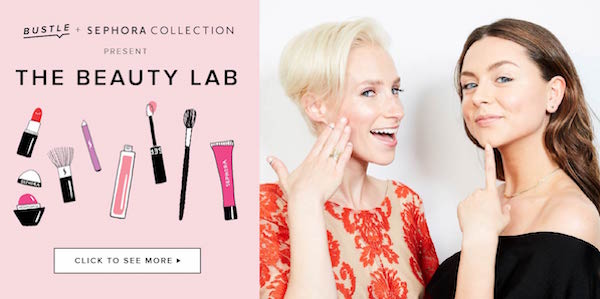
For about a month, it has run Stories sponsored by brands including Sephora, Hidden Valley and the film “Before I Fall.” By the time Bustle started running sponsored Stories, it had increased its overall Stories output from about three a week last fall to about seven per week.
“Almost every pitch we send out to clients now includes Instagram,” said Jackie Bernstein, Bustle’s director of branded content. “It has become more of a marquee product for us in terms of sales.”


More in Media

Why CNN International is building for agentic ad market that barely exists yet
CNN International is still chasing its first agent-sold dollar by Q1.

Media Briefing: The transatlantic push to rein in stealth bots is gathering pace
U.S. and U.K. publishers are pushing for laws to crack down on stealth AI crawlers as bot scraping surges and demands for transparency grow.

Creator mentors Colin and Samir want to turn their followers’ ideas into productions
Creator mentors Colin and Samir teamed up with Adobe to fund a creator’s project; the first step towards the duo’s new production era.