for the Digiday Programmatic Marketing Summit, May 6-8 in Palm Springs.
Media Buying Briefing: Dentsu’s new CEO on how he’s going to grow the business again
This Media Buying Briefing covers the latest in agency news and media buying for Digiday+ members and is distributed over email every Monday at 10 a.m. ET. More from the series →
While the world of marketing and media keeps a close eye on the Big Three holding companies — can Publicis keep up its impressive winning streak? How else can Omnicom wring value out of the IPG acquisition? Can Cindy Rose successfully reverse WPP’s downward trajectory? — something just went down in Japan that is expected to have a considerable effect on Dentsu’s fortunes.
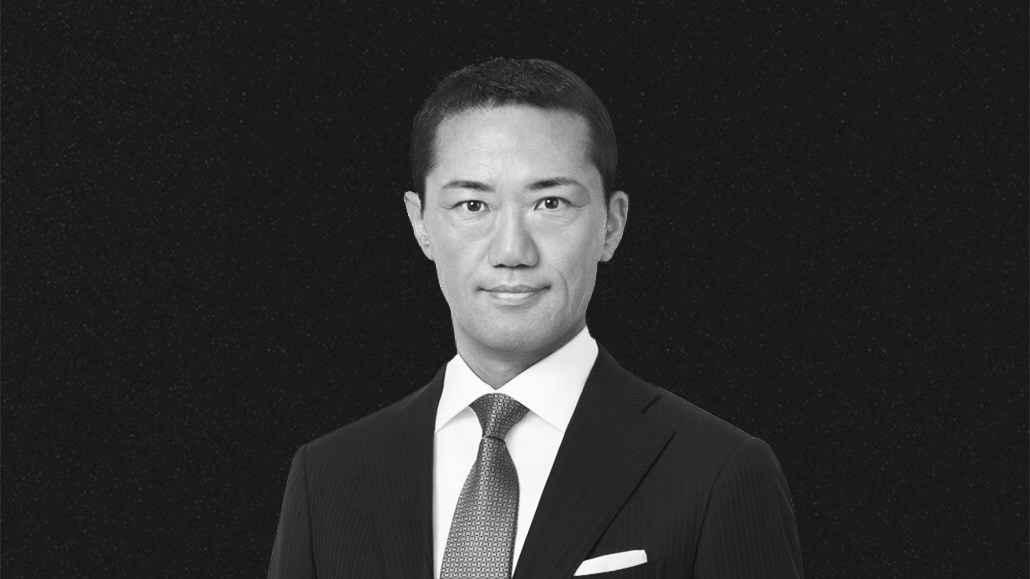
Two weeks ago when Japanese-owned Dentsu announced its 2025 full-year earnings, global CEO Hiro Igarashi announced he was stepping down, to be replaced by Takeshi Sano at the end of March. Sano, who’s been with the holdco since 1992, most recently was CEO of Dentsu Japan (the holding company’s most successful division by far) and deputy global COO, which means he’s familiar with the current operations outside of Japan — and what’s not been going right.
Sano told Digiday via an emailed response to questions that he plans to focus on regions with the best opportunities for growth, which very much includes the U.S. “We have a big opportunity ahead of us at Dentsu,” wrote Sano. “The U.S. is, of course, one of our most important markets, alongside Japan. It is home to many of our global clients, and we know that driving growth for clients locally often unlocks new opportunities on a global scale.”
One major move that puts Sano much closer to Dentsu’s operations outside of Japan — which last year were essentially put up for sale by Igarashi-san, only to be turned down by potential acquirers as well private equity firms, resulting in a major write down in the company’s earnings — is the elimination of global COO and president roles, enabling regional CEOs to report directly to Sano.
As for the U.S., where iProspect, Carat and Dentsu X are headquartered in New York, and Beth-Ann Kaminkow oversees as CEO of Dentsu North America, Sano expects to spend some time there meeting with multinational clients and partners. “I’ll be working closely with Beth Ann and the leadership team to demonstrate how Dentsu can be the agile growth partner of choice for clients as we move into this next chapter,” Sano wrote. “By simplifying how we work, improving execution, and embracing AI-powered transformation, my goal is to set the business up for growth that starts and ends with our clients.”
He said he’s also focused on differentiating Dentsu from his rivals. “While others seek scale above all else, we seek agility, collaboration and meaningful outcomes for clients, all supported by an AI-powered technology ecosystem that partners like Microsoft, Adobe and Salesforce recognize as truly industry leading.”
There are immediate differences that jump out between Igarashi and Sano, according to interviews with former and current employees as well as consultants familiar with Dentsu. Sano is fluent in English, which insiders hopewill improve communication among regional leadership across Dentsu’s holdings. Insiders also say Sano has proven to be much more responsive to regional voices inside the company as well as espousing a more global-friendly attitude.
And Sano seems to understand that the Japan way — Dentsu Japan has long enjoyed a monopoly on media and marketing in its home country — cannot be replicated in other regions. He may have enjoyed “11 straight quarters of success in Japan,” as one Dentsu insider noted, but he seems to understand that success comes with far more effort in the rest of Dentsu’s holdings.
“We’ll stay focused on the areas where we can truly lead: sharpening our proposition, refining our global footprint, and making sure our capabilities are aligned to the markets with the greatest opportunity,” wrote Sano.
“He comes in as a force, and he speaks more of a Western recognizable business language for people in the West — whether it’s good or bad remains to be seen,” said Ruben Schreurs, CEO of consultancy Ebiquity. To Schreurs, an important distinction in the upcoming Sano era of Dentsu is that elimination of regional COOs. Sano “has made it very clear he’s taking direct ownership. All of the regional leadership will report directly to him, so he’s removing a layer in the matrix immediately,” Schreurs said. “And what he’s said numerous times is how he’s going to use speed and move with a real decisive mandate … that’s what happens with companies that enter a wartime mode of way of working.”
That sentiment was confirmed by at least one person internally. “He ran our global consultancy business, and is bilingual, which to me running a Japan based global company that wants to turn around international and stabilize clients is a minimum requirement in a world that requires real time response,” said one insider who declined to speak for attribution in order to speak more freely. This insider sees a much clearer direction ahead under Sano’s watch. “He’s also much more decisive which the international business needs.”
But it’s not all smooth sailing ahead for Dentsu. It lacks the full-service equivalence of its rivals in that it doesn’t own any major creative agency brands, noted Schreurs. (A Dentsu spokesperson clarified that Dentsu Creative operates globally as part of the holding company.) That said, the holdco has focused on bringing production and media closer together, as my colleague Sam Bradley recently covered.
Schreurs said he expects some degree of divestitures and possible M&A activity, unlike the failed efforts the last two years. Sano “made it clear that they will move fast, also when it comes to deciding if there are areas of their business they need to divest,” said Schreurs, who has recently met with Dentsu leadership. “I think they will make capacity for acquisitions by first streamlining some of their business. So I do expect there will be quite a bit of consolidation or efficiency initiatives that he’ll focus on.”
Finally, there’s the charm/magnetism factor to be considered. Publicis Groupe CEO Arthur Sadoun is widely perceived as the optimal holdco CEO: charming, informed, energetic, but also able to step out of the way to let his people do what they do best. WPP CEO Cindy Rose already has established herself as more outgoing and approachable than her brainy but bloodless predecessor Mark Read. Omnicom CEO John Wren seems to be letting Omnicom Media CEO Florian Adamski be the face of his expanded holdco, given his reputation as a “wild old fox,” as Sir Martin Sorrell described him.
Igarashi was none of those things, while Sano is given credit for being much more engaging, outgoing, younger (he’s 55) and worldly. The fact alone that he was willing to provide comment for this story tells of a Dentsu that may actually be much more open to the press and the world than it has operated of late.
“The previous [CEO] certainly didn’t do any favors, having to speak through through interpreters and translators,” said one consultant who spoke on condition of anonymity in order to speak more freely. “It’s just not a way to build trust or confidence with clients. So to have this well spoken, connected-to-the-work kind of [leader] is exactly what they need, especially with the cult of personality that now seems to dominate this marketplace.”
Still, this consultant believes Dentsu may have to focus competitively on the second tier of agency groups, as it’s fallen behind the Big Three the last few years. “This is a bit of a reset, just trying to re-establish those relationships with existing clients,” said the consultant. “Did I sense that they are thinking, ‘How do we take on a WPP or Publicis?’ I got the sense it’s more, ‘How do we start to show up with the Stagwells and Horizons.’ I think they see that cohort as the company they’re going to keep now, rather than trying to take on the big ones.”
Color by numbers
With influencer marketing attracting more attention than ever from marketers, how much are agencies involved in the planning and execution? And how transparent are the processes? According to a new study from the Association of National Advertisers, transparency levels could be better. Here are a few stats on what the ANA report uncovered.
- 52% manage their influencer marketing both in-house and with an external partner; 32% do so primarily with an external partner; 16% manage influencer marketing primarily in-house.
- 31% said their agency offers transparent compensation methods; 39% said their agency does not; and the remaining 30% of respondents didn’t know (the study presumes that those are also not getting transparency).
- One-quarter of respondents said they are very satisfied with their current agency compensation agreements for influencer marketing; 48% said they’re somewhat satisfied; with the balance (27%) saying they are either not very satisfied or not at all satisfied.
Takeoff & landing
- Havas reported its fiscal 2025 earnings, showing total revenue growth of 1.7%, with North America contributing the most growth percentage of all regions (at just under 5%). Organic revenue growth was 3.1% at the top end of the French holdco’s expectations. Margins are still lower than most rival holdcos, ending 2025 at 12.9%, but Havas expects it to rise to above 13% this year.
- Independent marketplace agency group Podean continues to buy other shops, acquiring retail media agency Ad Advance, which handles full-funnel strategy and performance across Amazon, Walmart, and emerging commerce channels. Terms were not disclosed.
- Independent CourtAvenue launched a new 100-person unit devoted to AI development called Velocity, which aims to help enterprises move beyond AI experimentation and into production-ready, scalable execution.
- Rise, the media agency owned by Quad Graphics, landed Gorilla Glue’s media business a few months after its sibling creative agency Betty secured the creative business.
- Nielsen issued the final final Super Bowl LX viewership data according to its Big Data + Panel measurement platform, with the total rising to 125.6 million viewers across NBC, Peacock, Telemundo, NBC Sports Digital and NFL+ on Feb. 8.
Direct quote
“The 1994 Cup planted an incredible seed to build infrastructure and fan communities here in the U.S. that the World Cup will now harvest those seeds.”
— Jason Wagenheim, North America CEO of publisher Footballco, about harnessing marketing opportunities for Major League Soccer off the back of the World Cup.
Speed reading
- I covered Omnicom’s 2025 earnings, which were largely unsurprising (which in this day and age can feel like a win to some), besides an expectation of greater savings through synergies, which often means more layoffs.
- Sam Bradley pulled together a series of slides that reveal a story about the agency business at the moment, in his latest In Graphic Detail.
- Krystal Scanlon walks readers through Amazon’s pitch to advertisers to heavy up spending in premium streaming inventory via its DSP.
- Seb Joseph digs into how CMOs are reacting to the growing use of principal media by their agencies.


More in Media Buying

Ad Tech Briefing: Disney and Mediaocean sound the death knell for the I/O
The pact suggests the insertion order is on borrowed time and is a pitch to the CFO as much as it is to the CMO

Media Buying Briefing: Instrument’s CEO on how agencies need to lead clients on AI
Part of Stagwell’s Code and Theory Network, Instrument has been able to help clients imagine projects not doable just a handful of years ago.

Transparency brought down The Trade Desk’s Publicis deal but it may not be enough to win its other clients
Nexxen’s launching new AI features. Amazon’s broaching streaming partnerships. And Viant, Blockboard and Stackadapt are setting out their stalls.