Join us Dec. 1-3 in Nashville for the Digiday Programmatic Marketing Summit
‘They’re going to be extinct at some point’: Why the chief AI officer is a transitional species
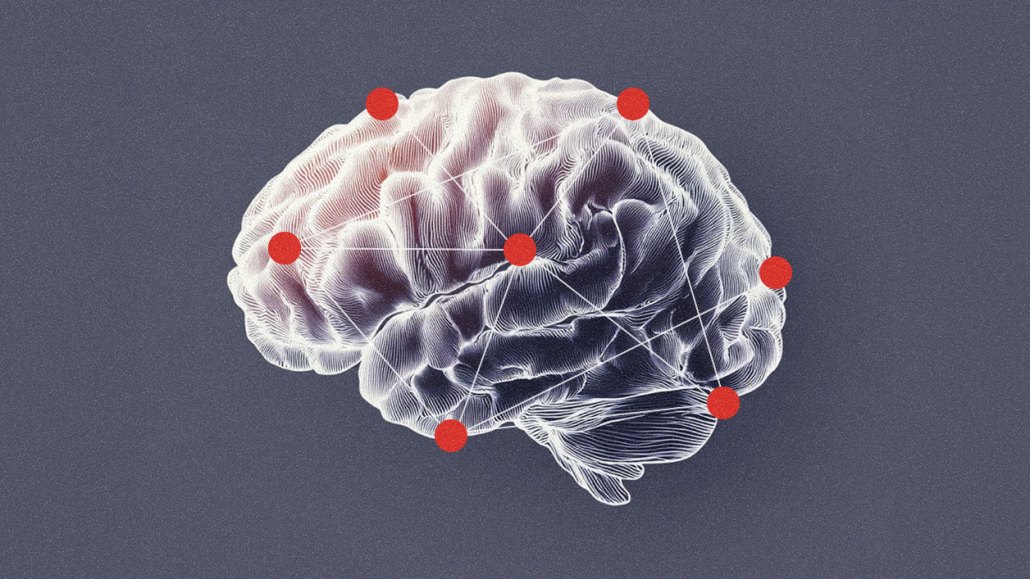
The chief AI officer has an expiry date — and that’s the point.
That’s the view of James Chandler, chief strategy officer at the Internet Bureau of Advertising U.K., who sees the role as a means to an end — that end being a business where AI is so embedded it no longer needs a dedicated executive to champion it. Once that work is done, every function owns it. Nobody needs a dedicated champion anymore.
“You’re starting to see chief AI officers, people that are leading AI, bringing functions at the business together — no different to what we went through in mobile in that sense, right,” said Chandler. “Mobile was going to be huge, so you’ve got to do it. They’re going to be extinct at some point — chief AI officers — but I think you need them to pull the business around this thing.”
For marketers, that outside perspective matters more than most. Few functions are feeling the pace of AI-driven change as acutely — and the numbers bear that out. One third of digital ad spend will be AI-driven by 2030, per IAB U.K. forecasts. In some respects that’s already underway. AI has quietly automated large swathes of how ads are bought, from walled garden auctions to the programmatic pipes that fund the open web. What’s coming — and what the forecast pinpoints — is something more acute: AI deployed across all facets of marketing, not just the pipework.
Creative is where the shift is hitting first. Nearly two thirds (63%) of the 52 senior marketers and IAB members surveyed expect AI to have an accelerating or transformative impact on creative development over the next 12 months. Just 2% think the impact will be minimal. It’s not hard to see why. The appeal isn’t purely about doing things cheaper. It’s about doing things that simply weren’t possible before: testing more ideas, personalizing at volume, iterating in real time.
“We’re not spending tens of millions of dollars investing in generative AI for advertising because we think we want to blow out our creative agency,” said a senior marketer at global advertiser, who exchanged candor for anonymity. “I mean yeah, a couple of copywriters at the agency could lose their job but, ultimately, that’s not my decision. We’re not doing this for a fee cut. We’re doing this to try and leverage a technology that matters.”
That urgency stretches beyond production.
More than half (56%) of IAB U.K. members surveyed are either experimenting with or piloting agentic AI. A further 18% are already scaling it — or consider themselves agent-first, with marketing operations built around agentic systems by design.
Almost two-thirds of the senior marketers and IAB members who were surveyed have already made changes to website structure, metadata and content strategies in response to generative engine optimization, while 74% believe AI summaries are cutting traffic to brand websites.
Expect that figure to rise. The platform pivot away from the open web — accelerated by AI — is no longer just a publisher problem. What began as the slow erosion of referral traffic to news sites has crept into brand-owned channels too. The scramble to optimise for large language models rather than search algorithms is a measure of how quickly the ground has shifted. And it will shift further still — ads are becoming a permanent fixture inside those conversations, as ChatGPT’s rapid steps into the ad business make clear.
The bigger picture
The report captures one marketer’s view of all this. But it maps closely to conversations Digiday has had with marketers worldwide. And nowhere is the alignment clearer than on the question of autonomy — specifically, how much of it marketers are willing to hand to AI.
The short answer: not much. Trust in AI-generated creative falls by more than half when human oversight is removed, according to a survey of 200 senior U.K. marketers commissioned by MTM for the report. The same pattern holds for media buying. High or complete trust drops from 68% with human review to 26% without it.
“The idea of this fully autonomous agent that can go out there and build creative, buy all media and make sure its fraud-free, brand safe and well targeted is just not fully formed yet,” said Chandler. “There still needs to be this human oversight. Advertisers, more than anyone, are thinking about share price, being on the front page of a newspaper. They don’t want to be that brand to get it wrong in AI.”
Whether it stays that way will depend on the guardrails. Creative quality, trust, transparency and accountability — get those wrong and agentification doesn’t solve advertising’s problems. It compounds them.
Little wonder then why only 4% of IAB U.K. members consider themselves fully agent-first. That number will rise, of course, but how fast depends on too many variables to call now.
“Every new thing that comes along, you’ve got to get the foundations right,” said Chandler. “You’ve got to call things the same thing, you’ve got to do definitions. You need to be buying the same sizes. You’ve got to have standards around stuff. AI, in that sense, is no different.”
In the meantime, the chief AI officer might want to hold off updating their LinkedIn profiles.


More in Marketing

AI boosts discovery but reviews still seal the deal, new research shows
ChatGPT is where 16% of shoppers start looking for products. However, only 9% go there to actually buy something.

Future of Marketing Briefing: Advertisers have more ways than ever to choose a holdco, and free holdcos to choose from
Fewer holdcos, more ways to pick one: inside the changing agency pitch.
Walmart Connect pitches brands directly as it pushes lift studies ahead of holiday ad deals
Walmart Connect is using lift studies to prove ad performance directly to brands ahead of the holidays, signaling a tighter race with Amazon.