Join us Dec. 1-3 in Nashville for the Digiday Programmatic Marketing Summit
Digiday Research: 58% of agency employees say they are paid fairly, a dip from last year

This research is based on unique data collected from our proprietary audience of publisher, agency, brand and tech insiders. It’s available to Digiday+ members. More from the series →
Salaries have long been an issue for ad agency employees. Because of changes in the way most ad agencies are being compensated by their clients, fees have declined — and also salaries. That has resulted in a talent crisis within parts of the industry.
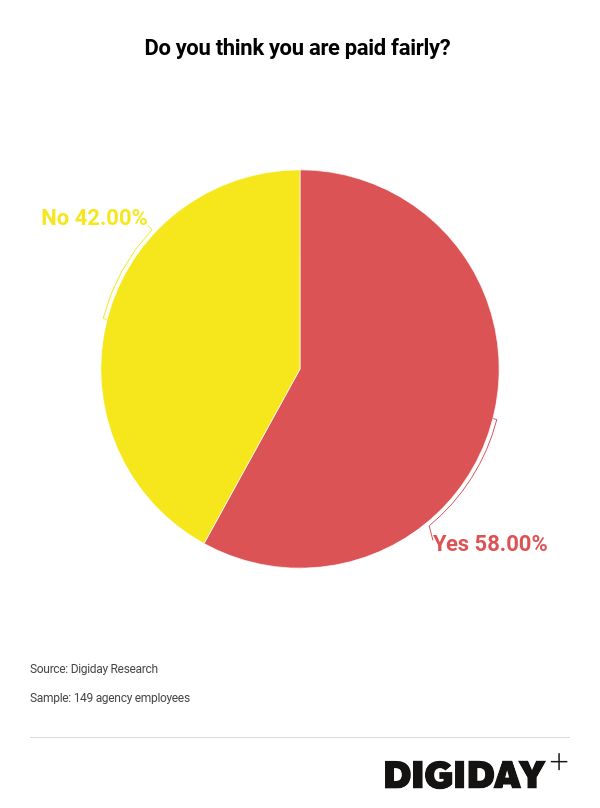
And things might be worsening on that front. A new Digiday poll found that 58% of the 149 agency staffers surveyed said they are compensated fairly.
Last year a similar survey found that 62 percent of the agency staffers surveyed said they believe they are paid fairly for the work they do.
The results differed slightly, according to the gender of respondents. About 60% of the men polled said they are compensated fairly, compared with 55% of the women surveyed.
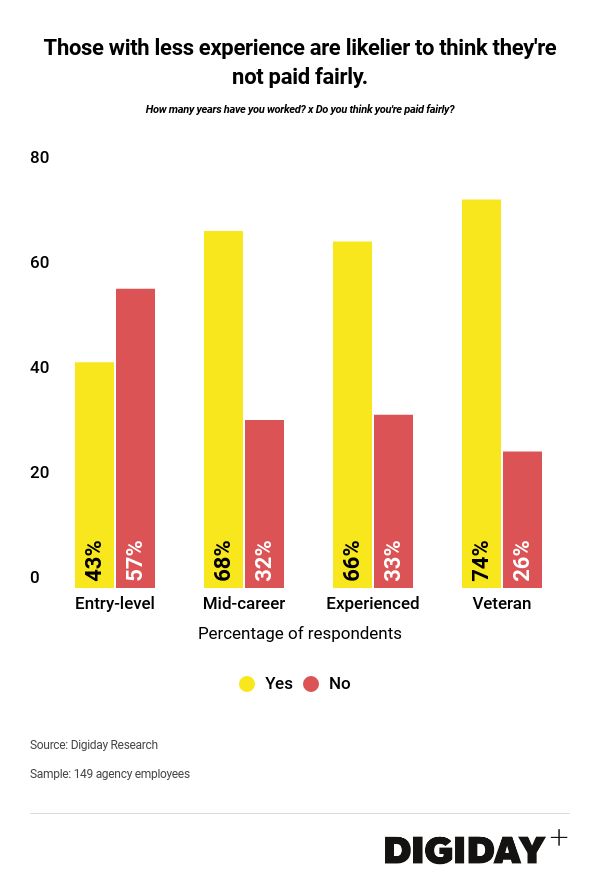
More of the least experienced employees (those with less than four years of experience) said their pay wasn’t fair. Fifty-seven percent of the surveyed entry-level workers, compared with about 32% of the mid-career staffers and 33% of the experienced workers, said they weren’t being compensated fairly.
In another related industry, about half of the publishing workers recently surveyed by Digiday reported that they think they are being compensated fairly.


More in Marketing

Ruggable’s new ad spend strategy shifts focus to ShopMy creators
Ruggable is shaking up its marketing stack, pulling dollars our of Meta and into ShopMy creators ahead of a potential IPO.

Future of Marketing Briefing: The holdcos long, awkward courtship of the C-suite
What holdcos risk when they go over the CMO’s head.

Brands turn to content series and Jimi Hendrix to improve AI search performance
Guitar brand Fender and amp-maker Marshall both recently launched content series aimed, in part, at improving their visibility in AI search answers. It’s part of a greater pattern.